

Running an online store for adult products is a unique challenge. Ads get flagged. Payment processors label businesses as “high risk” and shut down merchant accounts with little warning. Yet despite these obstacles, entrepreneurs are creating thriving online communities, driving consistent traffic and helping sexual wellness brands find their audience.
Behind the glossy storefronts and discreet shipping labels lies a constant hustle. Success is never guaranteed. Instead, online sellers must build it day by day through clever SEO work, creative content strategies and relentless determination to achieve visibility in the face of mainstream platforms’ efforts to silence them.
Each product page is written to feel like I’m right there with you in the shop.
SEO: A Process of Discovery
Search engine optimization may not be glamorous, but for many online retailers, it’s the quiet powerhouse that keeps the lights on. In a marketplace where ads can be censored or banned overnight, search visibility offers a steady flow of new customers — if you know how to earn it.
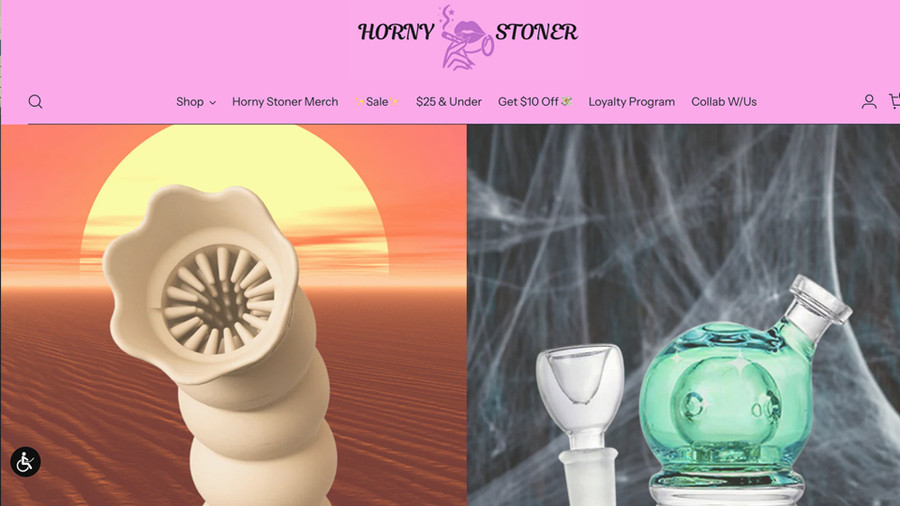
“That means doing keyword research regularly, observing how search habits evolve, and ensuring that product titles and descriptions remain optimized without sounding robotic,” advises sex educator Carly S, who recently relaunched HornyStoner.com, an online shop combining pleasure products and cannabis accessories.
For most ecommerce entrepreneurs, SEO is a primary weapon. Pleasures Club founder and CEO David Costa spends hours refining product pages so that titles, meta descriptions and product copy are all not only accurate but optimized for discovery.
Marta Brzezińska of Poland’s LulaPink.pl noted that her online boutique’s secret weapon for SEO is storytelling.
“We don’t just upload products — we create long, SEO-driven descriptions enriched with cultural references, playful slogans, and inclusive language,” she said. “This helps us rank well in search engines while also building a strong brand identity.”
According to Brzezińska, one of the biggest challenges for LulaPink.pl is also what defines the brand — abandoning “for women” and “for men” categories and to introduce gender-neutral language in Polish.
“For example, we use forms with x’ (gotowx instead of gotowy/-a),” Brzezińska explained. “From an SEO perspective, this choice initially affected our visibility, because many people still search using gendered keywords. However, we decided to stay consistent, as inclusivity is part of our identity, and over time this approach has also created new opportunities for discoverability.
“We regularly refine category, brand and product descriptions, as well as meta descriptions, carefully weaving in diverse keywords in a natural way,” she continued. “This requires a lot of linguistic and conceptual agility — but it allows us to combine inclusivity with effective SEO.”
However, SEO is also continuously evolving — and faster than ever, thanks to new tools like ChatGPT.
“AI has completely changed how SEO works,” says Carolyn Eagle, founder and CEO of Betty’s Toy Box. “It alters how your store, products and services are discovered. It’s crucial for those of us in ecommerce to understand these shifts, or we risk falling behind.”
The Social Media Tightrope
If SEO is the silent driver, social media is the loudspeaker. Of course, in the pleasure industry, the volume is always turned down — thanks to constant restrictions on what can be shown or said — so adult brands must find ways to stay entertaining, approachable and compliant all at once.
Zoë Ligon, CEO of Spectrum Boutique, keeps it simple.
“Showing up consistently across platforms matters more than any single campaign,” she says. Staying active on social media, Reddit and other internet spaces, she adds, helps her brand stay visible even when algorithms are working against it.
Others lean into humor and community as a workaround. Carly S says her site has built a following not by focusing solely on toys, but by creating a brand people want to spend time with.
“Memes are a huge part of our strategy because humor is a great way to break the ice and normalize pleasure,” she suggests. “A well-timed meme can make someone laugh and get them curious enough to click through and check out the product we’re featuring.
“We also use short, scroll-stopping videos to show products in action — without being too explicit — so followers can imagine how they might use them in their own lives,” she adds. “These clips start conversations, get people tagging friends and make the products feel accessible rather than intimidating.”
Customers who want more in-depth information can then find it on her sex educator Instagram profile.
“That separation keeps our main page focused on entertainment and discovery, while giving people who want to learn more a place to do so,” she clarifies. “At the end of the day, it’s about reading the room. If your audience is here for laughs, find clever and meme-worthy ways to feature your toys. If they love aesthetics, make everything look like it belongs on their Pinterest board. If they want education, drop one interesting fact about every toy you post.”
While catering to their audience, every online adult retailer also faces the same balancing act: How do you make products look appealing without breaking mainstream platforms’ rules?
Some, like Costa, have become adept at subtlety. Instead of showing products front-and-center, he notes, Pleasures Club places them in the background, styled like lifestyle accessories, while using euphemisms and metaphors to avoid explicit terms that could trigger platform bans.
For Tara Acevedo, founder of Tyes by Tara, the key to striking the right balance is understanding the rules and conditions of specific platforms, as well as audience expectations.
“This creates space to experiment in, and sets the boundaries for knowing where to be discreet and where to lean into creativity,” Acevedo says. “From there, it’s about choosing the right presentation: styling products on a model when context adds value, or using flat lay photography with complementary props when simplicity is more effective. The aim is to create an online marketing strategy that is memorable, clear and effective at driving conversions.”
Eagle says that Betty’s Toy Box leans into the educational angle, focusing on PG visuals and wellness messaging.
“It’s more about building a community, rather than showing specific products,” she explains. “That community-first approach is what keeps people engaged even when specific items can’t be promoted.”
Under the Influence
Collaboration has become another key driver of traffic. Online stores frequently partner with influencers, who share unboxing videos and lifestyle content. This can showcase a store’s products in ways that feel more personal and aspirational, and expand the store’s audience as the influencers’ followers end up exploring the site and products.
Some online retailers, like Sensual Minded, also weave such collaborations into event partnerships and goody bags, so that the store is represented in multiple touchpoints, both online and offline. Others take collaborations beyond adult models and creators. Horny Stoner partners with comedians, cannabis influencers, lifestyle bloggers and drag queens — voices with significant, engaged audiences that align with the brand’s playful energy, so that the collaboration still feels organic.
“These collaborations allow us to show up in unexpected places, spark conversations about pleasure, and reach people who might have never thought about shopping with us before,” explains Carly S.
Lula Pink is also recognized beyond the online space because of the offline activities the company participates in.
“We organize workshops, collaborate with NGOs and foundations (especially those supporting the LGBTQIA+ and people with disabilities community), and work closely with sexologists’ offices and urogynecological physiotherapy clinics, where our products are presented alongside professional guidance,” Brzezińska said. “We also host our own Festival of Pleasure (Festiwal Rozkosz) — a cultural and educational event that normalizes conversations around sexuality.”
By embedding products into broader lifestyle narratives, e-tailers gain visibility in ways that algorithms alone could never provide.
You’ve Got Mail!
While social media and influencer campaigns may be splashier and arrive with more fanfare, email quietly remains one of the most reliable drivers of sales.
Acevedo aims to nurture customers through consistent, value-driven email communication.
“Regular email engagement combined with shareable client experiences has become a dependable way to drive online store traffic,” she shares.
In a sector where visibility can vanish with a single shadow-ban, email offers a refreshing degree of stability — a direct line to customers, unmediated by algorithms or ad policies. For many online retailers, it is the one space where they control the conversation.
Feedback Loop
In today’s online retail space, customer reviews carry enormous weight. Buying intimate products online requires a leap of trust, and positive reviews can provide the reassurance people need to click “buy.”
“In this sector, people really care about trust, safety and quality,” Costa confirms. “Reviews help potential buyers feel more confident, because they want to know about comfort, materials, packaging and delivery. The challenge is actually collecting reviews. Even with the option to post anonymously, a lot of customers prefer to stay quiet.”
Relying on reviews can also be tricky for another reason. Nicole Carrasco Rojas, COO of Japi Jane, notes that while reviews are essential, customers need to be reminded that not every product works the same for everybody, or every body.
“Every review reflects personal tastes and experiences,” she points out.
Distance Learning
Brick-and-mortar adult stores rely heavily on staff interactions to help customers find the products that match their needs and preferences, and to share relevant information about those products. Lacking that personal contact, ecommerce brands must compensate by building education into every digital touchpoint.
“We strive to share as much educational information online as possible, so that people can hopefully find the answers they’re seeking on their own,” Ligon says, adding that Spectrum also invites shoppers to send questions via DMs and email.
Carly S crafts both social media posts and site copy to blend humor with education, so followers and shoppers can learn something without feeling like they’re sitting in a lecture.
“Each product page is written to feel like I’m right there with you in the shop,” she says. “Friendly, educational and full of the details that help you make a confident purchase, so customers feel guided, not overwhelmed. I also use social media and email as my ‘virtual staff.’
“When I feature a product, I like to share at least one helpful tip about how to use it, pair it with other products, or care for it, so it’s not just a pretty picture; it’s actionable,” she elaborates. “For customers who want to dive deeper, I create guides and blog posts that explain topics like toy materials, lube compatibility or how to choose the right product for your body.”
With two sex educators on staff, the Betty’s Toy Box website doubles as a knowledge hub. Blog posts, videos and cross-linked guides ensure customers always have resources at hand.
“Many of our products include videos — some from the manufacturers, but many created by us — that focus on teaching people how products work and how to select the right one for their bodies,” Eagle shares. “We also offer a live chat where people can ask questions, and we’re reachable by email as well.”
According to Costa, Pleasures Club invests in content like blogs, short videos and educational posts about wellness, intended to pull traffic in by building authority and trust. Meanwhile, Quake Novelties offers detailed product descriptions, FAQ sections, and guides that walk customers through options.
“I make sure the language is approachable, clear and respectful,” says Quake’s Deshawn Haynes. “So customers feel comfortable learning on their own.”
Going the Extra Mile
For many shoppers, the principal value of ecommerce is discretion, since purchases made from the safety of laptops maintain their privacy. In other areas, however, e-tailers must often make an extra effort to provide the level of personal attention customers might more routinely get from a brick-and-mortar store.
Haynes says that Quake prioritizes providing responsive customer service, to answer private questions directly.
Meanwhile, Sensual Minded founder Iris de Jong says her company makes packaging part of the customer experience, so that shoppers are greeted with satin gift boxes and handwritten notes once they open those plain brown packages.
“Every order deserves a personal thank you,” she highlights.
In a market where stigma still lingers, these details can easily make the difference between a one-time buyer and a loyal customer.
Today, adult ecommerce isn’t about chasing trends. It’s about navigating barriers, seizing opportunities and refusing to disappear in the face of restrictions. Whether through SEO mastery, humorous memes or influencer collaborations, pleasure e-tailers are finding ways to stay visible.
Costa sums it up with clarity: “It’s all about being creative while sticking to the rules.”
In this sector, that creativity isn’t optional — it’s the cost of entry. Those willing to innovate gain more than traffic; they build brands that normalize pleasure, foster trust and carve out a place for themselves in a competitive digital marketplace.