



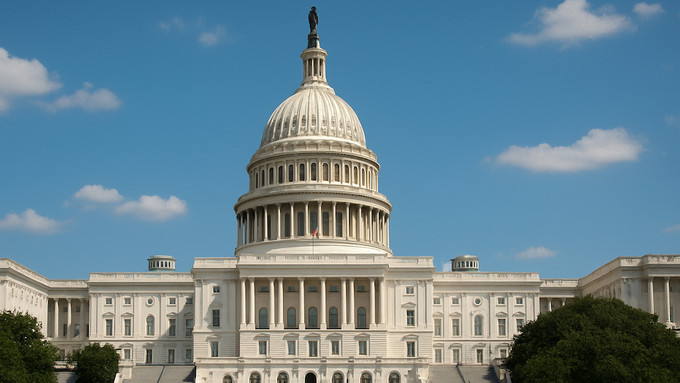
WASHINGTON — The Senate Commerce Committee on Wednesday voted to approve the SCREEN Act, which would mandate nationwide site-based age verification of users seeking to access adult content online, but a procedural issue blocked the bill from advancing to the full Senate.
On a party-line vote, the U.S. Senate Committee on Commerce, Science, and Transportation agreed to advance the bill, with Republican members supporting and Democrats opposing the legislation. However, a number of the votes in favor were by proxy, on behalf of members who were not physically present for the meeting.
Since Senate precedent requires that the number of senators voting yes in person must outnumber total no votes, Senator Ted Cruz, who chairs the committee, agreed with Senator Maria Cantwell, the ranking Democrat on the committee, that not enough members were present to favorably report out the bill.
Republican Senator Mike Lee of Utah introduced the Shielding Children’s Retinas from Egregious Exposure on the Net (SCREEN) Act, his third attempt at shepherding such legislation through Congress, in early 2025. Republican Rep. Mary Miller introduced a companion bill in the House. However, neither version saw any movement for a year.
Then, in March, the House Energy and Commerce Committee incorporated an amended version of the SCREEN Act into the Kids Internet and Digital Safety (KIDS) Act, an omnibus bill combining a suite of online safety bills. In June, the House of Representatives passed the KIDS Act, but the bill has encountered stiff opposition in the Senate — not because of the SCREEN Act provisions, but due to House/Senate disagreements over language in a more prominent bill included in the package: the Kids Online Safety Act (KOSA).
The Senate's separate version of KOSA was advanced unanimously during Wednesday’s session.
Violations of the SCREEN Act’s AV requirements would be treated as a violation of the Federal Trade Commission Act’s prohibition against unfair or deceptive acts or practices. Violators would therefore be subject to civil penalties of up to $10,000 for each violation.
A committee staffer confirmed to XBIZ that while the SCREEN Act received majority approval, a revote will be needed to comport with Senate rules on in-person attendance. The bill therefore cannot advance further unless Cruz chooses to bring it back up for another vote with enough committee members in attendance.
Free Speech Coalition (FSC) Director of Public Policy Mike Stabile told XBIZ that the hearing's outcome was good news for the industry.
“Not enough members were willing to be in the room to vote on the bill, and the vote itself was along party lines — both of which are positive signs, and indicative of the opposition to the bill that's been marshaled by FSC and our allies,” Stabile said. “The bill could potentially be brought back later in the year, of course, but we should count today as a victory.”
FSC has been aggressive in its efforts to oppose the SCREEN Act, working with allies in and out of the industry on the bill. Stabile reaffirmed the organization’s commitment to that work.
“We will continue to advocate for better, more effective solutions that don't give the government broad censorship powers,” he said.
Likely contributing to public outcry beyond the adult industry, and winning FSC additional allies in its efforts, was the fact that Lee's original version of the SCREEN Act would have impacted not just adult sites but many mainstream platforms as well. However, the amended version on which the Commerce Committee voted would have updated the bill's text to more closely match the language in the KIDS Act version. In particular, the amended Senate version of the SCREEN Act would no longer encompass all websites, but only those for which "more than one third of the material made available thereon is sexual material harmful to minors," a provision common to many state AV laws.



