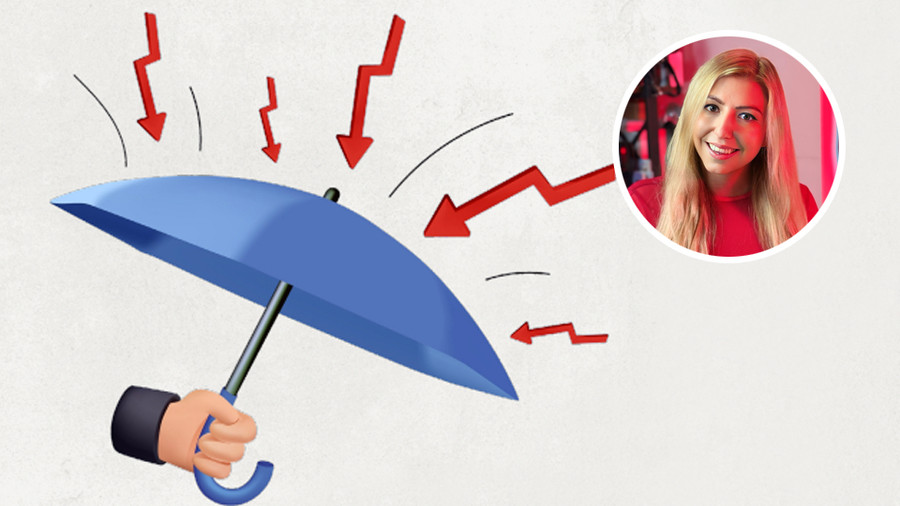
Every economic slowdown prompts businesses to ask a challenging question: How can we survive until circumstances get better?
This is especially relevant for the pleasure product industry today, as consumer spending cuts persist and manufacturers face higher production costs, tariffs and supply chain uncertainties.
Brands that maintain visibility during economic downturns tend to emerge even stronger when the economy improves.
Yet history shows that recessions don't just distinguish successful businesses from unsuccessful ones; instead, they separate companies that adapt from those that do not.
The Old Playbook No Longer Works
The economy has changed, and strategies that were effective a few years ago no longer produce the same outcomes.
After the pandemic, the government’s stimulus spurred record-high consumer spending, leading to rapid business growth. However, as inflation rose, consumers became more selective in their purchases, though they did not cease buying altogether.
Many companies still use the post-pandemic years as their benchmark, but those conditions were unusual. Targets based on pandemic-era sales are no longer realistic. To offset declining sales from existing customers, businesses need to reach new ones.
Customers continue to seek products that enhance intimacy and relationships, but they now require greater value before making a purchase. Stores need to offer expert advice, education, outstanding customer service and an experience worth coming back for.
The same applies to manufacturers. Participating in trade shows is important, but only one part of the formula for attracting business. Long-term growth comes from building relationships, educating retailers, traveling to find new accounts and creating demand year-round.
Branding Is More Important Than Ever
During financial difficulties, consumers become more cautious with their spending, and trust plays a crucial role. They tend to prefer brands they recognize. This is why branding is especially important during an economic downturn.
A strong brand encompasses more than just a logo; it reflects your story, values, personality, expertise and the overall experience customers encounter with your business. Every interaction should reinforce why customers should prefer you over competitors.
Today’s customer journey is non-linear. Customers may discover your brand on Instagram, read reviews, watch an educational video, visit your website, and then make a purchase either online or in-store, possibly in reverse order. All interactions — from QR codes and product guides to social media posts — should feel interconnected, focusing on education rather than just selling.
Marketing Is an Investment
A common mistake businesses make during a recession is reducing marketing efforts. While this can cut costs temporarily, it also decreases your brand's visibility when customers are choosing where to spend. Relying solely on B2B partners isn't enough; brands must also generate demand directly from consumers.
In the pleasure product industry, education stands out as one of the most impactful marketing strategies. Blogs, videos, podcasts, tutorials, workshops and informative social media content assist customers in making confident purchasing choices. Additionally, events like couples nights, educational workshops and speed dating can attract foot traffic to stores and provide opportunities for people to connect beyond just a transaction.
Rather than questioning how to cut marketing costs, focus on generating greater value. Brands that maintain visibility during economic downturns tend to emerge even stronger when the economy improves.
Invest Smarter
The biggest risk during a recession is not lower sales. It is making decisions driven by fear rather than strategy. Strong companies do not panic. They optimize. High-return investments include staff training, retention programs, e-commerce improvements, SEO, educational content, product innovation, AI tools, and reusable photo and video content.
The companies that perform best after a recession are typically not the ones that reduce their spending the most. Instead, they are the ones that continue investing in sectors that generate long-term value.
Sell Value, Not Discounts
One of the most common mistakes businesses make during a slowdown is engaging in price wars. Discount after discount may boost short-term sales, but it also trains customers to wait for the next promotion, eroding margins and brand value.
Instead of asking how to reduce prices, ask how to increase perceived value. Can you offer better education, bundles, exceptional service, or exclusive products or gifts with purchase? Customers rarely remember buying the cheapest product. They remember how a brand made them feel.
Sell the Experience
Independent retailers have one advantage that Amazon and other large online stores cannot easily replicate: the human experience. Customers can buy almost any product online, but they cannot buy confidence, expert advice, or a genuine conversation with someone they trust.
This requires a shift in mindset. Stop asking, “How do we sell this product?” Instead, ask, “How do we help this customer?” When you focus on improving people’s lives, you build trust, and trust keeps customers coming back.
The Right Mindset Wins
Remember, every recession eventually comes to an end. The ones who come out stronger are the businesses that adapt with resilience, stay innovative, and look ahead with a long-term vision.
Most importantly, avoid adopting a victim mindset. Your business is your responsibility, and your future hinges on the choices you make today, rather than waiting for the economy to get better. Every challenge presents an opportunity to learn, improve and strengthen your business.
Economic conditions may be outside our control, but how we respond is entirely up to us. Resilience is not about waiting for better times. It is about building a business strong enough to withstand any economy.
Kate Kozlova is the U.S. Sales Manager for Kiiroo and a seasoned sex educator, known as InBedWithKate on YouTube. With over a decade of experience in adult retail and manufacturing, she is a certified device specialist and a public information sexologist (certified by the American Board of Sexology).