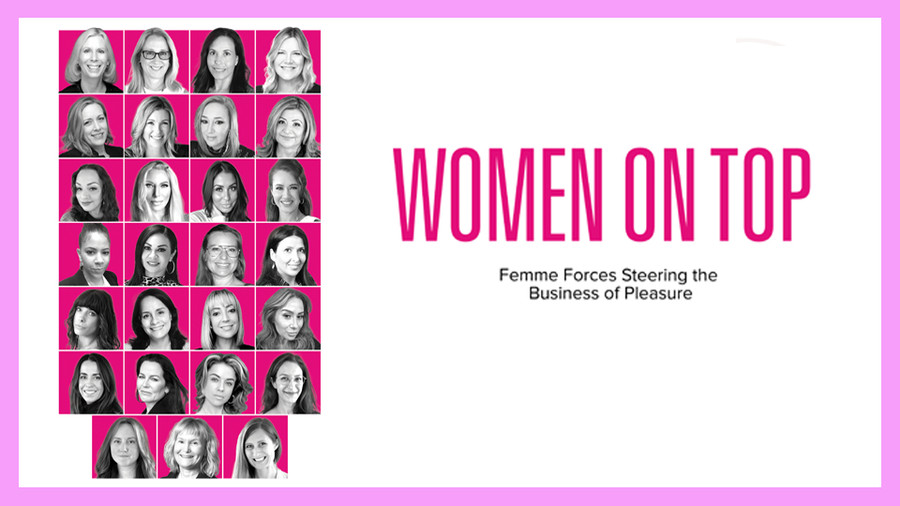
Over the past two decades, the pleasure products industry has undergone a transformation that extends beyond product innovation. Once defined largely by novelty, stigma and male-driven narratives, the industry has steadily evolved into a sophisticated, wellness-oriented sector shaped by education, inclusivity and consumer empowerment. At the center of that evolution is a growing cohort of women executives who entered the space and are redefining it from the inside out.
From founders building purpose-driven brands to sales leaders expanding distribution into mainstream retail, women are increasingly occupying positions of influence across every part of the business. Their impact is evident in everything from product design and marketing language to retail environments and corporate culture. This shift's momentum is undeniable and continues to accelerate as new generations of female leaders step into executive roles with fresh perspectives and long-term vision.
When women are in key positions, the conversation shifts — the lens changes.
This evolution has been chronicled in real time through Women in Adult (WIA) monthly profiles by XBIZ, spotlighting the voices, journeys and leadership styles of female executives shaping the industry. Each year, that impact is further recognized at the XBIZ Awards, where the WIA Woman of the Year award celebrates exceptional achievement and influence. Together, these initiatives have documented progress and enhanced the visibility of women whose contributions are redefining the future of adult retail.
WIA, Revisited
For this special report, XBIZ revisited with women who were profiled as WIA Women of the Month nearly a decade ago and beyond to reflect on how far they’ve come, how the industry has changed around them, and the lessons they carry into the next era.
For Alicia Sinclair, founder and CEO of COTR, growth is both a professional achievement and a deeply personal point of pride. Her company began with a single product and now offers more than 250, including the recent acquisition of Together Toys.
Her career has also intersected with mainstream visibility, underscoring how far the industry has come.
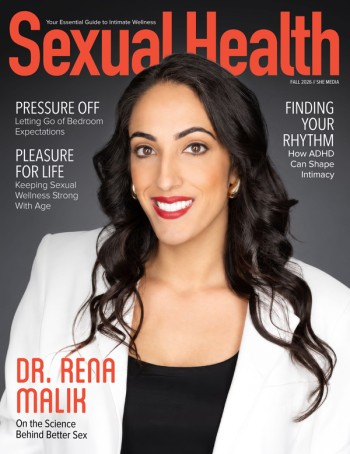
“Being featured in Vogue and appearing on the cover of Sexual Health Magazine this year have been pinch-me moments I’m incredibly proud of,” she adds.
That blend of growth and recognition and team-building resonates across many of the executives reflecting on their journeys.
“I can’t believe I won the prestigious WIA Woman of the Year award in 2017 — almost a decade ago,” Classic Brands Sales Executive Nicole McCree says. “Time truly does fly. But if I had to choose one highlight, it’s staying power… with purpose.”
In an industry often marked by rapid change and turnover, McCree considers her 14-year tenure a meaningful achievement.
“It speaks to growth, adaptability and trust,” she expresses. “I’ve had the opportunity to evolve alongside the company, take on new challenges and be part of shaping where we go next.”
McCree's approach has become more broad and future-oriented.
“My role has moved from purely relationship management and road warrior chronicles to a more strategic, forward-facing position,” she explains. “Relationships are still the heartbeat of what I do, but now I’m also focused on expansion.”
That includes exploring new channels beyond traditional adult retail.
“It’s about widening the lens without losing the foundation,” she says, noting the versatility of products like lotions and potions that can cross into broader wellness categories.
While the early stages of starting a company from scratch often involve wearing multiple hats, the past decade has been about embracing leadership and learning to delegate for executives like Sinclair. Over time, however, her role has become more strategic as she has learned to rely on her team.
“Trusting the team, empowering them and watching them lead — that’s where I live now, and I love it,” she beams.
NS Novelties’ Luzoralia Acosta’s path reflects a different kind of evolution, shaped by strategic career moves across companies and regions. She began her career as director of sales for Jimmyjane in North America, before moving on to Fun Factory USA, covering North and South America. In 2022, she joined NS Novelties as an account executive for international sales, a role she holds today.
Similarly, Lupe Martinez, executive director of sales and retail marketing at CalExotics, describes her progression from business development to executive leadership as an opportunity to shape the brand's broader direction. Yet even at the executive level, she remains grounded in the fundamentals.
“What I still love most is working closely with retail customers, staying connected to what’s selling and identifying emerging trends,” Martinez notes. “At the same time, overseeing marketing lets me tap into the creative side — it’s the best of both worlds.”
Back in 2017, when Sliquid VP of Global Michelle Marcus received her WIA Woman of the Month spotlight, she ended her interview with the goal of greater global expansion for the brand.
“Deciding to prioritize that global path 10 years ago allowed me to transition from setting goals to actually living them,” she said. “That decision didn't just expand our reach; it refined my own perspective, allowing me to lead with a truly borderless mindset. It’s a powerful feeling to look back at that interview and realize that the 'future' I was aiming for is now the foundation I’m standing on as I step into my 17th year.”
An Industry Transformed
If there is one consensus among women in the biz, it is that the industry they entered a decade or more ago bears little resemblance to the one they navigate today.
“The evolution has been remarkable,” says Sinclair. “We’ve seen inclusive language become more widely adopted, photography that reflects a genuine range of bodies and identities and a much stronger emphasis on body-safe materials. Marketing has become significantly more sophisticated, and our products are now available in a much broader range of environments — for better or worse, you can now pick up a vibrator at the pharmacy.”
Women, she emphasizes, have played a central role in that transformation.
“When women are in key positions, the conversation shifts,” Sinclair asserts. “The lens changes. And consumers — especially female shoppers — have both driven and benefited from that change.”
Acosta echoes that sentiment, highlighting the role of digital platforms in accelerating cultural change toward the sexual empowerment of women.
“Women are no longer embarrassed to walk into sex shops or afraid to ask questions,” she says.
McCree observed the industry evolve into a more structured, strategic business environment. That maturity is closely tied to the growing presence of women as leaders.
“It’s still not as common as it should be, but it’s no longer rare,” she notes. “We’re seeing more brands centered around sexual wellness, education and real pleasure — what women actually want.”
Dr. Sadie Allison, a sexologist, author and CEO of e-tailer TickleKitty.com, who also launched GoLove CBD Naturals in 2020, underscores the broader cultural effects of that shift.
“Women are seeking answers, support and solutions — and they’re being met with more resources and validation than ever before,” Allison observes.
Lynn Swanson, director of sales for Classic Brands, agrees and has seen industry leaders working to close those gaps by elevating expert voices and normalizing conversations about pelvic health, menopause, pleasure and self‑care.
“The rise of femtech and sexual wellness startups — many founded by women — has reframed sexual health as a legitimate component of overall wellbeing,” she adds. “These companies emphasize empowerment, autonomy and access, offering solutions for pain‑free intimacy, reproductive health and trauma‑aware care. This trend underscores a cultural shift: sexual wellness is no longer treated as a taboo niche but as a meaningful contributor to physical, emotional and relational health.”
Bridget Molloy, who built her sensual herbal apothecary business, Bridget’s Botanicals, through sheer determination 20 years ago, recalls riding her bike to events or taking buses with suitcases full of products.
“So much has changed since I started in this industry regarding sexual wellness stigma,” she said. “Conversations have shifted to the importance of navigating topics like body confidence, sexual trauma, relationship wellness, and body awareness regarding hormone shifts and their impact on libido. These conversations used to happen only at my in-home parties or in our human sexuality classes in college, and, of course, back at the pelvic floor physical therapy clinics. We now see conversations happening all over social media, and even in the aisles of mainstream stores.”
As the industry has evolved, so have the challenges and opportunities facing its executives. For many, staying relevant has meant embracing change. Nu Sensuelle Director of Sales Conde Aumann points to material advancements as key turning points.
“There’s been significant progress in understanding body-safe materials,” Aumann notes. “Many of us have taken the time to learn the ins and outs of each material and ensure proper labeling.”
For Doc Johnson Director of Sales Kerin DeFrancis, the transformation is even more dramatic when viewed over decades.
“When I started in the mid-’90s, the industry was very different,” she says. “There were few women, and business was largely handshake-based.”
Economic shifts and the influx of corporate professionals changed that dynamic.
“Part of staying relevant is being flexible,” DeFrancis adds. “Starting young allowed me to grow and change as the industry did.”
Looking back, many of these executives point to decisions made years earlier that continue to shape their careers today.
XR Brands International Sales Executive Roxana Mendoza chose to prioritize long-term brand building over quick wins, a decision that proved foundational.
“Focusing on international relationships, compliance and sustainable growth gave me the flexibility and resilience to adapt,” she says.
Aumann recalls a guiding principle that has remained constant since her WIA profile in 2012.
“Do unto others as you’d have them do unto you,” she says. “I’ve always tried to put myself in others’ shoes and deliver what I would want — often before being asked.”
For Angela Mustone, founder and CEO of High on Love, trusting her instincts in product design has been key.
“I focused not just on what a product does, but how it makes you feel,” she explains. “Creating clean, cruelty-free products that are still luxurious reflects what I personally value.”
DeFrancis emphasizes the importance of integrity.
“Staying true to my core belief system has been one of the most important decisions I’ve made,” she says. “Being genuine and delivering your best — that’s what builds lasting relationships.”
Allison echoes that sentiment from a different perspective.
“Prioritizing long-term credibility over short-term growth allowed me to build trust rooted in research-informed education,” she says. “That’s become even more important as the space becomes more crowded.”
Throughout the past decades, the industry has been defined by women stepping into leadership roles within established companies and by female founders building brands from the ground up — often in direct response to gaps they personally experienced.
These emerging companies’ missions are rooted less in market trends and more in lived experience, bringing an authenticity that resonates with modern consumers, who are increasingly discerning about both product and purpose.
Lubify founder Orla Maguire was inspired by a disconnect she observed between two adjacent industries.
“I saw a clear gap between the sophistication of the beauty industry and what was being offered in sexual wellness,” she explains.
Her response was to treat intimacy products with the same rigor and intention as prestige skincare, and she launched her brand in early 2025.
“It’s not about solving a problem,” Maguire says. “It’s about elevating the experience.”
That emphasis on experience — not just function — is a recurring theme among newer female-led brands.
“I had a problem that needed a solution,” Splash Blanket founder Rosie Rees says of her brand which launched in 2020. “I wanted something that allowed me to fully let go during sex without worrying about ruining the bed or the couch.”
What began as a practical solution became something more symbolic.
“It’s never just been a blanket,” Rees adds. “It’s a permission slip — to feel, to explore, to be fully expressed in your body without inhibition.”
Knude Society founder Emma Richardson-Gerrard was inspired to develop alternative pleasure product designs that weren’t clinical and cold or overly graphic and male-gaze-heavy.
“I built the thing I wanted,” she explains, “a brand that talks to women like real human beings about pleasure, without the cringe and without the shame.”
Similarly, Whitaker Cohen founded pleasure brand Amor Sui in 2024, based on direct conversations with women.
“It became clear that women didn’t feel they had a safe, shame-free place to explore,” Cohen says. “Every product starts with real conversations, not assumptions.”
Persistent Barriers
Despite all the innovation and momentum, launching a company in the pleasure space remains uniquely challenging. Unlike many other consumer categories, founders must navigate a complex web of cultural stigma, financial barriers and digital restrictions, often all at once.
“This is still a highly restricted category — culturally, commercially and digitally,” Maguire notes. “From platform limitations to retail hesitations, the barriers are very real.”
Securing funding can be an uphill battle. Richardson-Gerrard recalls being repeatedly denied startup loans and funding.
“The sexual wellness space is still not taken seriously by most investors, especially when the person pitching is a woman,” she notes.
Marketing adds another layer of complexity.
“I’ve had accounts shut down, ads rejected, content flagged,” says Rees. “So, I leaned into organic storytelling, word of mouth and building a loyal audience who gets it.”
These limitations necessitated a strategic pivot for Deborah Porteous, co-founder of The Pleasure Pods Company.
“We learned that word-of-mouth referrals, trusted experts and community relationships were far more effective than traditional advertising,” she says.
Operational challenges can be just as demanding. From sourcing high-quality materials to ensuring compliance in a loosely regulated category, founders must balance innovation with responsibility.
“Resilience becomes a muscle,” Rees says. “You stop taking things personally and start being resourceful.”
Innovating From Within
This emerging group of female-led brands is characterized by their origin stories and their efforts to reshape the industry’s core principles.
“The category is moving away from a purely functional approach and toward a far more holistic, experience-led approach,” Maguire explains.
That evolution is evident across everything from product design to brand messaging.
“We’re softening it… and at the same time, making it more powerful,” says Rees. “It’s less about selling something and more about inviting someone into a deeper relationship with themselves.”
At its core, this shift marks a departure from a historically male-dominated framework.
“For decades, the industry was built around male fantasy,” Richardson-Gerrard notes. “Female-led brands are centering the woman using the product, not the viewer watching her use it.”
Cohen echoes that sentiment, emphasizing that there’s greater focus on the entire experience. This reorientation has also broadened the definition of the industry.
“Pleasure is no longer just about products,” Porteous explains. “It’s about confidence, health, connection, education and overall quality of life.”
In practical terms, that means addressing previously overlooked areas, including menopause, postpartum recovery and chronic conditions — topics that were rarely part of the conversation a decade ago.
“Female founders are recognizing that women’s bodies change through different life stages and deserve thoughtful support,” Porteous adds.
Breaking the Silence
As these brands have grown, so has the cultural conversation around sexual wellness. For many founders, this change stems from their efforts and serves as a catalyst for further growth.
“When I started, even saying certain words felt edgy,” Rees recalls. “Now those conversations are becoming more mainstream. The shift is from shame to curiosity — and that’s where everything changes.”
Still, progress is uneven.
“There’s still a disconnect between consumer mindset and institutional frameworks,” Maguire notes. “Advertising and retail infrastructure remain conservative.”
Even so, the overall trajectory is clear: what was once a niche or taboo topic is increasingly recognized as an essential part of overall wellness.
“Sexual wellness is just wellness,” says Cohen. “People are starting to understand that.”
Building Forward
For women looking to enter the industry today, these founders offer guidance grounded in hard-earned experience.
“Be very clear about your positioning,” Maguire advises. “This is not a category where you can be vague.”
Rees emphasizes purpose.
“Be anchored in your ‘why,’” she says. “If you’re only in it for money, you’ll burn out quickly.”
Others highlight the importance of understanding the business side as deeply as the creative vision.
“Know your product inside and out,” Richardson-Gerrard says. “Understand how it helps someone in a tangible way.”
Porteous adds that the strongest brands are built on genuine lived experiences and unmet needs.
Perhaps most importantly, many emphasize the value of confidence — even when it feels premature.
“You deserve to be here,” Cohen says. “If you feel you have a meaningful product, you do.”
If the executives featured in the first half of this report helped transform the industry from within, these founders are reshaping it from the outside by creating new frameworks.
“Women are driving the evolution of the category,” Maguire says. “We’re expanding it beyond products into a broader conversation about self-agency and connection.”
Rees sees an even larger cultural shift on the horizon, highlighting how today’s companies are bringing pleasure out of the shadows and into everyday life.
“We’re not asking for permission anymore,” she says. “We’re just doing it.”
And for many, that momentum feels unstoppable.
“A tidal wave is coming,” Molloy says simply.
Collectively, these perspectives point to a future in which the pleasure industry becomes even more inclusive, innovative and closely aligned with the communities it serves. This future is driven by women who are not merely adapting to the current industry but actively creating the one they envision.