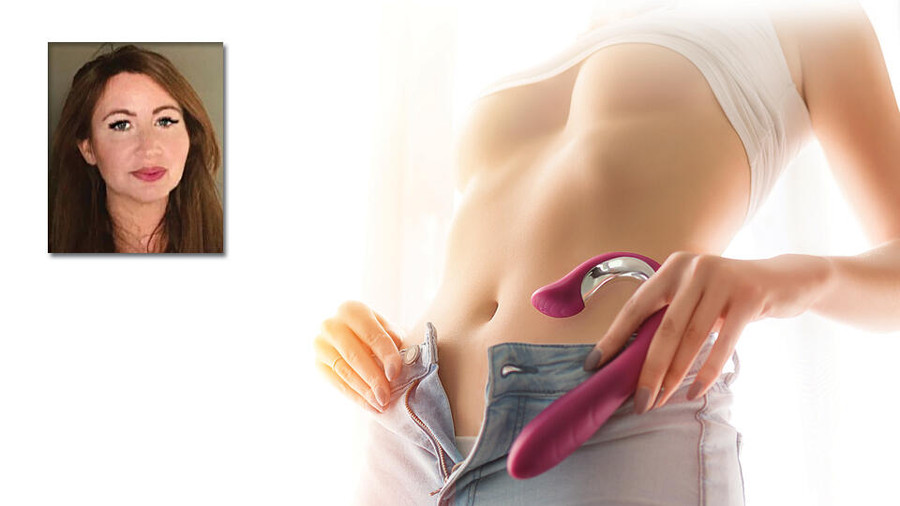
Lockdown loving has been a hot topic over the last few months, with articles about keeping your sex life alive when you’re stuck in close quarters, reports that visits to porn sites are skyrocketing, and people across the country realizing that “more time to relax” often equals “more time to masturbate and have sex.” Back in April, Business Insider reported that sales of sex toys had skyrocketed — no doubt due to people finding new ways to pass the time when they didn’t have work and commuting eating into so much of their day.
Of course, the broader picture could be a bit more complicated than that: the self-love-in caused by lockdown has been hampered by the fact that we’re locking down due to a pandemic. Grief, stress, anxiety, imminent recession: none of these things are particularly conducive to feeling sexy, and the nation — indeed, the world — will likely spend a long time recovering from this collective trauma even if we do manage to find that gold-dust vaccine soon.
I think we’d be much happier embracing our change of pace, allowing for 40 percent more masturbation — and a hell of a lot less stress.
I’ve read many articles over the last couple of months about changes we’ve implemented during coronavirus that we could do with keeping in the long term. More flexibility in when and where we work is definitely one of them, as well as increased cycling and walking to ease the strain on public transport. But what about the changes that have had an impact on our sex lives? Personally, I think that the increased use of sex toys and porn, combined with more spare time to indulge them, could greatly improve both the physical and mental health of society.
I’m especially keen to understand whether lockdown has helped to ease masturbation stigma, encouraging more people to masturbate and be open about doing so. A fascinating survey by Tenga back in June revealed that 40 percent of men say they’re masturbating more since the start of lockdown. Through my work with Hot Octopuss, I know that masturbation stigma for men — predominantly though not entirely cisgender men — is a huge issue. While sex toys and masturbation for women are now regularly covered in mainstream media, there is still a huge taboo around discussing male masturbation. This is particularly the case where it involves sex toys, and doubly so if those sex toys happen to be anal ones.
The fact that more men are masturbating during lockdown should be good news to everyone. Not only does masturbation have some very specific physical and mental health benefits, but the more people are willing to admit to doing it, the more likely it is that we’ll chip away at the masturbation stigma that has caused so much anguish over decades and centuries. The main reason cited in the Tenga poll for this upswing was that people weren’t located with their partners and so were more likely to be enjoying solo sex, but many also cited simply having more time on their hands. Given this, should we perhaps be factoring “more time to masturbate” into our calculations about what a post-COVID world should look like? I think so.
There’s been plenty of talk of baking sourdough, nurturing plants or taking up arts and crafts to pass the time during 2020, but self-care doesn’t always come wrapped in wholesome packaging. Sometimes self-care — or partner care — involves lube and vibrators and a great porn scene on the laptop. And if we’re working from home more, there’s lots of time to do exactly that.
Recently, the U.K. government has been all but begging people to return to work, and been met with deafening silence from commuters who are sick of jamming themselves into crowded train carriages. When we discuss the reasons for this, we usually focus on the ones that are suitable to be printed on the front page of newspapers: disease transmission in offices or on public transport is a huge risk, there are significant environmental factors involved in daily commuting, and the cost of it — both in time and money — takes a huge toll on people’s lives. But while it may still be a bit taboo to say, I think it’s worth mentioning that our sexual wellness takes a nosedive in these scenarios too. Who really wants to get sexy after two hours being intimate with a stranger’s armpit on a commuter train? Who has the energy to dedicate to an hour of self-love when you’ve spent all day in pointless meetings fueled only by a sandwich?
There’s a huge rush at the moment to “restart the economy.” Those who own office buildings and city-center sandwich chains are champing at the bit to have us all trudging back into work. But those of us in the adult industry are probably much keener to see where this new world could take us. Not only could the parts of the economy in which we work grow significantly, we also recognize that the work we do has a hugely positive impact on people’s way of life.
When we talk about lockdown changing our lifestyle, it’s important to acknowledge that our sex lives are part of our lifestyle too. So when the pandemic is over, and the anxiety and stress it brings starts to fade away, do we really want to go back to how things were? I think we’d be much happier embracing our change of pace, allowing for 40 percent more masturbation — and a hell of a lot less stress.
Julia Margo is the co-founder of Hot Octopuss.