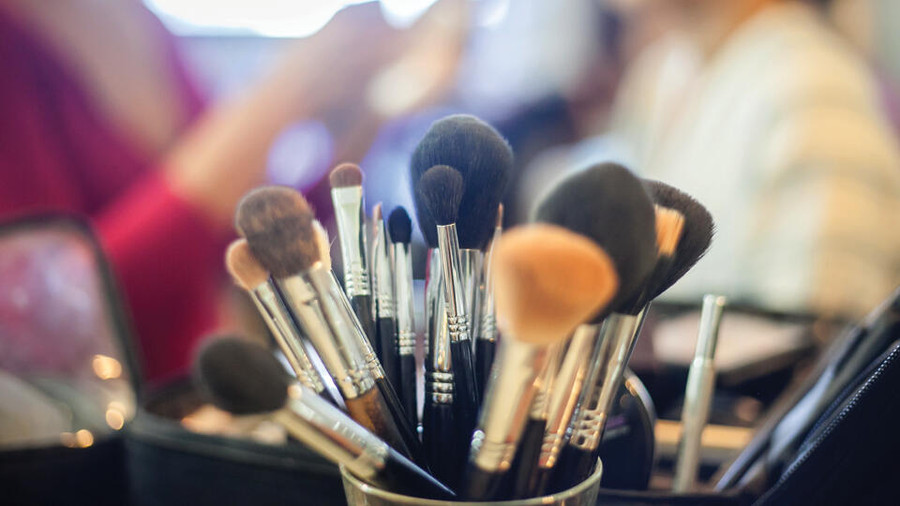
Getting your makeup done for a cam session or photoshoot can feel like a glamorous experience. You get to sit in the makeup artist’s chair like the muse you are as they airbrush your skin to perfection, highlight your cheekbones for the gods and contour every curve of your face into a work of art. One thing you may not be thinking about as you sit there getting pampered is whether the makeup and tools have been sanitized, and that can be a dangerous mistake.
Most professional makeup artists are very careful about this, sanitizing their products meticulously after every single client. I have been on dozens of content shoots and nine times out of ten, the artist’s kits have been immaculate. There was one shoot, however, where the artist pulled out her kit and my inner makeup artist nearly passed out. Her brushes where dirty, several of the makeup products were clearly expired and she didn’t have any disposable mascara wands or lip brushes on hand. Though these incidents are few and far between, you need to know what to do when and if it happens to you. I have had several models tell me about experiences they’ve had with makeup artists that led to acne flare-ups and other unpleasant situations.
Unsanitary makeup can lead to a ton of issues such as eye infections, flu and colds, E. coli and even staph infections.
Unsanitary makeup can lead to a ton of issues such as eye infections, flu and colds, E. coli and even staph infections. Given that we are living in the age of coronavirus it is now more important than ever to ensure everything that touches your face is clean and free of bacteria. Here are a few tips to help you stay safe.
Don't be Afraid to Speak Up When a Kit Looks Dirty
Several models I talked to said they never spoke up when an artist’s kit looked unsanitary because they didn’t want to be impolite. That mistake left one model with a skin infection so bad that she was unable to work for several days. When it comes to your health and safety, you should always feel empowered to say something if things don’t look right to you. And if an artist tries to apply mascara or lipstick to your face straight from the tube, run for the hills! Both of these items are a breeding ground for bacteria that can lead to pink eye and cold sores even in the best-case scenarios.
Make Sure the Artist Sanitizes Tools in Between Models
If you are in a situation where one artist is applying makeup to multiple models, make sure they are sanitizing brushes after each and every application. Most makeup artists carry cleansing sprays and wipes with them that will kill bacteria to avoid transmitting germs from person-to-person. And please never be afraid to ask an artist to use disposable mascara wands and lip brushes if you don’t see them doing so already. It is your right to keep yourself healthy no matter where you are and who you are working with.
Carry Your Own Disposable Applicators and Sanitizing Sprays
I admit this one may sound a little extreme, but once the world gets back to business after the stay-at-home orders have been lifted, we will have to be more careful than ever. I have always brought extra disposable applicators and makeup sanitizing spray with me to every shoot I have ever worked on just in case. Luckily, as I mentioned above, I only needed to use them once, but boy was I glad I had them handy!
Sanitize Your Own Makeup Regularly
If you are doing your own makeup, make sure you sanitize your products and tools regularly even if you are the only one using them. As someone who works with makeup both personally and professionally, I hate washing my brushes. It’s time-consuming, but given the number of nasty germs that can be lurking, it’s something that needs to be done at least once a week. To wash your brushes and sponges, try a cleanser like Sonia Kashuk Makeup Brush and Sponge Shampoo and Cleanser ($9), or use a mild dish soap that won’t irritate your skin and ruin your brushes.
When it comes to the products themselves, you should sanitize eyeshadow palettes, blushes and compacts regularly by spraying them with a makeup sanitizing spray (my go-to is BeautySoClean Cosmetic Sanitizer Mist, $16). As for your lipsticks, lipliners and eyeliners, you can wipe them down with makeup sanitizing wipes (BeautySoClean makes these as well). If you don’t have access to any of these products, you can also put a little 70% isopropyl alcohol in a spray bottle, spritz it on your products and wipe away the excess afterwards. The entire process sounds daunting, but let’s say you did your makeup while you had a cold. Maybe you didn’t have any symptoms yet so you had no idea you left all those germs on the makeup products you used that day. The next time you do your makeup – and every time after that – you would run the risk of giving yourself the same cold over and over again. Sounds way more time consuming than just sanitizing your makeup to begin with, right?
Don't Share Makeup ... Ever
It may sound like fun to sit around with your friends and share makeup palettes while you are getting ready to shoot, but you’ll be sharing a whole lot more than eyeshadow colors and poppin’ highlight. You’ll also be sharing viruses, bacteria and who knows what else with the whole group. When it comes to germs, sharing is the opposite of caring, so don’t do it!
Jackie Backman is the Content Manager for Cams.com. She has been working in the industry for over 13 years and specializes in copywriting, beauty and social media management. You can follow her @beautychaoticofficial on Instagram.