


Global adult platforms often enter new markets with a familiar assumption: If their checkout accepts major cards, they're ready for local customers. In reality, payment habits vary widely by country. Dutch consumers use iDEAL for online shopping, BLIK is a leading e-commerce payment method in Poland, and India's UPI handles billions of transactions each month.
A checkout that looks complete from the merchant's perspective can still feel incomplete to the customer. Some users lack a suitable card, while others face issuer declines, particularly with international or high-risk merchants. Even when a card is available, asking customers to abandon familiar payment habits adds friction at the most sensitive point of purchase.
For adult platforms, Brazil shows what can happen when cards are no longer the only practical route to the customer: greater access, a different authorization experience and less friction at checkout.
For adult platforms, that friction can be costly. Purchases often happen within short decision windows, while security, privacy and billing concerns already give customers reasons to hesitate. The same offer can perform very differently depending on the payment options available at checkout.
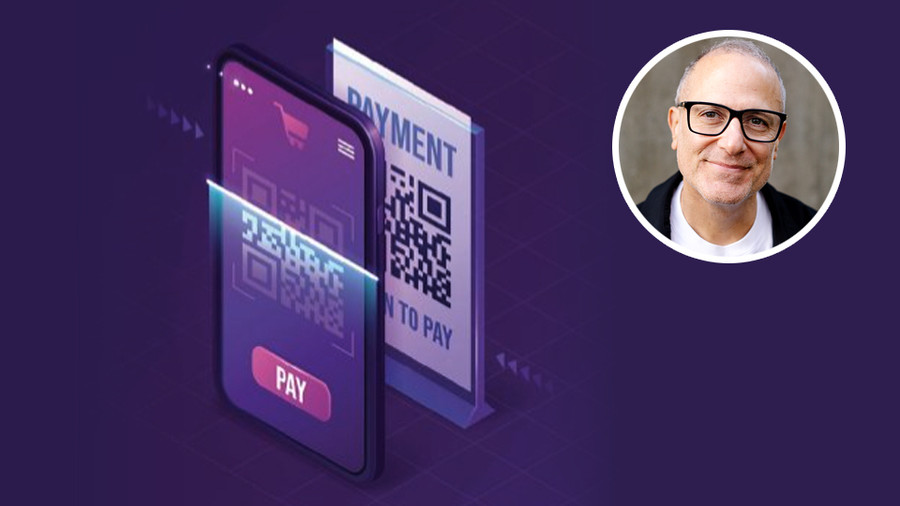
Brazil offers a useful example of what can happen when a local payment rail becomes part of everyday financial behavior. Launched by the Central Bank of Brazil in 2020, PIX allows customers to pay businesses directly from checking, savings or prepaid payment accounts. At checkout, users typically scan a QR code or receive a payment code, then authorize the transaction through their banking or payment app.
Its recurring-payment extension, PIX Automático, brings a similar model to subscriptions and other recurring charges. Customers authorize the arrangement through their financial app, allowing subsequent payments to be initiated automatically without requiring approval for every transaction.
PIX quickly evolved from a new way to transfer money into a system used in everyday commerce, accounting for 47% of Brazil's non-cash transactions by late 2024. For adult platforms, Brazil shows what can happen when cards are no longer the only practical route to the customer: greater access, a different authorization experience and less friction at checkout.
How Local Payment Methods Expand Conversion Opportunities
A card-only checkout assumes customers have a suitable card and that their issuer will approve an adult transaction. That limitation can be significant. Our data shows that adult merchants in Latin America can lose up to 45% of potential sales when local payment methods are unavailable.
PIX gives merchants another route to customers with an eligible bank or payment account, including those without a credit card. It also changes the authorization flow. Card payments move between the merchant, acquirer, card network and issuer before approval, while PIX transactions move directly between participating financial institutions through Brazil's instant payment system.
The impact can be significant. One merchant found that Brazilian visitors were converting at roughly half the rate of its European traffic, with support tickets pointing to payment problems. After the merchant added PIX, its approval rate in Brazil rose from 52% to 81% within two weeks.
That experience is reflected in broader performance data. Merchants that enabled PIX saw an average 30% increase in new sales from Brazil, while PIX transactions achieved a 90.51% acceptance ratio, with acquirer-level acceptance reaching 95.94%.
The lesson goes beyond PIX itself. Local payment methods can expand the addressable audience and give legitimate transactions another route to approval by meeting customers where they already prefer to pay.
Why the Authentication Experience Matters
PIX's performance isn't only about access and approval rates. How customers authorize payment can also change the checkout experience.
With a card payment, customers enter reusable financial information at checkout and trust the parties involved to handle it securely. With PIX, they confirm a specific transaction through a banking or payment app they already use.
For adult customers, that distinction can matter. PIX isn't anonymous, and the purchase is still recorded, but customers don't have to enter card details at checkout or agree to store them for future use. Instead, authentication takes place in a familiar financial environment.
That familiarity can reduce uncertainty at checkout. Customers spend less time figuring out the payment process or wondering how their financial information is being handled. In adult retail, where purchase decisions can happen quickly, removing that friction can help customers complete a transaction they already intended.
From Payment Option to Payment Strategy
Simply adding a familiar payment option doesn't automatically solve the checkout problem. Funnel data shows that availability and completion aren't the same thing; some customers still leave after selecting PIX.
The surrounding experience matters. How prominently is the payment method displayed? Is the transition to an external app clear? Can customers easily return after authorization? And is the right payment method being shown to the right customer?
That's the difference between simply offering local payment methods and building a payment strategy around them. Merchants should measure selection, initiation, approval and abandonment by market, then use that data to understand where customers are dropping off. The same payment method can perform very differently depending on how and when it appears in the checkout journey.
Beyond Brazil
PIX isn't a template every market can copy, and its success doesn't mean cards are going away. What Brazil does show is how much can change when an account-to-account payment system reaches mass adoption. For adult platforms, the opportunity is to recognize those shifts early and adapt checkout to local payment behavior.
Brazil offers a clear reminder that payments are local. Merchants that understand how customers actually pay in each market can remove friction before they ever need to optimize pricing, marketing or conversion. PIX happens to be Brazil's answer. Every market has its own.
Mitch Platt is co-founder, CEO and president of Vendo Services, a global payments company specializing in high-performance solutions for e-commerce and high-risk merchants. With more than two decades of experience in fintech and payment processing, Platt is a frequent industry speaker known for translating complex payment trends into practical strategies that drive revenue, improve authorization rates and reduce risk. His expertise spans AI, payment orchestration, alternative payment methods, fraud prevention and regulatory compliance. Learn more at vendoservices.com.



