



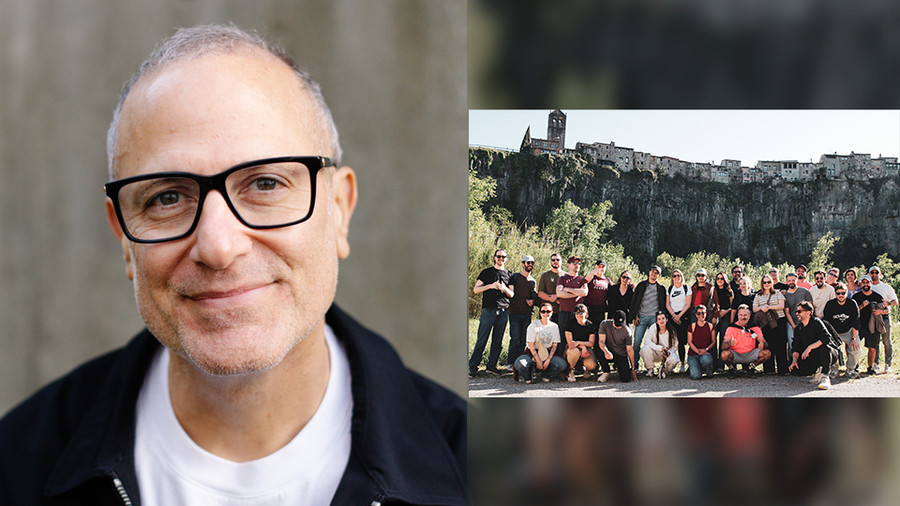
More than 20 years ago, three entrepreneurs in Barcelona began gathering over beers to pitch, dissect and routinely destroy one another's business ideas. The ritual was simple: One person arrived with a concept, while the other two tried to expose every weakness. Any proposal that survived earned another look. Most did not.
After months of killing ideas, the group finally turned its attention to a problem hiding in plain sight.
"We asked a simple question: What if merchants could offer local payment methods in every market they served?" recalls Vendo CEO and co-founder Mitch Platt. "Would more customers complete their purchases? Could we remove other friction from checkout too?"
That question became the foundation of Vendo, a global payment provider built to help merchants convert more traffic, reach customers across borders and navigate the evolving demands of high-risk commerce.
Today, the company serves merchants through a mix of payment orchestration, local payment methods, fraud prevention, regulatory expertise and customer support. Its technology has changed considerably since those early meetings, but the central mission remains the same.
"More than twenty years later, we're still chasing the same mission: remove friction, help merchants sell more and never stop asking how checkout can be better," Platt says.
From Pizza and Beer to Payments
Entrepreneurship came early for Platt, who started his first company at 16 and has spent much of his career building businesses. Not all of them succeeded, a fact he considers an essential part of his education.
"There have been plenty of failures along the way — probably more than successes — but that's where I've learned the most," he admits. "Failure is a brutally honest teacher, and it has made me a better founder and leader."
Before Vendo, Platt was an expat living in Barcelona and helping a mobile payments company expand into English-speaking markets. The company served the adult industry, though Platt didn't know that when he accepted the position. He was drawn to the technology, the rapid pace, and the challenge of scaling an international business.
The experience revealed how many obstacles stood between global consumers and a completed online purchase. Platt and his future co-founders recognized five central barriers: payment methods, language, risk and compliance, customer service, and currency and pricing.
Customers without credit cards were shut out, while others abandoned purchases when checkout pages appeared in unfamiliar languages. Merchants faced fraud and chargebacks, international buyers had to navigate costly U.S. support numbers, and shoppers were expected to calculate currency conversions before completing a transaction.
To determine sustainable pricing across different markets, the founders used an unconventional metric.
"We created what we called the 'Pizza and Beer Index,'" Platt says. "We researched the local cost of two delivered pizzas as a benchmark for a monthly subscription and a beer at a bar as the benchmark for a trial. It sounds funny, but it worked. In some countries we could charge more. In others we charged less, sold far more, and ultimately made more."
Those five barriers became Vendo's blueprint. Adult and other high-risk merchants proved natural partners because they were already operating internationally while contending with elevated fraud, frequent declines, complex regulations and a limited pool of providers willing to serve them.
"We weren't just entering the payments business," Platt explains. "We were entering the friction-removal business."
Putting the World on the Table
Vendo's earliest years were marked by rapid growth, confidence and a scrappy willingness to make an impression. During roadshows, the team would enter boardrooms, spread an enormous map across the table and cover it with foreign currency. They would then ask merchants where their sales originated. Most reported that 80% to 90% came from the United States.
The next question was where their traffic originated.
"The answer was almost always fifty-fifty — half U.S., half international," Platt says. "Half their traffic was generating nearly all their sales, meaning the other half was being left on the table. Then we'd ask, 'What if we could sell to that other fifty percent?' That presentation never lost."
An early relationship with Playboy gave the young company one of its most consequential breakthroughs. Platt met the brand's COO at an XBIZ event inside a dark restaurant-nightclub, where he was abruptly instructed to sit and deliver his pitch without a deck or preparation.
"I'd just finished a roadshow, so I pitched him cold and nailed it," Platt recalls. "He said, 'If you can do what you say, come to Chicago and prove it to my team.' We did."
Playboy became one of Vendo's first beta customers and remains a client more than two decades later. The relationship gave other adult businesses the confidence to meet with the emerging payment provider and helped establish Vendo throughout the industry.
"That relationship opened countless doors because when the biggest brand in the industry trusts you, everyone else takes the meeting," Platt affirms.
Finding the Best Path to "Yes"
As Vendo grew beyond its early successes, one ambitious project tested some of the assumptions guiding its development. The company invested millions in Vendo Data Tools, an advanced analytics platform introduced long before AI-driven insights became commonplace. The technology was strong, but many merchants were not ready to entrust a single provider with so much of their processing volume, data and traffic.
"The problem wasn't the technology," Platt says. "The problem was assuming merchants wanted what we wanted."
The experience changed how Vendo approached innovation. Rather than starting with what the company believed merchants should want, its teams learned to listen first and build around genuine demand. That lesson shaped the philosophy Vendo now describes as "intelligent payments with a human touch," combining sophisticated technology with responsive service, clear communication and accountability.
"We don't build products to impress ourselves," Platt says. "We build products that solve real problems for merchants. Sometimes the smartest thing a founder can do is admit the market is right."
The same lesson informs Vendo's approach to payment orchestration. Platt describes the goal as giving consumers the familiar payment options they trust while managing the complexity merchants would otherwise face behind every transaction.
"Our job is to give them every possible chance to complete that sale," Platt says. "That means connecting the right banks, payment methods, risk tools, and recovery strategies, and making them work together intelligently."
The Next Chapter
After more than two decades in payments, Platt expects Vendo's next chapter to unfold in an environment where change arrives faster and carries greater consequences.
"Payments have always evolved," he says. "What's changed is the speed and the stakes."
Preparing for that future means giving Vendo greater independence and control over its operations. The company has evolved from an independent sales organization into a payment facilitator and earned its Payment Institution license. It is now pursuing Payment Initiation, Electronic Money Institution capabilities and other opportunities further along the payments value chain.
Platt also believes Vendo's continued growth depends on a culture capable of carrying the company forward. Its values are organized around the acronym IMPACT: Integrity, Mastery, Passion, Ambition, Care and Tenacity, with customer service at the center.
"Customer First is our operating system," he affirms.
That common compass is particularly important for a fully remote company whose employees are empowered to make decisions and influence its direction. Platt takes pride in building an organization that no longer depends entirely on its founders.
"We look different. We walk different. We sound different," he says. "That's why talented people want to join us and why I believe Vendo's best years are still ahead."
His long-term ambition is for Vendo to become one of the world's leading acquiring institutions for high-risk commerce. Yet he hopes the company's reputation will ultimately rest on something more enduring.
"If you ask what I truly hope Vendo is known for ten years from now, it isn't a license," Platt says. "It's trust."
For Platt, that means making Vendo 100% referenceable, with merchants, employees, partners and regulators willing to recommend the company based on their experiences.
"Technology will change. Regulations will change. Payment methods will change. Trust won't," he concludes. "If Vendo is still known as the company that puts merchants first, removes friction, and earns trust every day, I'll consider that our greatest success."



