



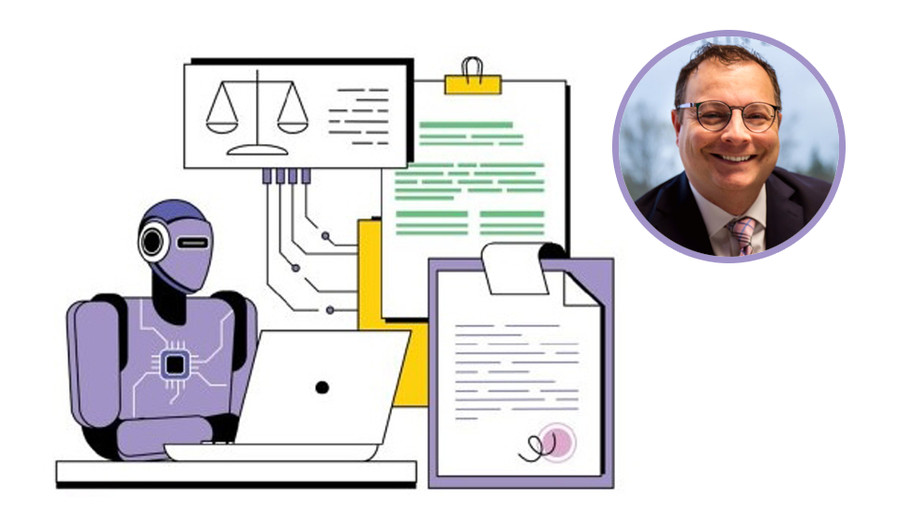
Artificial intelligence can write a contract in seconds, but that does not mean it can write the contract your business actually needs.
Across the adult industry, operators, creators and producers are increasingly using generative AI to prepare model releases, performer agreements, privacy policies, takedown notices, employment documents and responses to regulators. The appeal is obvious: Legal work is expensive, AI is fast and the resulting document often looks impressively professional.
Generative AI is designed to produce plausible language, not guaranteed truth. When a system lacks reliable information, it may still provide an answer. In legal contexts, that can mean fabricated court decisions, nonexistent statutory sections, imaginary filing procedures or incorrect deadlines.
That polished appearance is exactly what makes the practice dangerous.
An AI-generated legal document can contain proper formatting, sophisticated terminology and confident citations while being fundamentally wrong. It may rely on repealed law, invent a legal requirement, omit a mandatory provision or combine rules from jurisdictions that have nothing to do with one another. Unless someone qualified reviews the result, those defects may not become apparent until a dispute, audit or enforcement action is already underway.
At that point, the savings disappear quickly.
Drafting Is Not a Legal Strategy
The first mistake is assuming that legal work consists primarily of writing. Before drafting an agreement, a lawyer must identify the parties, determine which laws apply, understand how the business operates, assess the relevant risks and decide what the document should accomplish. The language comes afterward.
AI often begins drafting before the user has provided the facts needed to shape the agreement. A "standard performer release" may appear legitimate yet fail to account for the production location, the performer's residence, the distribution model, or intended uses such as subscription platforms, promotional clips and digital replicas. It may also overlook employment classification, recordkeeping, consent and age-verification requirements, as well as local restrictions on waivers, perpetual licenses, and publicity rights.
Each of those details can affect whether the agreement is valid and enforceable. A clause that works in Nevada may be ineffective in California, irrelevant in Cyprus or unlawful elsewhere. AI can blur those jurisdictional differences by combining legal language from multiple sources into a single document.
When AI Invents the Law
Generative AI is designed to produce plausible language, not guaranteed truth. When a system lacks reliable information, it may still provide an answer. In legal contexts, that can mean fabricated court decisions, nonexistent statutory sections, imaginary filing procedures or incorrect deadlines. Courts have already sanctioned attorneys for submitting AI-generated filings containing fake authorities.
Businesses face the same danger outside the courtroom. An AI-generated response to a regulator could unnecessarily admit facts, identify the wrong entity, waive objections, or miss a filing deadline. It might also confuse criminal penalties with administrative fines, promise measures the company cannot implement, expand an investigation by volunteering unrelated information or use an informal email when a formal response is required.
Admissions may be impossible to retract, while missed deadlines can allow regulators to proceed by default. AI can mishandle both the law and procedural strategy while sounding completely certain. Such errors can contribute to disputes involving contracts, advertising, copyright ownership, privacy, and unauthorized use of a person's name, image, or likeness, allowing costly mistakes to be created and deployed on an unprecedented scale.
Why Adult Businesses Face Greater Risk
Adult businesses must be especially careful with AI-generated legal documents because they operate under complex, overlapping legal regimes. A single website may face rules involving performer consent, age and identity records, content classification, obscenity, privacy, consumer protection, age assurance, payment processing, intellectual property and platform moderation. Requirements may vary based on the locations of the company, performer, customer, server and payment provider.
Documents may also be scrutinized by regulators, financial institutions, platforms, investors, opposing attorneys and law enforcement. A flawed policy, release or compliance declaration could jeopardize consumer privacy, payment processing, content rights, acquisitions or regulatory standing. AI cannot reliably weigh all those consequences without careful, informed human direction.
"The AI told me" is not a Defense
Responsibility remains with the person or company that signs, publishes or submits the document. A chatbot's involvement will not excuse a false regulatory filing, invalidate a performer's legitimate claim or persuade a court to enforce a defective contract.
The use of AI may also raise confidentiality concerns. Legal questions often involve sensitive information, including performer identities, banking details, corporate structures, unpublished allegations and litigation strategy. Entering that information into a consumer AI service could expose it to retention, internal review or other uses, while communications with an AI system generally do not become privileged simply because the user is seeking legal guidance. Before sharing sensitive information, businesses should review the provider's retention, training, access and deletion policies.
AI Is Not Your Lawyer
AI still has a place in legal work. With proper oversight, it can summarize documents, identify issues, compare versions, improve organization, prepare questions for counsel and produce first drafts. The key is to use AI to assist the legal process, not to control legal decisions.
A sensible workflow includes several safeguards:
- Obtain qualified human review before signing, publishing or filing an AI-generated legal document.
- Verify every legal citation against an official source.
- Confirm the correct parties and legal entities rather than relying on brand, domain or studio names.
- Independently check jurisdiction, governing law, service requirements and deadlines.
- Remove unnecessary confidential information and use placeholders whenever possible. Never upload identification documents, performer records or privileged communications without authorization and an appropriate security review.
Ask counsel to review both the underlying business process and the document. Even a well-written release or privacy policy cannot correct procedures the company fails to follow.
The Most Expensive Document May Be the Free One
Legal documents allocate risk, and their true value becomes clear when something goes wrong. A missing sentence can determine ownership of an entire content library, an unnecessary admission can support a regulatory fine, and an invalid release can threaten years of distribution revenue.
AI can quickly produce something that resembles a legal document, but sound legal judgment still requires informed human review. Before betting your company, content library or reputation on its output, put an experienced human between the draft and the signature line. The most dangerous legal document may be the one convincing enough that nobody checks.
Corey D. Silverstein is the managing and founding member of Silverstein Legal, which represents all areas of the adult industry. His clientele includes hosting companies, affiliate programs, content producers, processors, designers, developers, operators and more. He is licensed in numerous jurisdictions. Contact him via MyAdultAttorney.com, corey@silversteinlegal.com or 248-290-0655.



