



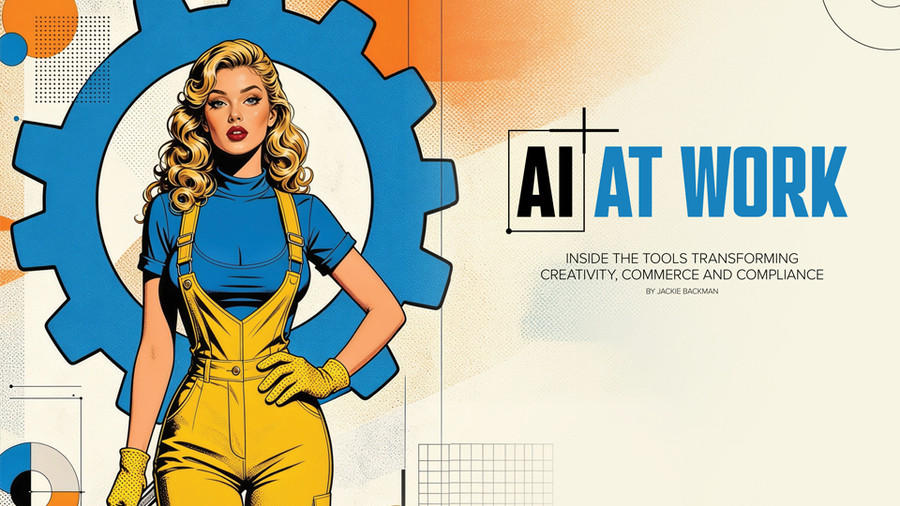
For years, artificial intelligence felt like the plot of a science-fiction movie. Pop culture gave us Skynet from “The Terminator,” the replicants of “Blade Runner” and countless visions of machines replacing human creativity altogether. AI was cast as either humanity's next great breakthrough or the beginning of a dystopian future.
In reality, AI arrived and quietly went to work.
AI should not operate completely on its own. The strongest approach combines technology, customized rules, merchant knowledge and experienced human review. That's especially important because being too aggressive can block good customers along with fraud.
Across the adult industry, AI has evolved from an emerging technology into a practical business tool. Companies are streamlining operations, while creators are organizing content, drafting marketing copy, editing photos and freeing up more time for their fans.
For an industry that has spent decades pioneering everything from streaming video and subscription platforms to virtual reality and digital payments, AI represents the latest chapter in a familiar story. Yet unlike many previous technological shifts, its greatest impact may not be measured by what it replaces, but by how it enhances human creativity, strengthens businesses and raises the value of the qualities machines cannot replicate.
Christoph Hermes of airisprotect.com sees AI as the industry's next natural evolution.
"The adult industry has often been an early adopter of technologies that later become mainstream," he says. "It appears we are seeing a similar pattern with AI."
This time, however, adoption looks a little different. While many mainstream businesses are using AI to automate workflows and improve productivity, companies across the adult industry are increasingly investing in consumer-facing AI experiences. AI-powered chat, virtual companions and customizable digital characters are changing how consumers interact with creators and content.
For JxGx of Xenoslit AI, the technology may be changing quickly, but the motivations behind it are not.
"People still want the fundamental experience of being with another individual presence," he says. "People still have fantasies they want to explore, and will explore those fantasies however the medium exists."
That demand is driving rapid innovation across generative AI. At the same time, many adult businesses have taken a more measured approach than their counterparts in other industries, carefully weighing questions surrounding performer likeness, consent, payment processing and regulatory compliance before expanding their AI initiatives.
Performer and entrepreneur Cherie DeVille believes that thoughtful approach could ultimately shape how AI is adopted far beyond the adult industry.
"As always, we're spearheading these changes because we're one of the first communities affected by new technologies," she says. "The protections we put in place for ourselves will end up being the protections a lot of other people rely on, too."
Mitch Farber, CEO of NETbilling, says AI is also helping businesses streamline customer support by handling routine questions, summarizing customer interactions and directing customers to the appropriate department more quickly.
"It is not replacing knowledgeable support people, especially when payment problems become complicated, but it can make them more efficient," Farber says.
AI's growing role extends beyond operational efficiency. Researchers say the technology is also changing how people explore relationships and intimacy, giving consumers experiences tailored to their individual preferences.
"It's important to recognize that AI isn't a monolith," says Dr. Ellen Kaufman, senior research associate at the Kinsey Institute. "The through-line between all of these AI-facilitated experiences seems to be hyper-individualization; customizing your experience (or even your partner) to your exact specifications."
As AI becomes a bigger part of the industry, businesses are looking beyond what the technology can generate and focusing on how it fits into their long-term strategy.
"The biggest shift I've seen isn't just technology — it's the industry's mindset," says Steve Lightspeed, founder and CEO of Lightspeed AI. "Early on, everything was about the tech. A few years later, that novelty has worn off, and that's a good thing. The focus has come back to what always mattered — stories, characters and understanding your audience."
Expanding the Creator Toolbox
Rather than taking over the creative process, AI is helping creators manage the behind-the-scenes work that keeps their businesses running, leaving more time for content creation and the human connection that fans value most.
"The biggest value creators are getting from AI is in the work that eats up their day and never shows up on camera," says Alex Lirette, co-owner of the Teasy Agency. "Every hour you claw back from admin is another hour you can spend creating or connecting with fans, which is where the money is made."
That approach has resonated with creators like multi-XMA-winning performer Katie Summers, who now incorporates AI into nearly every part of her business. She uses it to edit photos for social media compliance, generate captions, create logos, organize monthly goals and build content calendars, freeing up more time to connect directly with fans.
"AI helps me stay organized so my fans get more out of me as a person," says Summers. "That gives me more time for customs and chatting online, which is what I pride myself on as a brand."
Even as AI takes on more of the behind-the-scenes work, Lirette encourages creators to treat it as a starting point, not a finished product.
"Let it write the caption, then rewrite it so it sounds like you said it," he says. "Using AI doesn't make you inauthentic, handing over your voice does."
Beyond streamlining everyday tasks, AI is also expanding what's creatively possible. For JxGx, today's creative tools are opening new opportunities for creators willing to experiment.
Advances in open-source image models, video-generation tools and specialized LoRAs — AI add-ons that enable image generators to reproduce specific artistic styles, characters or visual concepts — have made it easier to develop new visual identities, marketing concepts and storytelling formats.
"It gives us access to intelligence that responds to our creative input," he says. "In many ways, this makes us more creative, since we now have a collaborator at hand to help us craft, hone and generate our ideas into business plans, new marketing ideas, video concepts, augmented photo sets and beyond."
The Digital Doppelganger
As AI becomes more sophisticated, it's moving beyond behind-the-scenes workflows and into new ways for creators to connect with fans. AI-powered digital doubles allow performers to extend their brands while maintaining control over their likenesses. Performer Rome Major has already taken that step, creating an AI version of himself through JOI AI that is clearly presented to fans as an AI-powered digital double.
"Having a digital twin that helps take some of the workload off your shoulders is a smart idea," he says. "One of the biggest advantages was how easy it made content creation. I customized it to look like me, dress like me and even match my personality and swagger, and I could post through the platform to generate content and captions for my social media. It became another tool to keep my audience engaged while saving me time."
As digital doubles become more common, experts say transparency will be just as important as the technology itself.
"Audiences care whether they're watching human content, AI-assisted content or a fully synthetic creation," says Hermes.
DeVille agrees.
"The fan should know if they're looking at AI or a real scene," she says. "The line should be transparency — telling people when something has been AI generated and when it's organic."
While digital doubles are giving creators new ways to engage with fans, AI companions are creating entirely new forms of interaction for consumers.
"I think a significant reason people are drawn to AI companions comes down to fundamental human needs, including connection, validation, emotional safety and sexual exploration," says Melissa Blundell Osorio, a researcher at the Kinsey Institute. "These interactions can offer relatively low-risk intimacy without the fear of rejection, which can be especially appealing for people experiencing loneliness, social anxiety or a recent breakup."
Even as AI companions become more sophisticated, those working closest to the technology believe human performers will remain at the center of the experience.
"The human adult performer is irreplaceable," JxGx says. "AI companions can be creative and sexy, but they can't hold my hand or touch my face. Their purpose is to stimulate the imagination through fantasy, but they can't make the human choices performers make when they’re on camera."
Lightspeed shares that perspective.
"What hasn't changed is the human heart,” he says. “AI will never be able to replicate that because passion still comes from people."
Turning AI Into ROI
Not every AI breakthrough is designed to appear on screen. While digital doubles and AI companions are capturing attention, many of the technology's biggest business gains are happening behind the scenes, where companies are using AI to streamline operations, strengthen fraud prevention, improve customer support and make faster, more informed decisions.
For Jonathan Corona, COO of MobiusPay, that's where AI delivers its greatest value. The key, he says, is to focus less on the technology itself and more on the problems it solves.
"For most merchants, AI should first be used to improve productivity," he advises. "Things like drafting customer communications, summarizing contracts, analyzing sales trends, organizing documents and automating repetitive administrative work all produce immediate returns."
He says businesses are also seeing value from AI-powered fraud screening, customer support, inventory forecasting and intelligent reporting, but cautions against adopting the technology simply because it's fashionable.
"If you can't clearly explain what problem you're solving or how you'll measure success, you're probably deploying technology for the wrong reasons," he adds.
Farber also encourages merchants to focus on practical AI applications that deliver immediate value.
"AI can help write product descriptions, prepare email campaigns, summarize reports and identify unusual transactions or customer behavior," he says. "Many of these tools are becoming affordable even for smaller businesses."
Marketing and business intelligence have also become major beneficiaries. AI can rapidly generate variations of promotional copy, analyze campaign performance and identify patterns that might otherwise go unnoticed, allowing businesses to test more ideas in less time and make smarter decisions based on data rather than instinct.
Fraud prevention is another area where AI is rapidly changing the landscape.
"The barrier to entry for fraud prevention has dropped dramatically," Corona observes. "AI has become essential because it can recognize subtle behavioral changes, detect anomalies across millions of transactions, and identify emerging attack patterns far faster than humans can."
Farber says AI is reshaping not only how businesses fight fraud but also how bad actors engage in it.
"Fraudsters are using AI to create more convincing emails, fake identities, websites and customer communications," he says. "AI and machine learning will become increasingly useful for recognizing new patterns and connecting warning signs across large numbers of transactions."
Cathy Beardsley, president and CEO of Segpay, says those advances are already producing measurable results.
"AI-driven fraud detection tools will have the biggest impact on payments," she says. "Early indications are showing a reduction in chargeback rates by 20 to 40 percent. And, just as importantly, they're cutting down on false positives."
She believes AI's greatest advantage may be its ability to stop fraud before it happens.
"AI is now helping us identify fraud signals before the transaction completes, which means we're not chasing down a chargeback after it lands," she says. "AI can identify patterns and anomalies that traditional rules-based systems often miss, allowing us to respond more quickly to emerging threats. In this sense, AI is a game changer."
For subscription-based businesses, AI is also improving revenue recovery. Beardsley points to AI-powered dunning management, which automatically retries failed payments that might otherwise result in lost revenue, along with tools that help automate compliance, identify operational risks and deliver deeper business insights.
"You simply can't fight AI-driven fraud with people and static rules," Beardsley says. "We must use 'Good AI' to defeat 'Bad AI.'"
Even as AI assumes a larger role in business operations, experts caution against viewing it as a replacement for human expertise.
"AI should not operate completely on its own," Farber says. "The strongest approach combines technology, customized rules, merchant knowledge and experienced human review. That's especially important because being too aggressive can block good customers along with the fraud."
Corona believes the best AI experiences are the ones customers never engage with.
"Consumers don't wake up hoping to experience more AI. They just want payments to be fast, secure and effortless," he says.
Looking ahead, Beardsley says AI will become more deeply integrated into everyday payment operations, allowing businesses to work more efficiently while customers enjoy a smoother experience.
"The biggest gains are going to happen where consumers never see them," she says. "Specifically, fraud screening, underwriting, compliance and reconciliation. It's the unglamorous plumbing part of our industry."
For Beardsley, the bigger opportunity lies in what those insights could unlock for merchants.
"The part I'm most excited about is access," she says. "If AI can accurately show an adult merchant is genuinely low-risk, backed by real data, it could unlock better rates and even mainstream banking connections."
For an industry that has long faced heightened scrutiny from financial institutions, that possibility could represent one of AI's most significant long-term business benefits.
"The future of AI isn't replacing a relationship," Beardsley says. "It's about removing friction and risk in that relationship for the benefit of the merchant and its payment processing partner."
Corona agrees that businesses seeing the greatest success won't necessarily be the ones using the most AI, but the ones deploying it with clear purpose and human oversight.
"I don't believe AI should ever become the only decision maker," he says. "The technology identifies what deserves attention, while people provide context, judgment and accountability."
The New Legal Landscape
While AI has opened the door to opportunities the industry could barely imagine just a few years ago, it has also opened a legal can of worms.
Digital impersonation, copyright, consent and performer likeness have quickly moved from theoretical concerns to everyday business challenges, while lawmakers continue working to catch up with the technology.
"We're in a blurry, experimental phase — it's a bit of an innovation gold rush," says Madeline Thomas, founder and CEO of Image Angel. "AI is fast, accessible and endlessly iterative. We need to make peace with the fact that technology will always outpace systems and safeguards."
She believes that's all the more reason for the industry to build accountability into AI from the outset rather than waiting for regulations to catch up.
"The culture of building runs with a ship-and-patch mentality," she says. "The positive is that the tools designed to catch what's going wrong can move just as fast. They can adapt, hear it early, predict outcomes and act before harm spreads."
Attorney Corey Silverstein says one of the biggest mistakes businesses can make is assuming AI eliminates the need for human oversight. While the technology can improve efficiency across everything from content moderation to fraud detection, companies remain liable for the decisions they make.
"Businesses should view AI as an assistive technology rather than a substitute for sound legal compliance programs," Silverstein warns. "The company — not the AI vendor — will almost always bear the legal responsibility."
Attorney Larry Walters says one of AI's biggest legal challenges stems from the very technology driving its rapid adoption: tools that lower the barriers to content creation can also be used to generate convincing non-consensual deepfakes featuring identifiable performers.
"These images are often generated by bad actors seeking to profit from the creator's name, image and likeness," he says. "However, the images can also be created by managers or marketing companies that are trying to assist the creators, but who end up producing AI content that is damaging to the creator's brand."
Walters says the legal implications extend well beyond deepfakes. Copyright, ownership and AI training data remain unsettled, while federal law still requires human authorship for copyright protection, leaving many fully AI-generated works with little or no protection at all. Meanwhile, payment processor requirements and platform policies have yet to catch up with advances in AI-generated media, creating an increasingly complex compliance landscape.
While attorneys are urging businesses to update contracts for the AI era, creators are also rethinking how those agreements apply to emerging technologies. DeVille cautions longtime performers to take a close look at contracts they signed years before AI became a reality. She argues that broad technology clauses, originally intended to cover routine editing and distribution, were never meant to authorize AI-generated versions of performers.
"When we read those contracts 15 years ago, we were thinking about things like photo retouching, video re-editing, or maybe cutting a scene shorter," she says. "No one would have imagined those contracts being used this way."
DeVille also encourages creators to protect their voices and likenesses wherever possible and have an attorney review AI licensing agreements before signing. While many companies are entering the space promising new opportunities, she cautions that creators shouldn't unknowingly sign away rights to personal brands.
Thomas agrees those precautions are an important place to start, and adds that creators shouldn't have to shoulder the burden alone. She believes stronger protections should be built directly into the platforms where content is created and shared, rather than relying on creators to constantly monitor their names, send takedown notices and clean up problems after the damage has already been done.
"Creators shouldn't have to work for the basics," Thomas says. "Protection at the point of sharing should just be there."
The Next Frontier
If the past three years have demonstrated anything, it's that AI is evolving far faster than most people anticipated. The next phase, however, may be defined less by what the technology is capable of than by how businesses and consumers choose to embrace it.
For JxGx, one of the most exciting frontiers is AI-generated video. As the technology continues to improve, he sees creators using it to produce original content and breathe new life into existing works.
Hermes believes one of AI's most underappreciated developments will be the rise of AI agents.
"Most people still think of AI as a tool that generates text or images," he says. "With AI agents, that changes. These systems can plan, make decisions and complete entire workflows autonomously."
Farber expects many of AI's biggest improvements to happen quietly, behind the scenes.
"Transactions will be evaluated faster, fraud decisions will improve and customer-service representatives will have better information available when helping a merchant or consumer," he affirms.
Over time, he believes payment providers will become more strategic partners, helping merchants identify problems, recommend improvements and make smarter business decisions through AI-powered insights.
But technological progress is only part of the equation. The legal landscape is evolving just as quickly.
"AI regulation is becoming increasingly fragmented," says Silverstein. "Rather than one comprehensive federal law, businesses are facing a growing patchwork of state statutes governing deepfakes, digital replicas, privacy and AI-generated intimate imagery."
He believes transparency will become a defining theme of the next wave of regulation.
"Governments are likely to require clearer disclosure when consumers interact with AI systems or view AI-generated content," he says. "Documentation, recordkeeping and governance surrounding AI deployment will become just as important as the technology itself."
Yet experts believe technology and regulation tell only part of the story. For Osorio, AI's future will be shaped by the intersection of technological advances, changing social attitudes and evolving legal frameworks.
"There will absolutely be an interaction between all three of these," she says. "Technology can evolve quickly, but how society normalizes or stigmatizes AI intimacy will shape how it becomes part of people's lives."
As AI becomes more sophisticated, researchers believe what makes us human will matter even more.
"We know from our research that people place a tremendous amount of value on authenticity and human connection, even within their experiences in the adult industry," says Kaufman. "In a recent study, we found that people were willing to pay more to talk to a human cam model than an AI-generated model."
Thomas believes that demand for human connection could ultimately reshape the digital economy itself.
"I suspect a leveling will come, where the easily verified becomes valuable, and proof of origin starts to command a premium," she says.
For JxGx, that's precisely why the future of AI still belongs to people.
"AI doesn't always 'do it for you,'" he says. "It demands your presence."
- NETbilling
- Segpay
- MobiusPay
- Teasy Agency
- Lightspeed AI
- Image Angel
- airisprotect.com
- Xenoslit AI
- Jonathan Corona
- Katie Summers
- Cherie DeVille
- Corey Silverstein
- Rome Major
- Cathy Beardsley
- Mitch Farber
- Larry Walters
- Steve Lightspeed
- Christoph Hermes
- Alex Lirette
- JxGx
- Dr Ellen Kaufman
- Melissa Blundell Osorio
- Madeline Thomas



