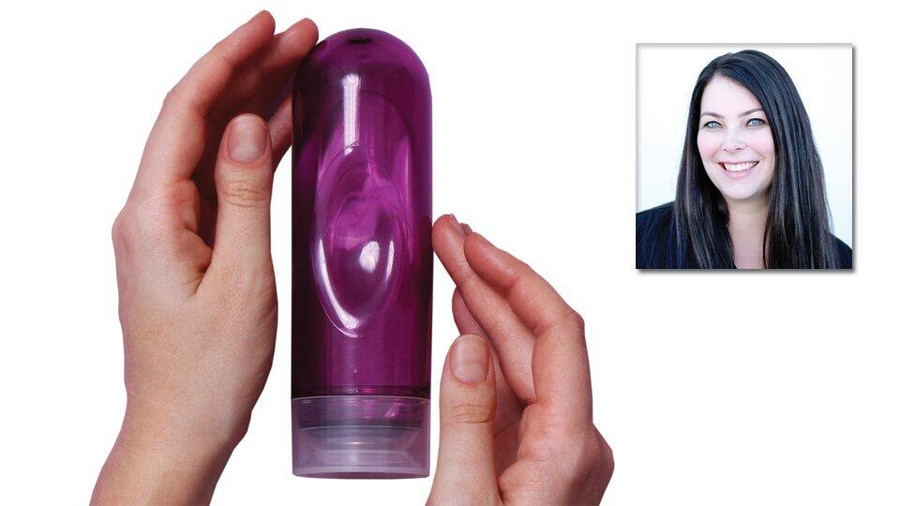
September always comes along with a “back to school” vibe, which makes me want to share what I know with the world! And since I’ve become an expert on personal lubes, let’s start there. Where I work at United Consortium, we offer the full range of liquid products, so I’m always learning how they’re made as well as what purpose they fulfill.
Let’s start with the basics – everyone loves a good, solid water-based lube — I know, because our H2O flies off the shelf. Water-based lubes are very appealing because they don’t get tacky, they wash out of clothes and sheets easily, and they have a natural feel to them that mimics our body fluids. I don’t know many women who don’t have a bottle of water-based lube tucked away in their nightstands. But because water-based lubes are primarily made from – well, water, they sometimes don’t have the viscosity to withstand the friction you’re into in the moment of play time. That’s where silicone comes in.
Silicone formulations have an extraordinary feel. They’re thick and viscous, able to withstand the close, tight situations without flattening out and disappearing completely. With anal sex, for example, when you want to feel that layer of lube working for you no matter what (because no one can produce their own lubrication in that area), silicone is the superior choice. No matter how tight the squeeze, it stands up to the test and gives you that barrier you want that feels like a cushion and makes the experience much more pleasurable. Then of course there are hybrid lubes that are somewhere in between.
There’s a lot of talk about what’s good, bad and ugly with lubes, and I want to educate people that “paraben-free” is not synonymous with better, and paraben is not a dirty word. It may not be everyone’s choice in preservative due to specific or unique sensitives, but by and large throughout the world, this system is highly regarded as the gold standard in formulations. I find that the fear of safe preservatives serves to highlight a gap in consumer knowledge — all the more reason to go back to school!
In my view, the more troubling trend in lubricants are manufacturers that use formaldehyde boosters as preservatives. These can include anything listed under the category UREA by the FDA. Many unsavory practices go under the consumer’s radar because the topic has simply not been presented to the mass consumer market. It’s not always easy to make an informed decision when there are conflicting messages. For instance, the E.U. actually frowns on companies that say “paraben-free” because it creates an improper consumer fear relating to a highly tested and extremely safe preservative.
At System JO, we use USP-grade, plant-derived, sustainably sourced glycerin. It’s a big deal because natural ingredients that perform well are always preferred. Like the cucumber extract in our Renew product that prevents vaginal dryness alongside Aloe Vera and Vitamin E. But that’s not to say that many man-made ingredients are not body-safe, and it’s important not to demonize safe ingredients, creating misinformation across the consumer market. But, to give people with paraben sensitivities options, many of our products use a natural salt-based preservative, like our Agape lube, our jelly, not to mention many of our flavored lines like Gelato and Candy Shop. I’d also like to note that silicone lubricants don’t require a preservative at all.
Now let’s talk about specialty categories. Jellies, creams and gels — oh my! There are so many to choose from that I can almost understand if you want to run screaming back to your H2O nightstand classic. But, if you hear me out, you might find yourself perusing the shelves — virtual or otherwise — to try one of these different types.
I love jelly lubricants because they do all the work for you. A good jelly lube stretches and strings out to join you. It stays where you put it, and on contact it spreads wherever it needs to go. The best way to get a little more coverage is to try a jelly, as it provides additional comfort during toy use or with a partner. I always recommend premium jellies for Nuru (body-to-body) massage or erotic full body touch. It spreads better than other glides and feels pleasant when rubbed in. In my opinion, It maintains better longevity than a lube heavier in siloxanes.
Gel lube has a thicker body too and stands up well to friction, staying where you put it. Gel is perfect for creating a reservoir of lube for strokers and for backdoor play. It’s like a thick pillow of lube that doesn’t thin out and offers a longer lasting cushion. Creams, on the other hand, offer a texture more like lotion, a different style of silky. Creams are ideal for those users that haven’t found the right feel yet, and are comfortable with the cosmetic moisturizers.
Now, when it comes to toys, the conventional wisdom still stands that you shouldn’t use silicone lube with silicone toys. The lube can cause material damage that breaks down the toy over time, keeping it from being 100 percent body-safe. That said, hybrid lubricants are toy-safe, as are water-based lubes. Jelly and gel lubes are safe for all toys and condoms, which is great because a little bit of extra lube in the reservoir tip of a condom increases pleasure and maintains a wet and slick sensation without causing the condom to come off.
Besides which lubricant to get, there’s also a lot of variables with how you use them. A friend once told me how happy she was with her favorite water-based lube because it was so long-lasting, and then the next day someone else described the same lube as inefficient because they were “constantly re-applying.” That caused me to ask more questions. For example, how much are you applying at a time? Finding the right application can really change the way a product performs. Everyone is different from skin-type to personal viscosity preference, so one person’s comfort-level might spell discomfort for someone else. What I’ve learned is this: just because it says to apply a dime-sized amount of lube to your genitals, doesn’t mean you can’t apply a quarter-sized amount! It may seem like a no-brainer, but many people feel that they don’t want to “misuse” a product, causing them to miss out on a superior sensation that could literally be one more squeeze away! If a bigger amount feels great, there are no lubricant police that are going to pop out of the shadows and throw the cuffs on you. It’s your body, and these are body-safe products that do not pose a risk to your health no matter what the amount.
The bottom line is that experimenting with all these intimate products is safe and fun, so get out there and get a hands-on education!
Victoria Titus-McCrobie leads U.S. account development at United Consortium, where she manages the flow of communication between departments to give clients the best possible experience. With a background in management and business development in beauty and retail, she has embraced the pleasure products industry with a personal passion that reflects her commitment to sensual health and wellness.