
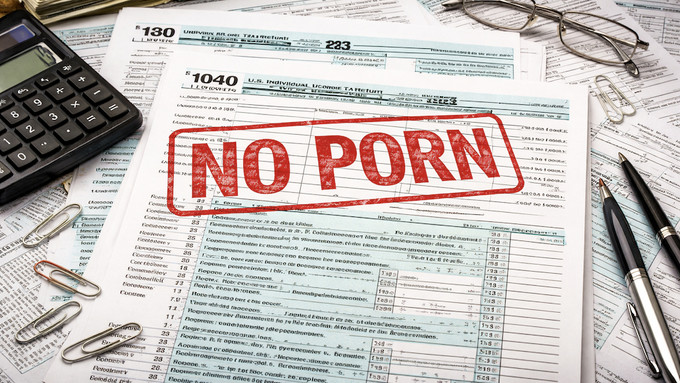
WASHINGTON — The Internal Revenue Service on Monday published final regulations on the “No Tax on Tips” provision included in the “One Big Beautiful Bill Act,” offering new tax deductions for tip workers but excluding revenue received for “pornographic activity.”
The new rule, titled “Occupations That Customarily and Regularly Received Tips; Definition of Qualified Tips,” states: “Amounts received for prostitution services and pornographic activity are not included in the definition of ‘qualified tips.’”
After President Trump signed the omnibus legislation into law last year, the IRS developed final regulations for implementing the bill’s provision allowing taxpayers in occupations that have “customarily and regularly received tips” to deduct up to $25,000 per year in tips from their taxable income. Following a comment period, the IRS finalized a list of qualifying occupations, and tips that eligible taxpayers may claim as a deduction.
The official “List of Occupations That Receive Tips” includes “digital content creators,” and the new rule provides some guidance specific to that occupation. However, content creators would not be able to deduct tips for “pornographic activity” — a term the rule does not define.
The rule notes that several commenters objected to this exclusion and its vagueness.
“In addition to noting that certain pornography is legal, some commenters stated that pornography is protected First Amendment speech, that these businesses pay taxes, and that in fairness these businesses and their employees should have access to the deduction for qualified tips,” the posted rule reports. “One commenter suggested the prohibition be limited to activity that is unlawful under State or Federal law. Several commenters requested that the regulations define pornographic activity.”
The Free Speech Coalition's comment on the then-proposed rule notes that the exclusion of “pornographic activity” from the definition of “qualified tips” is the only categorical exclusion that does not involve illegal activity. It also points out that pornography is not a legally recognized category of speech.
“This makes it impossible to determine whether a performance or work that generates tips is eligible for tax exemption,” FSC’s comment reads. “If content creators provide material or performances for which they can be tipped, how is it determined whether the content is ‘pornographic?’ If the material depicts genital stimulation, is it ‘pornography?’ If the material depicts no nudity, but the speaker is speaking about sex, is it ‘pornography?’ If the speaker is wearing translucent, or even transparent clothing, but speaks of investments and not sex, is it ‘pornography?’”
Without a precise definition, FSC argues, “unconstitutional discretion” is provided to every decision-maker when determining eligibility for the tax-deductibility of tips.
“Under the proposed rule, the regulations will create an environment where enforcement will inevitably be arbitrary; disputes regarding the categorization of income as having been generated by ‘pornographic activity’ will be constant; and litigation will be chronic,” the FSC comment warns. “Every taxpayer whose tip exclusion is rejected under this regulatory category will have a valid constitutional challenge to the rejection.”
The rule notes that the Treasury Department and the IRS “will consider whether to provide additional guidance regarding these exclusions.” In the meantime, the IRS “intends to interpret the occupations on the list in a fair and impartial manner consistent with their commonly understood meaning.”
Justification at Odds With Anti-Debanking Policy
According to the IRS, excluding pornographic activities is “intended to address the potential for greater noncompliance and abuse with respect to these activities and services.”
This language seemingly contradicts the Trump administration’s public stance toward regulatory discrimination on the basis of lawful business activities, strongly echoing past justifications for debanking industry professionals and companies based on subjective interpretations of “risk.”
As XBIZ reported last year, President Trump’s August 7, 2025, executive order on debanking prohibits banks, savings associations, credit unions or other financial service providers from restricting access to accounts, loans or other services on the basis of a customer’s lawful business activities “that the financial service provider disagrees with or disfavors for political reasons.”
Following that order, the Office of the Comptroller of the Currency (OCC) issued a report on debanking, in which it named adult entertainment as one of several sectors facing discrimination for engaging in activities contrary to banks’ “values.”
In March, Federal Trade Commission (FTC) Chairman Andrew Ferguson warned PayPal, Stripe, Visa and Mastercard against denying customers access to services based on lawful business activities perceived as high-risk. Earlier this month, the OCC and the Federal Deposit Insurance Corporation (FDIC) issued a final rule codifying the elimination of “reputation risk” as a criterion in their supervision of financial institutions.
It remains unclear, however, how much impact any of those actions will ultimately have on adult creators and businesses. The OCC, the FTC and numerous banks have failed to respond to requests for comment or clarification on this question — and the new IRS rule further illustrates that attitudes toward the industry within the Trump administration remain far from positive.
FSC Commentary Highlights Double Standard
The Free Speech Coalition on Tuesday published an overview of the new provisions by FSC member Katherine Studley of The Only Consultant, which provides tax and business consulting for industry professionals. The piece notes that the exclusion of adult creators resulted from the efforts of conservative and Christian organizations.
“No acknowledgement that these are legal businesses operated by legal workers who have been paying their taxes,” Studley writes. “The same businesses who are good enough to tax are apparently not entitled to the same tax relief as everyone else.”
Studley also notes that adult creators can deduct tips from “a non-explicit presence.”
“Adult creators are not banned as a category of person and the tip is tied to the content,” she writes. “This is advantageous for creators operating across multiple platforms and producing mixed content.”
The “No Tax on Tips” policy was passed as a temporary four-year measure and sunsets on December 31, 2028. Its provisions could be revisited or updated at that time.