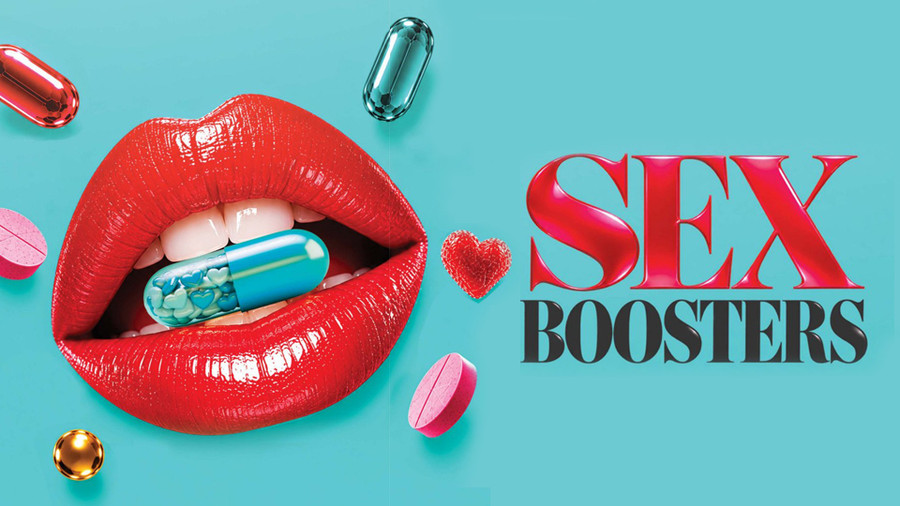
For decades, the sexual enhancement aisle consisted mainly of pills promising stamina, with bottles and blister packs leaning heavily into themes of masculinity, urgency and performance. The sales pitch was rarely subtle: Take this, and something bigger, harder, longer or more intense would follow.
That world of sex, mood and attraction boosters is starting to look very different nowadays; traditional pills now share retail space with gummies, chocolates, drink mixes, mushroom blends, mood-oriented supplements, botanical teas, THC products and fragrances built around attraction and confidence. Products are being marketed not only around sexual performance, but around desire, relaxation, focus, emotional connection and the ability to get out of one’s head.
While gummies and chocolates are fun, approachable formats and definitely have their audience, pills and honeys continue to be the strongest sellers we see in sexual enhancement.
Even hip-hop artists have entered the space. Sexyy Red has lent her name to sexual enhancement honey and gummies distributed by Doc Johnson; 6ix9ine’s Sex9ine line includes gummies, chews and honey for men and women; and Master P has been promoting his No Limit 69 gummies as part of his growing product portfolio.
The expansion creates a compelling proposition for adult specialty retailers. Enhancers are consumable, replenishable and generally easier to add to an existing purchase than another high-ticket durable product. They can turn a toy purchase into a date-night package or give a customer who already owns a drawer full of toys a new reason to shop. At the same time, the category is entering a period when trust may matter as much as novelty. Increased regulatory attention on adjacent smoke shop products, continued concerns about undeclared ingredients and inconsistent formulas, and the prevalence of counterfeit enhancement products are forcing retailers to ask a more complicated question than simply, “Does it sell?” Increasingly, they also need to ask, “What exactly am I selling?”
Evolving Beyond Pills
Despite all the new types of enhancers, traditional pills are far from obsolete.
“While gummies and chocolates are fun, approachable formats and definitely have their audience, pills and honeys continue to be the strongest sellers we see in sexual enhancement,” observes Jessica Sav, vice president of sales and marketing at Full Circle Brands. “Those formats are already familiar to many shoppers, which makes them easy to understand and easy for retailers to recommend.”
Honey, in particular, has emerged as one of the most recognizable formats in its category. Its portability, disposable design, and presence outside adult stores have helped build consumer familiarity with the product.
“Shot drinks also have a place in the category, especially for shoppers looking for something quick and easy to incorporate into a night out or special occasion, but pills and honeys are still leading the way for many retailers,” Sav notes.
Lavinia founder Katie Enright sees a similar dynamic but says much of the excitement is shifting toward formats that do not resemble medication.
“Pills are still the most familiar format, but excitement is shifting toward products that feel less clinical and more like part of the experience,” Enright says. “Chocolate feels indulgent and romantic, honey packs are portable and have become highly visible on social media, and shots are convenient for those who want something quick and easy to consume.”
Gummies may be the clearest example of the shift. Consumers already encounter gummy formats across mainstream supplements and wellness, reducing some of the psychological barrier that can accompany a product labeled a “sex pill.”
Lavinia’s Kinky Bites combine hemp-derived Delta-9 THC with horny goat weed, maca root, and longjack, with the THC content clearly labeled per gummy. Enright says the delivery method has become nearly as important as the formulation as brands try to make sexual enhancement feel like part of an intimate ritual rather than an intrusion.
“People seem to enjoy candy-like products or alternatives to simply taking a pill,” said Boaz La Bleu, vice president of distribution for Sugar Splash. “It makes the experience more fun and playful, rather than feeling like you’re taking medication.”
Sugar Splash takes a different approach to enhancement. Its product range features 9Pines, a pineapple-based shot aimed at altering the user’s taste during oral sex, along with taste-changing tablets that alter the recipient’s perception of flavor, mouth-watering mist, and other items designed to enhance specific sexual experiences rather than conventional performance. The website describes 9Pines as a blend of pineapple, cranberry, mango, papaya, and cinnamon, and presents it as a shot or cocktail mixer.
That widening definition of “enhancement” may be one of the most important developments for retailers. It moves the conversation beyond a single functional problem and creates opportunities to sell around an occasion, sensation or desired mood.
Customers are also becoming more specific about what they want.
“Shoppers are ultimately looking for products that can enhance their pleasure and improve their sexual performance,” Sav says. “That can mean different things to different customers. Some are looking for more arousal or desire, while others want greater stamina, heightened sensitivity, or a more intense overall experience.”
Enright frequently hears desire, sensation and connection mentioned, along with stamina and orgasm intensity.
“What is changing is that shoppers are becoming more realistic and better informed,” she says. “They are increasingly skeptical of products that promise an instant, guaranteed result. They want something that fits naturally into an intimate evening without making the experience feel overly planned or pressured.”
This evolution is enabling companies to compete on more than potency. Factors like flavor, portability, portion size, presentation, ingredient transparency, and a connection — such as a celebrity association — can all sway a customer's choice.
The result is a category that increasingly resembles lifestyle merchandise as much as a wall of supplements.
Enhancing Mind and Body
The most significant conceptual shift might be the expanding gap between “enhancement” and “erection.”
Stress, distraction, fatigue, and mental overload have become part of the industry’s conversation about intimacy. That gives retailers room to consider products that do not directly target genital response but may still appeal to shoppers seeking a better experience.
“Stress and mental overload have become major barriers to intimacy,” said Josh Whitaker, co-founder of Happy Mind. “People may be physically present with their partners yet mentally distracted by work, notifications, responsibilities, or self-consciousness. As a result, consumers are looking beyond traditional performance products for experiences that help them unwind, become more present and reconnect.”
Happy Mind represents one side of that emerging market, with products intended to focus more on mood and mental experience. Its current online assortment includes the Cognitive Flow month-long supply, Synaptic Surge single-pill dose, and Happy Hits, which includes three tablets. The variety of dosage options lets users experiment with a fourth of a tablet (a single dose) or increase incrementally.
Whitaker sees mood and conventional sex enhancement as complementary rather than competing categories.
“Happy Mind focuses on the mind, helping consumers move beyond everyday distractions and into a more euphoric, present and emotionally connected state,” he says. “Its role begins before physical intimacy, supporting anticipation, openness and a deeper sense of connection.”
Happy Mind’s sexier sister brand, XXXTABS, is a more directly intimacy-oriented line offering separate His and Hers formulas.
“Together, Happy Mind and XXXTABS address intimacy from both directions,” Whitaker says. “Happy Mind supports the mood, euphoria and emotional connection, while XXXTABS supports desire and the physical experience.”
Cam Jennings, owner of Daddy’s Counterculture Outlet in Las Vegas, sees similar potential in products operating outside the traditional sex-enhancement definition.
“Even though it’s not doing anything for your genitals, it’s doing a lot for your brain,” Jennings says of mood-oriented products. “That makes anything you’re doing on it better, including sex.”
Yet Jennings says adult retailers have so far been cautious about broadening their ingestible offerings. Part of the hesitation may be the industry’s experience with other fast-growing consumable categories.
“I think a lot of the industry is fearful of new things, specifically in this supplement region,” Jennings explains. “For a couple of years, a lot of people, mostly me, were pushing adult stores to consider carrying kratom, not knowing where the kratom industry was going to explode into with these derivatives.”
Mood products are also expanding to address more specific life-stage needs.
Michael Ives, owner and CEO of Jam Pax Distro, points to Aura BITEsx Menopause gummies as an example. The formula includes ginseng, ashwagandha, vitamin B6, reishi, L-theanine, magnesium citrate, vitamin D3, and passion flower extract. According to Ives, the line emerged in response to requests for products geared toward menopause, illustrating how the enhancer conversation can extend into broader sexual wellness and lifestyle concerns.
Meanwhile, Mark Bauman, president of Media Reps, says TupiTea was deliberately developed as a beverage rather than another male-enhancement pill. The powdered tea uses botanicals, including muira puama and catuaba, both traditionally used in South America.
“TupiTea gives retailers a particularly approachable entry point because tea is already a familiar daily ritual,” Bauman says. “Because it is a powder, it can also be used in shakes.”
The lifestyle approach has helped attract different consumers, Bauman added.
Emerging Audiences
For much of its history, sexual enhancement has been synonymous with male performance. Products have overwhelmingly centered on erections, stamina and potency. However, the future of enhancers looks less gender-exclusive, industry execs report.
“There is also growing interest in products designed for women and couples,” Enright says. “Today’s shopper approaches pleasure more holistically.”
NexEros co-founder and CEO Oliver “Buddy” Byington makes a similar argument. NexEros offers STAMINA for men and FEMINA with an emphasis on the female sexual experience.
Byington believes the language retailers use can either expand the audience or reinforce old anxieties.
“When a customer hears ‘performance enhancer,’ it can immediately imply that something is wrong with them or that they are failing to perform,” he says. “That creates unnecessary pressure, particularly for men, and it can also overlook women almost entirely.”
Instead, he recommends shifting the conversation toward the type of experience the customer wants: confidence, stamina, responsiveness, sensation, anticipation, pleasure or connection with a partner.
That creates a substantially different retail interaction. A customer is no longer being asked to admit to a deficiency. They are being asked what they would like to explore.
“The best retail conversation is often surprisingly simple: ‘What kind of experience are you hoping to create?’” Byington suggests. “That question changes the entire tone. It makes the interaction curious and collaborative rather than clinical or judgmental.”
Whitaker says his company’s development of separate XXXTABS His and Hers formulas also reflects the intention to broaden the appeal.
The main takeaway for retailers could be that focusing on themes like date night, relaxation, sensation, confidence, couples’ play or mood provides staff with more entry points and offers customers additional browsing options without making them feel labeled.
Behind the Label
As the category expands, however, it carries forward an old problem: uncertainty about what is actually inside some products.
Regarding rampant counterfeit pills, Jennings argues that identical branding has not historically guaranteed identical formulas.
“The Rhino capsules you purchase from trusted adult distributors do not contain the same formula as products with identical labels and packaging sold somewhere else,” Jennings says. “Consumers expect ingestible products to be consistent from one retailer to the next, no different from a Red Bull or a Snickers bar, but the enhancement industry is miles away from meeting that standard.”
For an industry built heavily around proprietary blends, inconsistency poses a fundamental problem. A shopper cannot make an informed decision based on a familiar brand name if unrelated products with effectively the same identity can circulate through different sales channels.
“The ‘proprietary blend’ nature of these products requires brand trust for them to exist,” Jennings says. “If what is actually in the product is not disclosed for ‘proprietary’ reasons, the burden falls on the brand name itself to make sure it’s safe, sane and sure to work.”
His concern has become more urgent as regulators scrutinize adjacent consumable categories.
In July, the Drug Enforcement Administration (DEA) announced its intent to temporarily place 7-hydroxymitragynine above a specified threshold, along with related substances mitragynine pseudoindoxyl, MGM-15 and MGM-16, into Schedule I. DEA specifically cited commercial products sold through gas stations, convenience stores, smoke shops and online.
That crossover of such products in adult retail, he argues, puts enhancement products under a microscope they had previously avoided.
“Where we’ve kind of flown under the radar for 30 years in the adult industry, it’s just too widespread, popular, and well known now,” Jennings warns. “I really hope that everybody in the industry is very careful with the business they’re doing.”
Jennings notes that even though thorough product testing requires considerable effort, companies still have the option to test their products for contaminants.
“I think the enhancement industry would have a much larger market if we were engaging in third-party testing,” he muses. “They could at least test the product to show that there are no heavy metals or pesticides. That, I think, is really important when we’re talking about putting stuff in people’s bodies.”
Jennings points to Doc Johnson’s distribution of the Rhino brand as a potentially important test case for whether one of the category’s best-known names can become more standardized.
“I like what Doc Johnson is doing because they’re putting a huge emphasis on third-party testing, on protecting the brand rights, etc., which has not been done before,” he notes.
Other respondents reached similar conclusions about transparency.
“Customers should be able to see the complete ingredient list, the cannabinoid amount per serving, clear directions and current third-party lab results without having to hunt for them,” Enright stressed.
Briana Watkins, CEO of Wild Brands, says brands also need to moderate their language.
“Everyone’s body is different, and I would rather educate our customers than make exaggerated promises just to sell a product,” Watkins says. “For me, transparency isn’t just a business practice; it’s how we build lasting relationships with our customers.”
Byington likewise sees the future in credibility rather than increasingly dramatic claims.
“The long-term future of this category belongs to companies that treat consumers intelligently, communicate transparently and build credibility through repeated experiences rather than relying on a sensational claim to generate a single sale,” he says.
For retail buyers, these insights imply that due diligence could become more embedded in category management. Questions to consider include: Who owns the brand? Is there a contact at the company? Where is the product produced? Can the lot be traced? Are lab reports accessible? Does the packaging display batch info or tamper-evident features?
“Creating specific packaging features, such as serialized QR codes and periodically updated anti-counterfeit markers, can make knockoffs easier to identify and keep counterfeiters at bay,” Jennings recommends.
Still, technology only goes so far.
“Ultimately, showing up at XBIZ and other B2B events, introducing yourself, and publicly standing behind your brand gives me more confidence as a retailer to carry an enhancement product,” Jennings says.
Selling Without Overpromising
Retailers need to maintain transparency all the way to the sales floor, and who better than a knowledgeable employee to help a customer distinguish among formats, intended uses and brands.
“I think most shoppers have at least heard of sexual enhancement products because they are available everywhere, from gas stations to convenience stores,” Sav says. “What brings customers into an adult specialty store, however, is the opportunity to find better products and receive education they will not get at the local gas station.”
When employees can answer questions and guide customers to reputable products based on their individual needs, the category becomes less intimidating and easier for shoppers to explore.
La Bleu further simplifies the process.
“Ask questions,” he urges retail staff. “There’s something for everyone in this category, and it’s tough to know what to recommend without knowing what someone is looking for.”
Existing purchases can provide clues. A shopper buying couples’ products may respond to a different conversation about enhancers than someone shopping for a solo toy or preparing for a date.
Enright suggests starting with format rather than forcing customers to make a deeply personal disclosure.
“A retailer can start with something simple, such as, ‘Are you looking for something topical, edible or drinkable?’” she suggests. “That gives the customer an easy, comfortable way into the category.”
Physical merchandising can reinforce that approach. Rather than creating a mysterious wall of pills separated from the rest of sexual wellness, it’s recommended that they are showcased by placing them alongside lubricants, condoms, couples’ products, massage items, and other merchandise that already implies a broader experience.
Watkins, whose Wild Brands products were developed with compact countertop formats in mind, believes discovery should feel casual.
“The first step is to make the category feel normal,” she advises. “Make it approachable. And honestly, make it fun.”
She emphasizes that the goal isn't to hide the product behind disclaimers or over-explain it, but rather to use clear packaging and strategic placement to minimize embarrassment.
“A customer shouldn’t feel embarrassed for picking it up,” Watkins says. “They should feel like they’re making a fun, confident choice.”
Single-use formats may be particularly useful for first-time shoppers.
Ives advises retailers new to the segment to experiment with several delivery methods rather than commit heavily to any one. Gummies, honey and strips can offer different entry points, while single-dose products allow shoppers to sample without committing to a larger package.
Whitaker similarly views lower-priced trial SKUs as important. A customer who is reluctant to spend $40 or $50 on an unfamiliar ingestible may be much more willing to spend $10 to $15 on a trial.
That trial can be especially impactful because consumables have a unique retail trait that toys lack: if customers enjoy them, they tend to sell out quickly.
“Consumable intimacy products have an economic characteristic that is extremely attractive to retailers: the product gets used up,” Byington says. “A customer may purchase a durable pleasure product and keep it for years. A consumable enhancer that becomes part of someone’s intimate routine creates a natural reason to return.”
That repeat cycle can also reopen the door to the rest of the store. A customer returning for a favorite honey, gummy, tea or mood product may browse new toys, lubricants or lingerie during the same visit.
Enhancing Appeal with Every Scent
Not every enhancer goes into the body. Pheromone fragrances occupy a distinctive niche in the market, blending sexual wellness with beauty, fragrance, self-expression and a degree of mystery that has kept shoppers curious for decades.
Jacqui Rubinoff, vice president of Eye of Love, says curiosity remains a major driver of purchases.
“People hear about pheromones and want to see for themselves whether they notice a difference in how people respond to them,” she says. “Most are looking for that extra boost in attraction, attention or confidence, whether they’re dating, going out or just want to feel a little more magnetic.”
Eye of Love is a family-run San Diego company founded in 2011 that offers vegan and cruelty-free pheromone fragrances made from wild yam root. Its assortment spans perfumes, colognes, and other fragrance formats, each designed around distinct scent profiles and intended moods.
For Rubinoff, scent has to stand on its own.
“We want them to be scents you’d wear even without the pheromones,” she enthused.
Jan Grocholski, operations manager at Medica-Group, the maker of PheroStrong, echoes that idea.
“The first impulse often comes from the idea of pheromones, but the product only works commercially if the fragrance itself feels pleasant, wearable and premium,” he says.
PheroStrong has developed dozens of fragrance collections for men and women, along with newer unisex concepts. Grocholski says the strategy is to treat pheromone products as fragrance and personal care first, rather than rely solely on an attraction claim.
“We are taking the opposite approach: first create a product that smells good, looks good and feels premium, then build the pheromone lifestyle story around it,” he explains.
Nicole McCree, sales executive for Classic Brands, distributor of Pure Instinct, takes an equally cautious approach to the promise itself.
“First, attraction enhancers should be fun,” McCree asserts. “We are selling the possibility of a little extra chemistry, not promising that someone will walk into a room and suddenly have everyone chasing them.”
Pure Instinct dates its original pheromone perfume oil concept to 1985. McCree says retailers should resist turning pheromones' anecdotal appeal into guaranteed outcomes.
“Attraction is personal,” she says. “It can be influenced by fragrance, body chemistry, confidence, mood and the natural connection between two people. A product like Pure Instinct is designed to complement that experience, but it cannot create chemistry where none exists.”
Anecdotes nevertheless contribute substantially to the category’s appeal.
“Are pheromones a magic potion? No. Can we promise every customer will have the same experience? Absolutely not,” McCree says. “Anecdotal stories are not scientific guarantees, but when you keep hearing similar experiences from different people, in different places, and over many years, it certainly adds to the fun and intrigue of the category.”
Jennings understands that appeal firsthand.
He says he has worn pheromone cologne for years and calls it his “confidence spray.”
“I think it works,” he says. “It might be ritual for me at this point, but I’ve been using pheromone cologne for years, and I can tell you, I see a real difference in my everyday interactions with people when I’m wearing it versus when I’m not.”
His experience as a retailer has added another anecdote to the pile.
“When I spray the Eye of Love room spray in my store, I’ll just mist the T-shirts and everything like that with it,” Jennings says. “It seems I have better numbers when I do that. I make more sales and have more people in my store. So I don’t know if it’s superstition or reality.”
That last sentence may be one of the most useful ways to understand the attraction enhancer category from a commercial perspective. Certainty is less important than the ritual, curiosity and confidence associated with the product.
McCree recommends leaning into exactly that.
“I always encourage retailers to sell the feeling,” she says. “When you smell good, you feel good. When you feel good, you carry yourself differently, and that confidence can be incredibly attractive. That is a much more honest and relatable conversation than making exaggerated claims.”
Fragrance also opens merchandising possibilities not available to ingestibles. Smaller roll-ons can live at checkout. Full-size perfumes and colognes can sit near lingerie or date-night merchandise. Testers give customers something immediately sensory to evaluate.
“Most importantly, let customers smell them whenever possible,” McCree says. “Fragrance is emotional, and once someone finds a scent that makes them say, ‘Ooh, I like that,’ much of the selling has already been done.”
She also recommends introducing shoppers to different fragrance formats and even a “scent wardrobe” for different moods or occasions.
Instead of the binary question “Do pheromones work?” retailers can move to something much easier to answer: “How do you want to smell and how do you want to feel?”
Bigger Category, Bigger Responsibilities
Enhancers have long thrived on the promise of potential. Perhaps a pill could boost stamina, a gummy might make evenings livelier or enhance mood, or a fragrance might boost confidence. The allure of possibility remains a strong selling point as the category expands into broader wellness. This growth offers retailers new chances to engage different customers, increase basket sizes, and foster repeat sales.
By pairing engaging consumable formats and approachable merchandising with realistic expectations and greater transparency, retailers can help the category evolve without losing the curiosity and fun that make enhancers appealing in the first place.
- Doc Johnson
- Eye of Love
- Classic Brands
- Lavinia
- Sugar Splash
- Happy Mind
- Full Circle Brands
- Medica-Group
- Wild Brands
- 6ix9ine
- Master P
- XXXTABS
- Jam Pax Distro
- Media Reps
- NexEros
- Mark Bauman
- Jacqui Rubinoff
- Katie Enright
- Ariana Rodriguez
- Nicole McCree
- Briana Watkins
- Sexyy Red
- Cam Jennings
- Jessica Sav
- 6ix9ine
- Master P
- Boaz La Bleu
- Josh Whitaker
- Michael Ives
- Oliver Buddy Byington
- Jan Grocholski