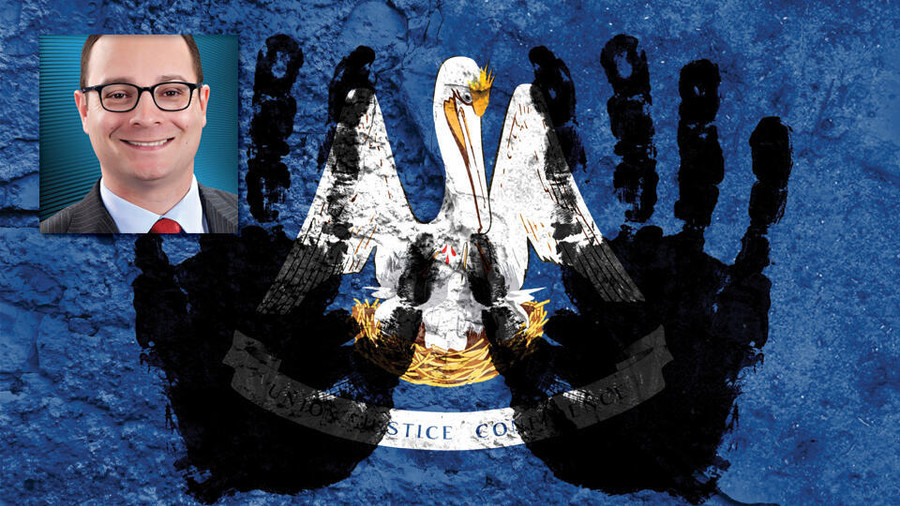
On Jan. 1 of this year, Louisiana’s controversial age verification law, HB 142, took effect, creating “a civil remedy against commercial entities who distribute material harmful to minors.” The purpose of this article is to provide answers to some of the most frequently asked questions surrounding this law. This article is not meant to be a substitute for speaking with an attorney who can analyze the law and its applicability to your specific platform or situation.
HB 142 was introduced in the Louisiana Legislature in February 2022 by its primary author, Representative Laurie Schlegel. Schlegel represents herself as a “certified sex addiction therapist” whose practice includes treating supposed addiction to pornography. On June 15, 2022, the bill was signed into law by Louisiana’s governor.
The true protection of minors from certain types of content on the internet remains a legitimate conversation, but HB 142 is not the solution.
The Rationale Behind HB 142
To understand the Louisiana state government’s intent with HB 142, you can look at the language of the legislation: “Due to advances in technology, the universal availability of the internet, and limited age verification requirements, minors are exposed to pornography earlier in age. Pornography contributes to the hyper-sexualization of teens and prepubescent children and may lead to low self-esteem, body image disorders, an increase in problematic sexual activity at younger ages, and increased desire among adolescents to engage in risky sexual behavior. Pornography may also impact brain development and functioning, contribute to emotional and six medical illnesses, shape deviant sexual arousal, and lead to difficulty in forming or maintaining positive, intimate relationships, as well as promoting problematic or 8 harmful sexual behaviors and addiction.”
To Whom Does HB 142 Apply?
HB 142 applies to any platform accessible in Louisiana on which at least one-third of its total material meets the law’s definition of “material harmful to minors.” The law's definition of “material harmful to minors” is broad and covers virtually every conceivable form of pornography:
• Any material that the average person, applying contemporary community standards would find, taking the material as a whole and with respect to minors, is designed to appeal to, or is designed to pander to, the prurient interest.
• Any of the following material that exploits, is devoted to, or principally consists of descriptions of actual, simulated, or animated display or depiction of any of the following, in a manner patently offensive with respect to minors:
1. Pubic hair, anus, vulva, genitals, or nipple of the female breast.
2. Touching, caressing, or fondling of nipples, breasts, buttocks, anuses, or genitals.
3.Sexual intercourse, masturbation, sodomy, bestiality, oral copulation, flagellation, excretory functions, exhibitions, or any other sexual act.
• The material taken as a whole lacks serious literary, artistic, political, or scientific value for minors.
Penalties for Violating HB 142
HB 142 is not a criminal law. It is a civil law that gives an individual a private cause of action to seek monetary damages against a platform operator that has allegedly not complied with the law. So, while the law doesn’t force platforms to implement a verification system, it would give a purported victim the ability to sue for “damages resulting from a minor’s accessing the material, including, court costs and reasonable attorney fees as ordered by the court.”
Is HB 142 Constitutional?
While it is impossible ever to predict the outcome of litigation, in my opinion, HB 142 is unconstitutional and at minimum, violates the First Amendment. The state of Louisiana would like you to forget that this is not its first attempt at age verification — and that its first attempt failed quite miserably in federal court.
In 2015, Louisiana enacted HB 153, which required that “any person or entity in Louisiana that publishes material harmful to minors on the internet shall, prior to permitting access to the material, require any person attempting to access the material to electronically acknowledge and attest that the person seeking to access the material is eighteen years of age or older.” A failure to age-verify, even if no minor ever tried to access the material, would have been a crime. Fortunately, in 2016, a federal judge signed an order permanently preventing Louisiana from enforcing HB 153, after two independent booksellers brought an action challenging its constitutionality.
Can You File a Lawsuit to Challenge the Constitutionality of HB 142?
Louisiana seems to have partially learned from its previous mistake, because this time, HB 142 is civil in nature instead of criminal; hence, the law can’t be challenged yet. However, once someone threatens or brings a claim under HB 142, the person or entity being targeted would have the ability to file a lawsuit to enjoin the enforcement of the statute as unconstitutional or defend a lawsuit brought by the plaintiff.
The reason why a constitutional challenge must wait is because the U.S. Supreme Court has held that a court cannot enter an injunction against unnamed private persons who might seek to bring civil suits.
How Do I Comply With HB 142?
HB 142 requires platforms to which the law applies to screen visitors through “reasonable age verification.” The options for platforms to comply include requiring users to provide a digitized identification card based on a form of government identification, or provide their government-issued identification. There is also a third option that allows the platform to use “any commercially reasonable method that relies on the public or private transactional data to verify the age of the person.” This third option is already controversial because platforms are struggling to figure out what would be acceptable to comply with this vague definition. Conveniently, Louisiana was one of the first states to lawfully authorize a digital driver’s license; see lawallet.com.
What If I Don’t Want to Comply With HB 142?
If you are a platform and have determined that HB 142 would apply to you but for whatever reason, do not want to comply with HB 142, you could use available technology to geo-block IP addresses originating from Louisiana, and not accept new customers from Louisiana who provide a Louisiana address or other information that would indicate the customers are from Louisiana. As to your existing Louisiana customers, to comply with the law, it would be appropriate to conduct age verification before the users’ next access to the platform, or terminate them altogether.
Will HB 142 Lead to Copycat Legislation?
Until HB 142 is either repealed or deemed unlawful by the courts, it is likely that other states and lawmakers with similar agendas will attempt to create similar laws. In fact, Arkansas Senators Tyler Dees and Jim Petty just introduced SB 66, titled “The Protection of Minors from Distribution of Harmful Material Act,” which would force adults in Arkansas to verify their age to access pornography online.
The Arkansas bill contends that pornography contributes to “the hyper-sexualization of minors” and may lead to “low self-esteem; body image disorders; an increase in problematic sexual activity in younger ages; increased desire among minors to engage in risky sexual behavior; difficulty in forming or maintaining positive, intimate relationships; impact brain development and function; contribute to emotional and mental illness; shape deviant sexual arousal; and promote problematic or harmful sexual behaviors and addiction.”
The Arkansas bill requires age verification by platforms on which at least 23.33% of content is deemed harmful to minors. The Arkansas bill defines material that’s harmful to minors as “actual, simulated or animated displays” of the “nipple of a female breast, pubic hair, anus, vulva or genitals; touching, caressing or fondling of nipples, breasts, buttocks, the anus or genitals; sexual intercourse, masturbation, sodomy, bestiality, oral copulation, flagellation, excretory functions, exhibitions of sexual acts or any other sexual acts.”
What Should Platforms Be Doing Right Now?
As I stated at the beginning of this article, all platform operators should be consulting with an attorney to analyze HB 142 and its potential applicability to their specific platform. The law took effect on Jan. 1, and remains in effect. However, many platforms are either unaware of HB 142 or not making informed decisions about compliance with it. This is not the time to try and copy what other platforms are doing, which could lead to potentially disastrous consequences.
What Should I Do as a Member of the Adult Industry?
HB 142 is a direct attack on free speech and the adult industry. The drafters of HB 142 can scream until they are blue in the face that this is primarily about protecting children. The fact is that HB 142 is just another attempt to restrict the transmission of content that one group wants to eliminate.
The true protection of minors from certain types of content on the internet remains a legitimate conversation, but HB 142 is not the solution and in this case, the state of Louisiana neglected to seek input from the most important source: adult industry providers themselves.
The adult community needs to make sure that its voices are heard, and I encourage you all to publicly and peacefully challenge any lawmaker that supports laws such as HB 142 and the suppressive philosophy that it enforces.
Corey D. Silverstein is the managing and founding member of Silverstein Legal. His practice focuses on representing all areas of the adult industry and his clientele includes hosting companies, affiliate programs, content producers, processors, designers, developers, operators and more. He is licensed in numerous jurisdictions including Michigan, Arizona, the District of Columbia, Georgia and New York. Contact him at MyAdultAttorney.com, corey@myadultattorney.com and 248-290-0655.