You work hard. Really hard. You're feeding your subscription-based feed, promoting your clip store, scheduling live shows and shooting an unbelievable amount of content just to keep up with the demand. It's exhausting!
In today's socialized content world, there's a race for fan engagement, and more importantly, fan dollars. So it’s definitely become a necessity to get educated in self-marketing; everybody has gone “back to school” because indie entertainment really is a full-fledged business these days. If you're any good at it, you already know what free content to post on Monday to set up your paid content on Tuesday, and you have a good understanding of what your fan acquisition costs are.
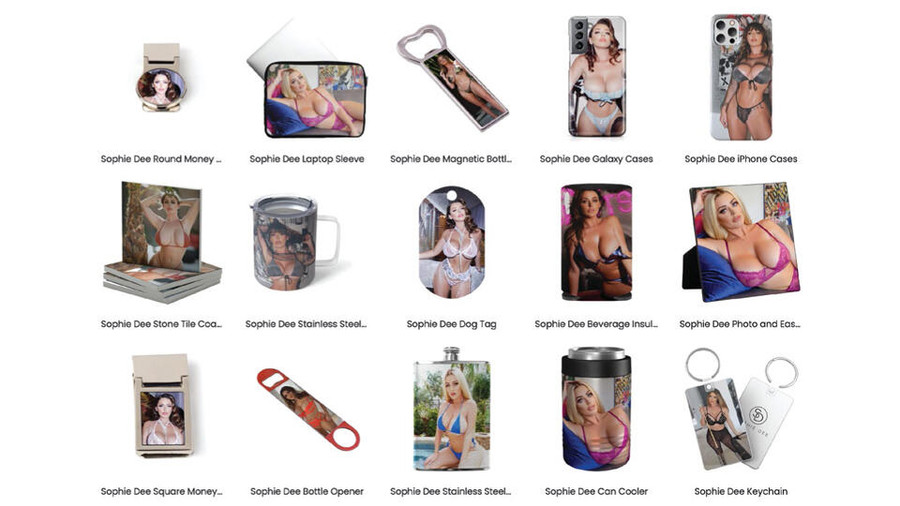
I can tell you from experience that phone cases, coffee cups, beverage holders, jewelry (like dog tags) and keychains are by far the best sellers; t-shirts can be good if they have the right design.
Let’s be honest, though: we're all fighting for the same eyeballs, and we all have the same basic ammunition. Logic would tell you that the winners are the performers who can be the most provocative or over-the-top. That’s always the way it has been — but not anymore.
Sure, there's always going to be the “hit and run” types of customers. They check out a video, do their thing and move on — that part is never going to change. But there's a new breed of fans ... fans that want more than just the XXX. Today, it's about the relationship between fans and performers. They want to know you, and they want you to be more than just a video fantasy.
SO, WHAT ABOUT BRANDED MERCH?
Well, first, don't let anybody lead you to believe that you'll make a fortune selling branded merchandise; you won't. But it can earn you a nice return per month and even more during the holidays.
When most people think about branded merchandise, they conjure up visions of VistaPrint or Printful or Printify or any of the other 438 print-on-demand sites out there. You know, the ones that charge a monthly fee and fleece you on wholesale costs and profits. The ones that have different vendors shipping your orders from different locations at different times. Phew, talk about exhausting!
For branded merch to make sense, you have to find a company that manufactures the products in-house and offers a fair wholesale cost. Most importantly, find one with no monthly fees.
BUT, WHY DO BRANDED MERCH AT ALL?
There are valid reasons for getting in the merch game, namely:
- Branded merch adds value and credibility to your brand (and don't shortchange yourself, you absolutely are a brand).
- It gives your fans something they can have and hold in their everyday life. It makes you more real to them. They're going to love you on their coffee cup or phone case.
- You're going to appreciate the boost in earnings you get over the holidays.
- You, yes you, make a great gift. Your fans will share you by way of your merchandise and you will sell more merch or, better yet, gain more members.
These are all good reasons to offer your fans something more. But there’s one more reason you should keep in mind: it’s free money if you don't have to pay a monthly fee. Just do a little promoting and collect your earnings.
When all’s said and done, getting yourself into the right branded merch situation is simply about finding the right company and putting together a group of high-resolution images. And you already have the images!
SO, WHAT PRODUCTS SHOULD YOU SELL?
There’s a ton of different products out there, and obviously, some are more popular than others. I can tell you from experience that phone cases, coffee cups, beverage holders, jewelry (like dog tags) and keychains are by far the best sellers; t-shirts can be good if they have the right design.
When possible, you should try to offer your products with a choice of multiple designs or photos. Giving your prospective buyers more than one option is always better and the diehard fan will probably buy more than one option. Remember: the merch company you sign on with knows their audience, so if their deal includes design services, take it! They will lead you in the right direction — common sense says they don’t make any money if you don’t.
WHAT ABOUT PHOTOS? WHAT WORKS BEST?
First and foremost, as mentioned above, you want them to be as high-resolution as possible — your photographer can help you out there. IG pics are too small and will just get blurry when trying to use them on merch. You also want to use photos that place you in the foreground. Images that have you at a distance are just tricky and proper placement becomes an issue. Lastly, and this goes against everything you might think, stay away from nudity on branded merch. Insane thought, right? Not really. Sure, you’ll sell some nude merch, but in the grand scheme of things, you’ll shrink your audience, your payment processing choices and even the ability to promote those products on the majority of your social media accounts.
If you’re with the right company, you could do nude projects by request only. For example, offer your fans a nude version of a coffee cup or phone case through your DMs, but clear it with your merch provider first. They can give you the specifics on how to make that work.
BUT SERIOUSLY, DOES SIZE REALLY MATTER?
Don’t believe everything you read! Size doesn’t matter at all — at least when it comes to the size of your audience in relation to branded merchandise. It doesn’t matter whether you have 5,000 followers or 5 million; you can still benefit from the addition of branded merch to your portfolio. It only takes one follower to make a sale.
Really, size only matters when it comes to the attention you get from some merch companies. Odds are they will bend over backwards for the account with 5 million followers because they’ll make more sales from a bigger audience — but that’s not always true. Successful branded merch providers know the value of accounts with a smaller audience, and they work just as hard. They know it’s not as much about the size as it is about the engagement.
Branded merchandise should be the easiest passive income you’ll ever make. If it’s not, then you’re with the wrong company. The perfect situation is different for everybody, but if you can get into a deal that costs you nothing and only requires you to send in your photos, then what do you have to lose?
Rachel Ferretti is the co-founder of GFE Model Services, LLC and the operations manager for FanGear.vip, an industry leader in branded merchandise, collectible calendars and other model-centric, printed products. FanGear.vip provides hands-free, zero-cost branded merchandise solutions for adult performers, IG models and social media influencers. For more information, contact sales@fangear.vip or visit FanGear.vip/get-fangear.