



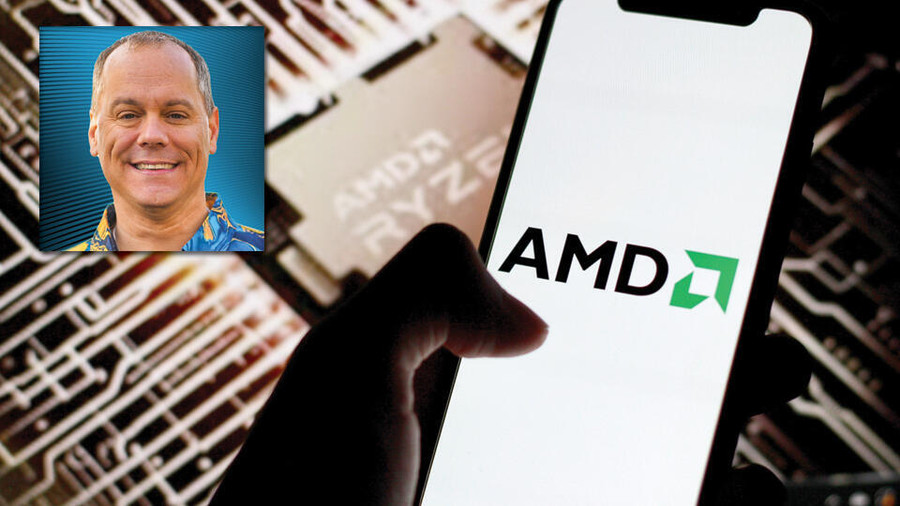
Over the last decade, we mostly stopped talking about CPU performance. Recently, however, there has been a seismic and exciting change in the CPU landscape, due to innovation by a chip company called Advanced Micro Devices (AMD). It is important to understand this shift, because applying this knowledge to your business can help you earn more money.
First, Some Background
Now more than ever, opportunity really does coalesce on these newer generations of hardware where the combination of so many simultaneous advances is taking place.
In 1965, Intel co-founder Gordon Moore made an observation that came to be known as Moore’s Law. He stated that the number of transistors on a chip doubles every two years. For a long time, this held true — which helps explain why, for almost the whole history of computing, significant performance gains were seen in available processors every few years.
Gradual gains worked fine for a time. Due to poor leadership, however, the world’s largest processor company fell asleep at the wheel and stayed that way for a long time. While Intel is now working very hard to catch up, over the past decade or more, the company’s CPUs offered only very minor performance gains year-over-year.
Intel did produce power savings along the way, and also began to increase core counts, but mostly they lowered the gigahertz speed of each core, sometimes adding more cores. The net result was that Intel’s CPUs were not meaningfully faster than what clients were using previously, especially if they didn’t do enough research and bought the wrong models.
Tech Innovations Hit Warp Speed
Advances in CPU technology can be put into perspective using examples from the hosting world. Up until 2022, most hosts were selecting Intel processors, which even today remain the most common choice in data centers. However, AMD’s market share is growing as its CPU performance and competitive prices help it gain traction.
Now, the punch line. An entry-level dedicated server from yesteryear, which was smart enough to run a whole small paysite program, is comparable to today’s next-generation medium-sized virtual private server (VPS) offerings. And the servers that were once the fastest are now comparable in speed to larger VPS setups, offering impressive speed gains even with fewer cores.
Cloud Viability Is Now Truly Viable
New VPS and cloud offerings using AMD EPYC, or especially AMD Ryzen CPUs, have become a truly viable alternative to dedicated servers. With advanced functions and modest prices, these servers are significantly faster than previous generations because they leverage a whole suite of newer technologies.
It’s true that not all cores are created equal. This year’s Intel Xeon Gold 6526Y is still 25% slower than an AMD Ryzen 7950X released two years ago — and in the next few months, the next generation of AMD Ryzen 9000 and EPYC 4004 is anticipated to be another 15% faster. If your server is Intel-based and more than a few years old, choosing a new AMD system could yield performance gains of up to 800%.
The important takeaway here is that technology has leapfrogged ahead, and you can leverage these advances to improve your site performance.
Unpacking the Particulars of Available Offerings
Understanding exactly which processor your sites would benefit from most can still be a somewhat complex calculation. For example, if you purchase a cloud or VPS instance using smart technology such as AMD EPYC from one provider, it might be dramatically slower than a similar instance from another provider. This is because some cloud providers, such as Amazon Web Services (AWS), use two of these processors per node. The addition of a second processor to the server actually delivers a diminishing performance return of 20% faster, not the 100% additional performance your logic might expect, resulting in dramatically lower results per CPU core when the count is doubled.
A great free web site that I have relied on to compare CPU performance for over a decade is CPUbenchmark.net. It provides an excellent general gauge of both single and multithread CPU performance, and it is one that I trust when I do research to compare new and old technology.
Cloud Performance Comparisons
Lastly, it’s important to understand how different cloud instances stack up to non-cloud options, such as VPS or dedicated servers. The fastest cloud instances available today from AWS can vary significantly in cost and performance compared with VPS and dedicated server platforms.
The difference is so dramatic that my research has shown various cloud options perform slower even with twice the CPU cores. The differences in price can also be large, with cloud instances costing as much as 300% more — even while providing lesser performance — and charging 2,000% more for bandwidth. As a buyer, you must understand exactly what you are purchasing because not all servers, networks, data centers or employee training are equal in the marketplace.
Reviewing your use of technology in real-world scenarios can help you make smart decisions about what to do next. For many site owners, “fast” is fast enough, and it’s not guaranteed that migrating to the latest and greatest hardware will yield increased profits. Instead of reflexively spending more money on new technology, it is worth the trouble to analyze specific requirements and determine the right size.
Regardless of whether more processing power is needed, upgrading server hardware benefits site owners with increased speed, reliability and security. Faster system memory and fourth-generation NVMe storage represents a tenfold improvement over solid-state disks (SSDs). With so many simultaneous advances taking place, storage no longer has to be every server’s bottleneck, so it’s critical to choose the right processors in your cloud instance, VPS and dedicated servers.
Going Green
These newer generations of hardware, combining so many simultaneous advances, can also offer unexpected opportunities — including environmental benefits. If you want to do your part saving the planet, consider changing your hosting technologies approximately every five years or so. In summary, if you’re currently using any combination of dedicated servers, it would behoove you to consider switching to smart virtualized private servers or cloud technologies. Not only will this yield a performance gain over what you have today, but you will benefit the planet by using significantly less power.
Brad Mitchell is the founder and president of MojoHost, which has served the industry for nearly two decades and has been named XBIZ Web Host of the Year several times. He regularly shares insights as a panelist at trade shows. Contact brad@mojohost.com to learn more about the suite of services his company offers.



