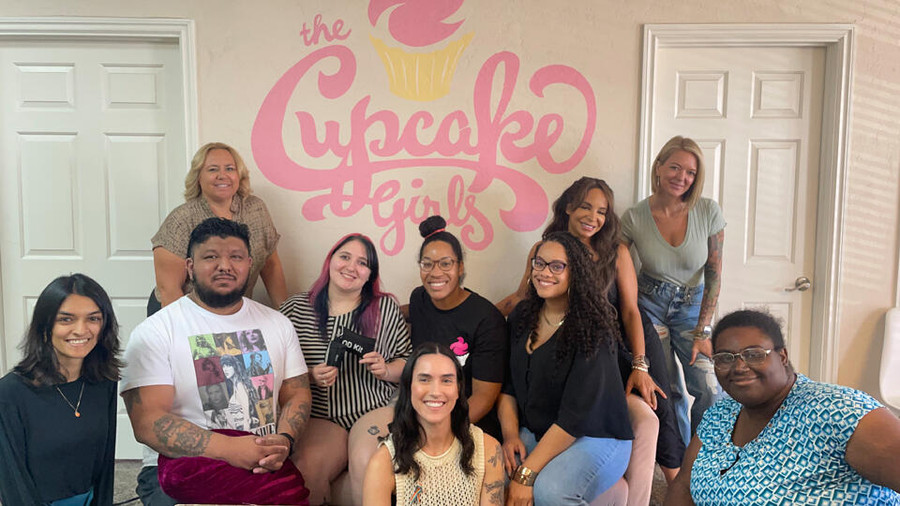
Since its founding in Las Vegas in 2011, The Cupcake Girls has built a network of over 400 partners providing sex workers with discounted or pro bono rates for professional resources. That includes lawyers, doctors and dentists nationwide, as well as advocacy, mentorship and outreach services.
The organization’s bakery-themed branding originated during the group’s early days of visiting clubs in Las Vegas while toting a box of pink cupcakes, an icebreaker that helped open conversations with adult entertainers. After being dubbed “The Cupcake Girls” during one club visit, the team decided to formally adopt the moniker. While they no longer bring cupcakes unless requested, the sweet treat remains the symbol of the organization.
At the intersection of supporting sex workers and fighting sex trafficking, there is a lot of stigmatization, misconception and a lack of nuanced care and support.
Now, through a unique combination of companywide social equity-driven practices, referrals, mentoring programs and open communication with sex workers about their needs, The Cupcake Girls has established itself as a go-to haven of empowerment and aid.
In this profile, the group opens up about its mission, milestones and lessons learned over the years.
XBIZ: Talk about The Cupcake Girls’ vision and values, and how they shape the work you do with and on behalf of sex workers.
TCG: At the intersection of supporting sex workers and fighting sex trafficking, there is a lot of stigmatization, misconception and a lack of nuanced care and support. That’s where The Cupcake Girls steps in, envisioning a world where sex trafficking is eradicated and consensual sex workers feel safe and empowered.
To achieve this vision, the team works diligently to provide diverse forms of support that encompass various aspects of individuals’ lives. This support goes beyond just addressing immediate needs; it extends to helping participants become mentally, emotionally, physically, spiritually, financially and relationally balanced and thriving.
The Cupcake Girls provides confidential support to those involved in the sex industry, as well as trauma-informed outreach, advocacy, holistic resources and referral services to provide prevention and aftercare to those affected by sex trafficking. We provide nonjudgmental support to empower our program participants in their pursuits through respect, resources and relationships.
Ultimately, The Cupcake Girls’ goal is for participants to leave the program having built enough self-determination and self-empowerment to continue to achieve their own goals in their time.
XBIZ: What are the most pressing issues you’re paying close attention to, in order to ensure you can best meet the needs of sex workers?
TCG: In the fight to support people consensually working in the sex work industry while addressing the horrors of sex trafficking, there are a lot of challenges to overcome. Some of the organization’s biggest challenges involve a lack of funding and a lack of community education and awareness on the differences between sex work and sex trafficking.
Many people do not understand what sex work is, or the differences between sex work and sex trafficking. In particular, many people assume that everyone in sex work is forced into this line of work, and that all sex work therefore inherently involves sex trafficking. This poses major challenges to the organization’s efforts.
The biggest challenges we face as an organization are directly related to the criminalization of the work that many of our clients do to support themselves and their families. Criminalization of sex workers not only feeds into the stigmatization of sex work but also puts sex workers at risk. Without protections in place for consensual sex work, those who choose to work in this industry are more at risk of becoming victims of sex trafficking.
That’s why The Cupcake Girls, along with organizations such as Amnesty International, the ACLU and the World Health Organization, supports the decriminalization of sex work.
XBIZ: What are the organization’s core programs and how do they support participants?
TCG: The Cupcake Girls has developed a wide array of support programs to cater to the diverse needs of participants. Two of our prominent programs are the resource referral program and the advocacy program.
The resource referral program is specifically crafted to assist program participants who have distinct and particular needs. This program taps into The Cupcake Girls’ extensive network of resources, which have been carefully curated and vetted. These resources are made available to program participants through partnerships with individuals and organizations that have generously agreed to offer their services, either pro bono or at a reduced cost.
The types of partners and resources included in this program encompass various aspects of life, such as medical services from doctors, assistance with taxes through tax preparers, mental health support from therapists and resources for parents and families. This program is finely tuned to cater to individuals with one or two specific needs, ensuring that they receive referrals to suitable partners or resources to address those needs effectively.
In contrast, the advocacy program is designed to cater to program participants with more extensive and multifaceted goals. This program involves a close and ongoing collaboration between participants and an assigned Cupcake Girls advocate. Through weekly meetings, the advocate and participant work together to establish what we call SMART goals, meaning goals that are “Specific, Measurable, Achievable, Relevant and Time-Based.”
The advocacy program goes beyond goal setting; it also connects participants with a network of partners and resources tailored to their unique needs. These needs may be related to domestic violence, sex trafficking, substance abuse, career development or homelessness. This program typically spans six to nine months, but it is flexible and has no fixed end date, ensuring that participants can receive support for as long as they require it.
In addition to these core programs, The Cupcake Girls offers a mentorship program and support groups.
XBIZ: Tell us about those two services.
TCG: The mentorship program is geared toward participants who seek an ongoing one-on-one connection and support system. Unlike the referral and advocacy programs, the mentorship program primarily focuses on personal and professional development. Participants are matched with mentors who provide regular support and communication, fostering personal growth and well-being.
Support groups provide a critical space for program participants to connect with peers, nurturing support and community-building. These groups convene weekly for 90 minutes, offering a safe and confidential environment where individuals can openly share their experiences and receive peer support. Support groups are not only accessible to program participants but also to approved guests within the target population, and participation is free of charge.
XBIZ: What is your Local for All project, and how is it progressing?
TCG: We are building Local for All, a physical space designed around the needs of our participants, which will serve as a hub for collaborative social impact. It is a trauma-informed community space for participants and staff, comprising a marketplace, wellness resources, co-working space and The Cupcake Girls offices. Our building will exist to provide an energizing, creative, inclusive, yet safe and supportive community for Las Vegas’ most oppressed populations.
Right now, we’re working on raising money to open this space. To get updates on this project and how you can get involved, find us @localforall on Instagram.
XBIZ: How can industry members in particular help support The Cupcake Girls?
TCG: We are honored to have folks with lived experience within our volunteer base, our staff and our board. Having individuals with lived experience supporting those involved in sex work or trafficking is vital for several reasons.
Lived experience brings empathy, trust and a deep understanding of the challenges, fostering a safe and nonjudgmental environment. Individuals with lived experience offer cultural competency, personal insights and crisis intervention skills, tailoring support to meet unique needs. They serve as role models, reducing stigma and advocating for policy changes while providing a sense of belonging to those they help. Their presence is essential for effective, empathetic and culturally sensitive support in this field.
Our message to folks in the industry is: “You are wanted here.” We’d love to have you join us. Go to thecupcakegirls.org/volunteer to sign up as a volunteer today.