From plant-based meat at Costco to cruelty-free beauty at Sephora, vegan options are accessible via many mass-market retailers these days. Things were dramatically different in 2010, however, when Kimberly Ardwell’s vegan condom brand, Glyde America, debuted in the U.S. market.
This was before veganism and sexual wellness went mainstream, and before quantifiable sustainability approached critical mass. Instead, a complicated experience with reproductive health care and the scarcity of non-hormonal contraceptives initially led Ardwell to the once-niche market, and Glyde was named the first certified vegan condom by The Vegan Society in 2006.
It really is the joyful connection I feel with customers and colleagues that keeps me engaged and inspired.
“Many who initially brushed off these brand attributes quickly changed their marketing,” Ardwell notes, in order to resonate with consumers who increasingly expect animal-free, body-safe and environmentally-friendly options.
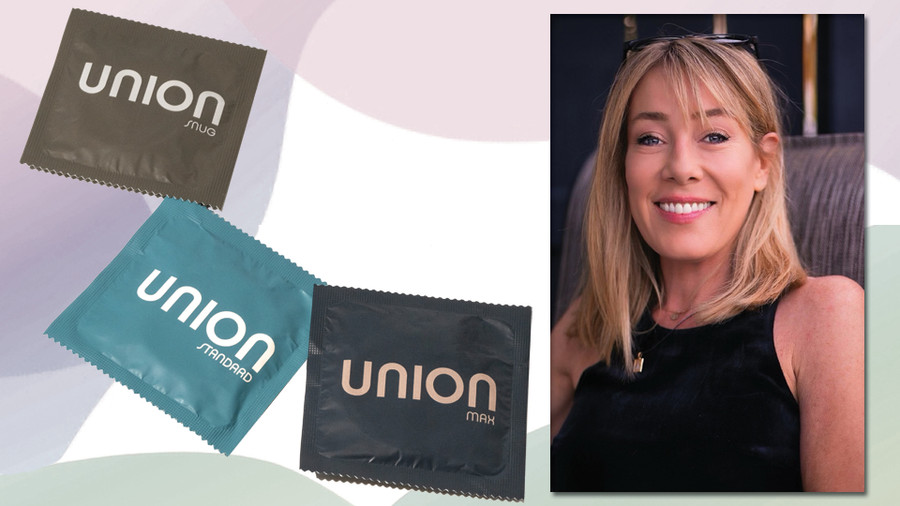
In 2021, Ardwell doubled down and launched Union, her second vegan, fair-trade, sustainable and ethically sourced condom brand. From a fringe movement to unprecedented popularity, Ardwell’s entrepreneurial journey in the vegan wellness arena isn't just business, it's personal.
XBIZ: What motivated you to become an early adopter of vegan intimate health products?
Ardwell: While working in tech and advertising in 2006, I had a health crisis that led me to explore natural fertility and intimacy products. The culprit was hormone-based birth control, which had wrecked my body hormonally and physiologically. After a frustrating investigation, I discovered there were no alternative products on the U.S. market, but there was also an aggressive pharma-driven backlash against the very idea of a woman having an intentional relationship with her fertility. Ultimately, I found a natural solution with a German-made digital fertility-tracking device called Lady-Comp, which I truly believe saved my life.
First, I became a Lady-Comp evangelist to my friends and colleagues. In 2009, I imported and marketed it online as a natural form of birth control. I collaborated with Yoga Journal, My Best Birth and various natural family-planning resources to promote the concept of safely ditching the pill. Acquiring Glyde was an obvious complement and progression.
Before I took over and brought the brand stateside, Glyde was already the first condom to be certified vegan by The Vegan Society. The brand had a soft launch in 2010 after being acquired from a Canadian couple who introduced their vegan condom on Dragon’s Den, a Canadian version of Shark Tank. As a result, Glyde was adopted by a variety of independently owned natural health stores in Canada, the Pacific Northwest and California, including several of the original Whole Foods markets.
XBIZ: What inspired the launch of Union condoms?
Ardwell: Union was conceived during COVID, when we were locked down and shut off from the most essential aspects of human nature: our connections with one another, our loved ones and our work. I strongly felt that in a time of crisis we needed to come together, and I chose to use that time to create Union condoms.
Glyde and Union share key features in terms of being premium vegan condoms with three size options. However, Union condoms have a flared head for added sensation, and Union Max is our “True XL” 60 mm size, for extra comfort.
Several years ago, it was apparent there was an underserved population of wearers who couldn’t fit into the 55/56 mm “large” condom. I pursued FDA approval for a 60 mm-plus condom for Glyde. The process was lengthy, costly and onerous, so I withdrew the application. A few years ago, their requirements changed and that barrier was eliminated.
XBIZ: In what ways was launching Union different from launching Glyde in 2010?
Ardwell: Timing was tricky in terms of logistics. There were delays in manufacturing, and costs skyrocketed due to port shutdowns. All efforts were impacted.
I think today the primary challenge for brands is around D2C, cutting through digital noise and responding to shifting algorithms. The digital ecosystem is highly monopolized; platforms including Google and Meta have become more costly and complex, but less reliable.
The good news is that we have had the pleasure of working with amazing partners like Hustler, who are constantly expanding. Best-of-class distributors like Entrenue and Eldorado put an incredible level of effort into sales and client service.
XBIZ: What hurdles did you encounter as an early adopter in this arena?
Ardwell: My business has always been a labor of love. Being the first, in any endeavor one truly believes in, isn’t immediately lucrative or pleasant. As a female-identifying entrepreneur in an industry historically dominated by men, let’s just say many of the people in “the club” were particularly ruthless, and made it very personal.
Initially, the concept of a vegan-certified condom was openly ridiculed among insiders, until it became clear that a younger generation of consumers valued this feature. Then, of course, other manufacturers wanted to identify as vegan. Several copied, some outright stole, and many claimed to be the first.
I had never built a business and had no idea what to expect in terms of fighting for stability while trying to grow. It was definitely character-building! These challenges have deepened my practice of Nichiren Buddhism and devotion to service.
XBIZ: How would you like to see the industry evolve?
Ardwell: I would love to see manufacturing return to the U.S. If we learned anything over the past two years, it is that globalization has benefits and drawbacks. Manufacturing may be cheaper offshore, but with spontaneous factory closures, doubled or tripled freight costs and other unforeseen events, that could be severely destabilizing.
With so many niche brands emerging, there is an opportunity to maintain successful relationships with offshore partners, while building a domestic manufacturing infrastructure to support new brands who order in smaller quantities.
XBIZ: What is the most fulfilling part of your work?
Ardwell: It really is the joyful connection I feel with customers and colleagues that keeps me engaged and inspired. When we get an amazing review or a note of appreciation — and we receive many — there is nothing more rewarding. Both brands have the fortune of being supported by many generous and kind people.