They say a picture is worth a thousand words, and in the era of online shopping, we really do rely on images to communicate our message of acceptance and appreciation to our customers. One way to achieve this is to let your promotional images be a literal reflection of your customers, making your imagery more relatable and allowing them to build a deeper personal connection with your product and your brand.
Often, at the corporate level, it is easy to lose sight of exactly who our customers are for each market category. It is important to regularly review sales statistics to continuously reassess your target demographic and what products are important to them. In doing so, you may recognize niche demands that have flown under the radar. In recent years, my lingerie company discovered that our imagery was not necessarily a true reflection of many of our customers and we decided to do something about it. We realized that our women’s lingerie category wasn’t just for size-2 women. In fact, it wasn’t even just for women. We had been excluding many of our customers with our imagery without even realizing it. We decided we needed more variety.
An aesthetic that is eye-catching to one consumer, another one might scroll right by, so give them everything.
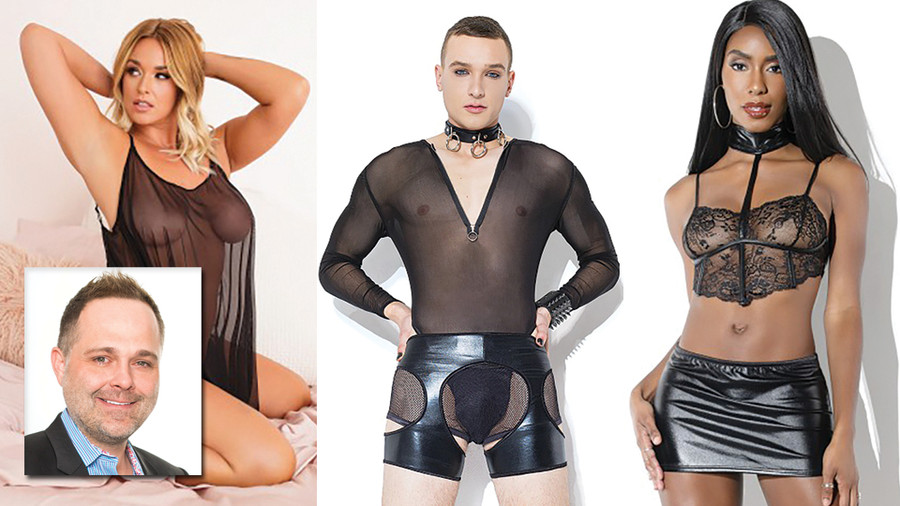
Given an increasing demand for gender-fluid pieces and androgynous looks, consider compiling a style capsule, consisting of transitional pieces styled to inspire your customers to think outside the lines. These looks can range from high-fashion chic to festival, industrial goth and everything in between. The intention is to accommodate everyone regardless of their gender, sexuality or lifestyle choices. The goal is to encourage both retailers and customers to see pieces in a new light and consider all potential styling alternatives. In doing so, you will broaden the marketability of your products while leaving a lasting positive impression on your customers, who will develop a sense of loyalty to your brand. For a consumer, it is not always just about the product itself, but more about the experience. Customers want to feel seen and understood, and for some demographics this can be a rare find that could give you, as a retailer or wholesaler, an advantage over your competitors.
In addition to gender-fluid imagery, it is important to represent a wider variety of women in your marketing photos as well. At Coquette we always strive to include curvy models in our launches, as a major portion of our sales revenue can be attributed to our plus sizes. With the growing popularity of online shopping, it is so important to have product shots on different body types to make it easier for our online shoppers to choose their size and style. It is also worth mentioning here that excessive photoshopping is not helping our online consumers establish what will work best for them. Although lingerie is about creating a fantasy, it is also about feeling confident with your own individuality. We want to encourage customers to feel sexy, regardless of what society may have traditionally deemed as “flaws.” Stretch marks are the new beauty marks and unique features surpass “conventional beauty.” This is not to say we can’t include our size-2 models too. This means we need to work to include both.
Aside from featuring a variety of body types in your imagery, it is also crucial to include as many different looks as possible. Models of different ethnicities are essential for so many customers to connect with and unfortunately this fact is often overlooked in this industry. Statistically, it is harder to measure the volume of sales attributed to each ethnicity, especially online. What we can see is that when we have images available of multiple models with varying ethnicities, we do see a spike in sales. Again, it’s about connection and relatability. The more relatable the imagery, the more consumers will connect with your brand. More consumer connections means more sales and a more positive brand image.
While extensive photo shoots may involve a significant financial investment and may prove to be time-consuming, the numbers show that they do pay off. One way for smaller companies to manage the cost is by sending product to a variety of social media influencers in exchange for content. Another option would be incentivizing your customers to wear or review your product in a post and tag your company. Be sure to have them consent to your company using the images on your website. One of the benefits to an online retail platform is that there is no limit to how many product images you can include, just like there is no limit to the different types of customers your product may be attracting. If in doubt when it comes to how many images you should have available, more is more. Variety is the key. An aesthetic that is eye-catching to one consumer, another one might scroll right by, so give them everything! If a picture is worth a thousand words, imagine what five or even 10 pictures are worth.
Marcus Horea is the president of Canada-based Coquette International, a family-owned company offering diverse styles and a wide range of sizing.