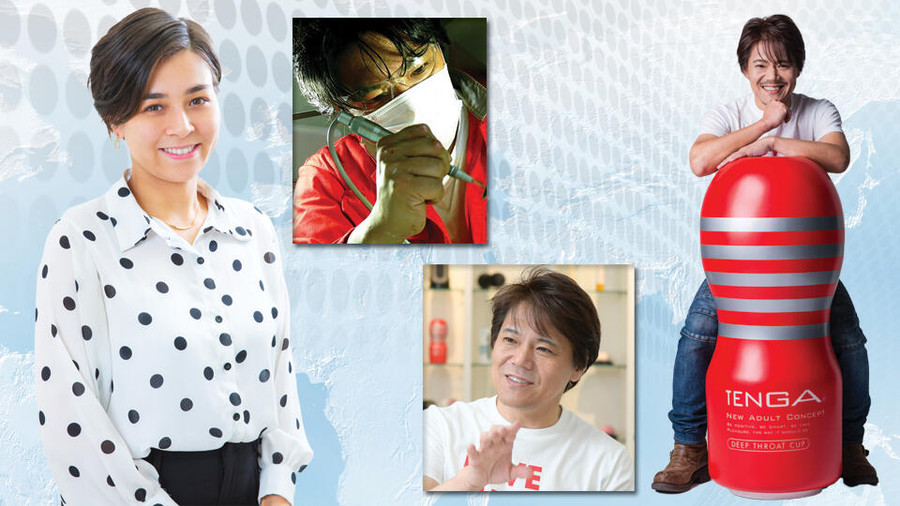
Tenga was born from the belief that sexuality and sexual needs are natural and should be valued. Koichi Matsumoto founded the company in Tokyo in 2005, using his personal savings to create the first prototypes for the product that the adult retail industry and consumers would initially come to know his company best for: Tenga Cups. With these male masturbators, a new approach to self-pleasure was born, leading to a dizzying array of products the company now produces for both men and women.
Like any reputable pleasure products brand, Tenga attributes its growth to hard work and building trust. Over 16 years, Matsumoto’s company — he still serves as president — has grown from a workforce of 17 people to almost 200 worldwide, with Tenga products presently sold in over 70 countries around the world. According to the company, the most lucrative market for those products is the U.S.
We don’t want to produce a product just for the gimmick of a novel new piece of tech; it has to be a good product overall.
“The first Tenga products in the U.S. were launched in 2008, where we received positive feedback for our discreet yet stylish product design from both end consumers as well as retailers, which was unusual for masturbators back then,” Marie Aoyama, a Tenga global marketing department rep explains. “Since the launch of our U.S. office in Los Angeles six years ago, we have started proactive sales physically in the U.S., have participated in exhibitions, and have expanded our connections with other business partners such as smaller adult retail stores and some mainstream stores.”
This brand expansion has led to constant collaborations, many starting from Tenga’s home base. Among Tenga’s most prolific collaborations is its line of masturbator cups and eggs featuring artwork from artist and AIDS activist Keith Haring.
“In our home market of Japan, we have a brand awareness of roughly 90% amongst young men in their 20s. Thanks to this, we frequently collaborate with brands and influencers outside of the adult industry. These collaborations play a key role in reaching new customers and raising brand awareness amongst an audience we would not be able to reach alone.”
Packaged in discreet, unassuming, sleek containers, Tenga’s “neutral product design” is as essential to its masturbators’ functionality as it is to its marketing image of being “friendly items that can be integrated into everyday life.”
“We pay great importance in creating product designs that do not imitate or replicate body parts, as we understand that not everybody feels confident integrating a realistic masturbator into their sexual routine,” Aoyama said. “We believe our designs help to position our brand as an alternative to already existing products, and stay suitable for a broader audience.”
For example, the Tenga Egg, one of the company’s bestselling items in the U.S., has a playful yet discreet design inspired by an everyday item not often associated with sexuality — an egg. This design is especially beneficial for beginners who are unsure about using masturbation products.
“The Egg is seen as fun and not intimidating,” Aoyama adds.
In keeping with the company’s embracing of sexual needs as natural and healthy, Tenga Healthcare was born in 2016. Through this healthcare division, the company works to solve sexual problems and address concerns, contributing to “sexual wellness for all people in cooperation with various academic societies, specialists and institutions in medical care, welfare and education.”
One of the major challenges for any company looking to stay competitive, whether it makes egg-shaped masturbators or coffee makers, is remaining innovative while providing better value with each new product. Tenga attaches great importance to the time the company devotes to executing its fully-realized R&D process, working hard to ensure the same lasting value its customers have come to expect from the brand. This step is crucial, Aoyama says.
“We don’t want to produce a product just for the gimmick of a novel new piece of tech; it has to be a good product overall.”
For instance, the company’s Iroha brand, launched in 2013, was created to deliver safe pleasure items for women. Just as it used to be with masturbation products made for men, pleasure products for women often fell far from the mark of meeting women’s sexual needs. This was largely due to the fact that in Japan, female pleasure was and is considered taboo, a topic met with shame and stigma. With its Iroha brand, Tenga set out to create high-quality toys made of body-safe materials, specifically designed for female pleasure, stifling that shame and stigma for women who seek to explore the same equal opportunity to masturbate with Tenga.
Although the company produces decidedly niche items for the pleasure products market, Tenga’s take on the new year is the same as that of many other businesses.
“One of our main company goals is to further expand our reach in the mainstream market both domestically in Japan and the U.S.,” Aoyama reveals. “We are aiming to acquire more business partners above and beyond the adult industry, such as convenience stores, big supermarkets and drugstore chains. We hope that they will add Tenga to their product lineup. Other than that, we are going to continue focusing on our online sales channel and improving our SEO performance to further raise our brand awareness.”
According to Tenga, fans of its products can expect new launches to happen all during 2022, but the company won’t reveal what they are just yet.
Suffice it to say, Tenga will continue to design, produce and sell safe, functional and hygienic pleasure products, staying true to Koichi Matsumoto’s vision of enhancing and embracing pleasure and sexuality for everyone to enjoy without guilt or shame.