



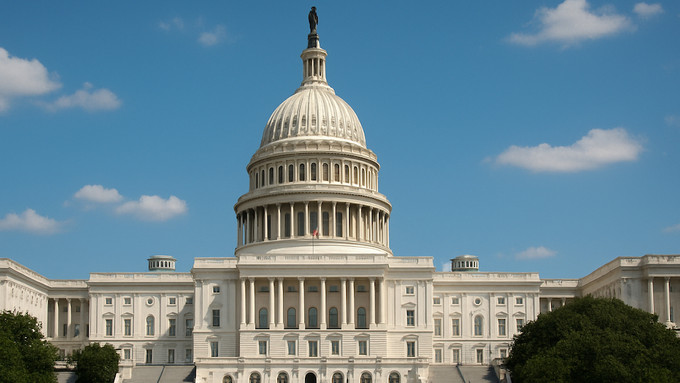
WASHINGTON — Two members of Congress on Thursday introduced new legislation to repeal Section 230 of the Communications Decency Act, which protects interactive computer services — including adult platforms — from liability for user-generated content.
California Democrat Mark DeSaulnier and Florida Republican Jimmy Patronis are co-sponsors of HR 10332, the “Sunset Section 230 Act,” which would take effect two years after enactment.
A press release from DeSaulnier’s office called Section 230 “obsolete and dangerous” and asserted that repealing it would enable Americans to “bring legal action against big tech companies responsible for online harm.”
The proposal joins a number of other pending bills aimed at removing Section 230 protections, none of which have advanced through the legislative process since their introduction. In fact, the new legislation bears the same name as a bill Patronis introduced in January, but which has seen no movement since then.
One reason for adding “sunset” provisions, which would set an "expiration date" for Section 230 rather than immediately repeal it, is that legislators seeking changes in the law see such "deadline setting" as a way to gain concessions from stakeholders opposed to changing Section 230. In March, the U.S. Senate Committee on Commerce, Science, and Transportation held a hearing that focused on potential changes to Section 230 rather than outright repeal, which lacks strong support.
Industry advocates, however, have voiced strong concerns that opening up Section 230 to tinkering could easily pave the way for a variety of specific “carve-outs,” in the tradition of FOSTA/SESTA exemptions — and that a carve-out aimed at or including the industry would render adult sites liable for user-generated content, opening the floodgates for civil lawsuits.
While most of those lawsuits could likely be defended against on First Amendment grounds, Section 230 enables defendants to avoid expensive litigation. As Techdirt’s Mike Masnick has written, the law “provides a procedural advantage in getting vexatious, frivolous nuisance lawsuits shut down much faster than they would be otherwise.” This is especially advantageous to the industry given that anti-pornography groups have filed lawsuits accusing adult sites of "trafficking."
Should Section 230 protections be weakened or withdrawn, “Big Tech” platforms could afford to defend their moderation choices in court more easily than smaller companies. Small sites and platforms could find the legal costs prohibitive, effectively giving the power of censorship to potential plaintiffs, including anti-porn groups.
The continued relevance of Section 230 for adult sites was demonstrated last month when the U.S. Court of Appeals for the 9th Circuit upheld a lower court’s ruling that Section 230 protects EU-based WebGroup Czech Republic (WGCZ), parent company of XVideos, XNXX, BangBros and GirlsGoneWild, from liability in a case involving user-uploaded CSAM on its tube sites. The National Center on Sexual Exploitation (NCOSE), a conservative anti-pornography organization that has called for Section 230 repeal, backed the case against WGCZ.
The likelihood of adult platforms being targeted under a weakened Section 230 is further reinforced by attitudes toward the industry within the current administration. Project 2025’s “Mandate for Leadership” blueprint, which has served as a reliable road map of Trump administration priorities, called for scrapping Section 230’s current approach. The same document included a call to criminalize all adult content, asserting that pornography “has no claim to First Amendment protection.”
DeSaulnier and Patronis’ bill has been referred to the House Committee on Energy and Commerce.



