

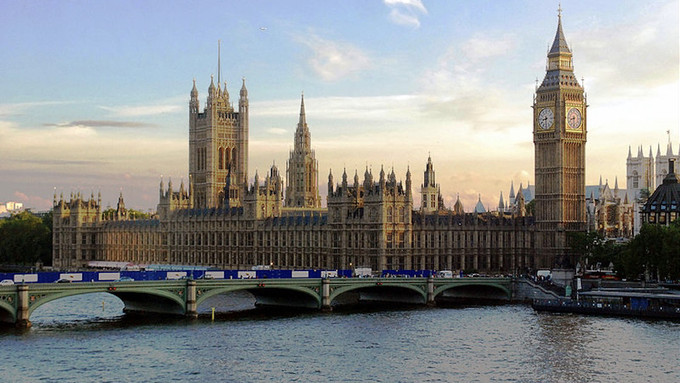
LONDON — The House of Lords, the U.K.’s upper house of Parliament, on Monday approved amendments to the pending Crime and Policing Bill that would invalidate talent contracts, and outlaw ‘step’ porn and content in which adult performers appear to portray minors.
‘Step’ Content Ban
The House of Lords approved an amendment making possession or publication of pornographic images of sex between relatives a priority offense under the Online Safety Act — a label that currently applies to material such as CSAM and terrorism content.
In December, the government rejected proposed amendments that would have criminalized content depicting sex between stepparents and stepsiblings. Echoing this stance, the amendment as introduced by the government would not have applied to content depicting sex between step relatives.
However, Baroness Gabrielle Bertin, a Conservative member of the House of Lords who served as independent lead reviewer on the influential U.K. pornography review, introduced language extending the prohibition to include “step” content, which the House of Lords approved.
Bertin told the House of Lords, “Depictions of incest being banned is great, but it is just token if you do not ban step incest as it will all be driven into the step incest category, which is just as damaging.”
If the Crime and Policing Bill becomes law with the amendment intact, possessing such material could be punished with up to two years imprisonment, a fine or both, while publishing such material could be punished with up to five years imprisonment, a fine or both.
Withdrawal of Consent
The House of Lords also approved an amendment to the Crime and Policing Bill that would entitle anyone appearing in adult content to withdraw their consent at any time.
The amendment would make it “irrelevant” whether an individual has previously given their consent to publication of the content in which they appear. If they subsequently withdrawn their consent, platforms would have to remove the content within 24 hours.
Prior to the vote, Parliamentary Under-Secretary of State Baroness Alison Levitt told the assembled Lords that while the government accepted the intended aim of the amendment, it could not accept the proposed approach.
“The part of the amendment relating to the withdrawal of consent and its application to professional entertainment contracts has a number of practical implications,” Levitt cautioned. “Where content is produced legally, as with the wider film industry, the rules and regulations governing its use are usually a commercial matter to be agreed between the performer and the production company, taking into account the intellectual property framework.”
If the Crime and Policing Bill becomes law with the amendment intact, violations could result in imprisonment of up to two years, a fine or both. Platforms found to violate the law could be fined up to 18 million pounds or 10% percent of their worldwide revenue.
Adult Performers Portraying Minors
The House of Lords additionally approved an amendment that would outlaw content that “mimics” child sexual abuse by featuring an adult performer who “appears to be or is implied to be a child.”
Notably, this prohibition would interpret elements such as costume and setting as evidence of whether an adult performer is portraying a minor. No explicit mention of a character’s age would be required.
The government opposed this amendment, with Levitt warning legislators that it would create challenges for police and government authorities charged with enforcing CSAM prohibitions.
“It is important to remember that the purpose of this suite of legislation is to criminalize indecent images of actual children and to help identify and swiftly safeguard children who are subject to sexual abuse,” Levitt said. “Expanding the scope of the Act to include adults who can and have consented to make pornography risks diverting resources for the police to try to distinguish children from adults who are pretending to be children. It risks delaying necessary safeguarding activity and leaving real children at continued risk of harm.”
If the Crime and Policing Bill becomes law with the amendment intact, content interpreted as featuring adult performers portraying minors would, like “step” content, become a priority offense under the Online Safety Act.
Pornography Review Head Denounces Industry
Measures intensifying regulation of adult content online gained momentum following the release, in February 2025, of the “pornography review” initiated under the conservative government of former U.K. Prime Minister Rishi Sunak.
The review’s recommendations included banning any adult content deemed “degrading, violent and misogynistic.” This led to the inclusion, in the Crime and Policing Bill, of content depicting nonfatal strangulation, or “choking.”
Bertin, who headed the review, repeatedly condemned the adult industry during Monday’s parliamentary debate.
“It is a sector that has been driven to abusive extremes by powerful, profit-driven algorithms, too often monetizing sexual violence and degradation,” Bertin told the House of Lords. “Exploitation and trafficking are rife. Sexual abuse material remains far too easy to find on these sites, and many survivors tell us that what is filmed as content is in reality recorded abuse. This cannot continue.”
Bertin called for “a far more aggressive business disruption process across the porn ecosystem.”
“Porn is ultimately about the money,” she said. “We need far tighter regulation and law that ends the grey area and replaces the passive, light-touch self-regulation with far more proactive scrutiny.”
Once the Crime and Policing Bill passes out of the House of Lords, it will return to the House of Commons for consideration of the new amendments.