



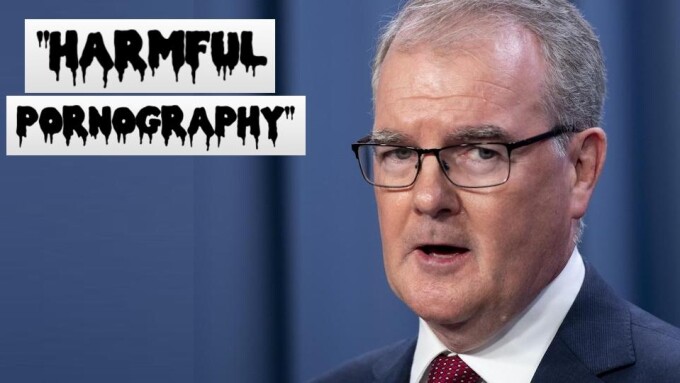
SYDNEY — After New South Wales state authorities announced earlier this month plans to hold an inquiry on the impacts of “harmful pornography,” researchers associated with the prestigious Australian academic site The Conversation have questioned the blatantly negative framing of the project.
New South Wales Attorney General Michael Daley has requested that a parliamentary committee “look into and report on the impacts of violent and misogynistic pornographic material on mental, emotional and physical health,” Australia’s ABC News reported.
"A generation of young men are growing up with unprecedented access to the online world, and this includes early and easy access to pornography, with harmful depictions of the treatment of women," Daley told the press on Aug. 2. "This inquiry will for the first time in our state provide insight into the full impacts of harmful pornography online and young people's access to it."
This week, Giselle Woodley and Lelia Green of Edith Cowan University, whose research is part of the Australian Research Council (ARC) Discovery Project "Adolescents' perceptions of harm from accessing online sexual content," published an article on The Conversation noting that “the negative framing of the inquiry risks revisiting old arguments, rather than advancing the debate and policies.”
According to Woodley and Green, although politicians, the mainstream press and vocal anti-porn and anti-sex-work activists have centered the debate around the potential harm to teenagers, “very few people have interviewed teens about it.”
“As part of our research, we asked teens about their experiences of porn and found many have a nuanced understanding of the risks, but also the benefits,” they wrote.
Woodley and Green’s research showed that, contrary to the biases of anti-porn activists as filtered through politicians and the media, “teens hold very mixed views about both porn and sexting” and “some of these views were positive.”
Porn, the authors also found, “may offer more accessible and explicit representations of sex and bodies that schools cannot.”
The authors recommend that policymakers and researchers “listen to teens, giving more importance to their firsthand experiences over secondhand statements. Secondhand statements tend to repeat warnings teens hear from others. Their actual experiences may be different from those represented in the media.”
Main Image: New South Wales Attorney General Michael Daley



