



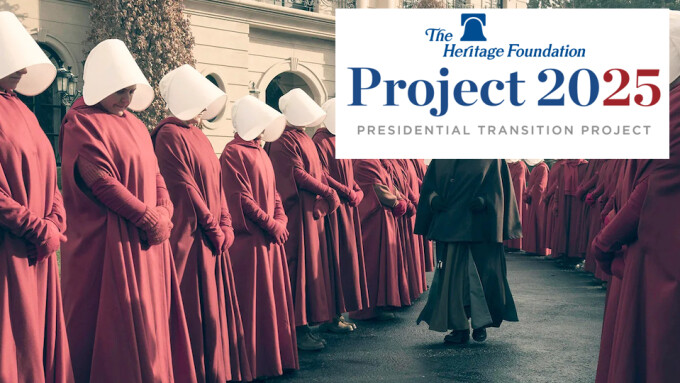
LOS ANGELES — Free Speech Coalition (FSC) has released a statement warning about the proposed conservative initiative Project 2025 and its multiple threats to the rights of sex workers and the LGBTQ+ community.
The FSC statement follows:
As we celebrate Pride Month, it's crucial to reflect on the progress we've made and the challenges that lie ahead. This year, a significant threat comes from Project 2025, an aggressive and dangerous right-wing policy proposal that could have severe implications for our industry and community.
What is Project 2025?
Project 2025 is a right-wing blueprint for the first 180 days of a second Trump administration. It was developed by a coalition of over 80 conservative organizations, including Alliance Defending Freedom, Family Research Council, the Heritage Foundation, and the American Principles Project, many of which have been designated anti-LGBTQ hate groups by the Southern Poverty Law Center. Their goal is to drastically reshape American society by rolling back freedoms and rights that have been fought for and won by women, members of the LGBTQ+ community, and advocates for freedom of expression in recent decades. Among other things, it proposes to ban pornography, withdraw the abortion pill from the market, and eliminate terms like “sexual orientation” and “gender equality” from federal laws.
How Project 2025 Threatens Our Community
The 920-page document details a wide range of policy proposals, from immigration and voting rights to healthcare and taxation, that would fundamentally reshape society using executive power. The impact would be vast, and censorship of “pornography” is central to this project. The mandate calls for banning “pornography” — broadly defined to include LGBTQ+ content — and imprisoning those who distribute it.
Criminalization of Porn and the LGBTQ+ Community
“Pornography, manifested today in the omnipresent propagation of transgender ideology and sexualization of children, for instance, is not a political Gordian knot inextricably binding up disparate claims about free speech, property rights, sexual liberation, and child welfare. It has no claim to First Amendment protection. Its purveyors are child predators and misogynistic exploiters of women. Their product is as addictive as any illicit drug and as psychologically destructive as any crime. Pornography should be outlawed. The people who produce and distribute it should be imprisoned. Educators and public librarians who purvey it should be classed as registered sex offenders. And telecommunications and technology firms that facilitate its spread should be shuttered.” (Mandate for Leadership 2025, Page 5)
Project 2025 bans both pornography and LGBTQ+ content and criminalizes those who own or share it. In fact, Project 2025 declares any and all LGBTQ content as pornographic in nature, thus criminalizing it and placing LGBTQ parents, educators, and public librarians at risk of prosecution for allowing people to access LGBTQ+ literature, resources and other content under severe laws targeting pornography.
With new laws calling for the imprisonment of those who produce or distribute adult content, Project 2025 advocates for the arrest of millions of adult content creators — a War on Porn that might mimic the War on Drugs. This risk to anyone working in the sex industry is enormous, but given the project’s twin concerns about LGBTQ+ content, would likely fall most heavily on LGBTQ+ sex workers, pushing them further into the margins, and increasing risk of violence and exploitation.
This is not new, but a reversion to earlier laws that treated both adult content and anything related to LGBTQ+ identity as “obscene.”
Reversal of Legal Protections
Project 2025 seeks to overturn landmark court decisions and laws that protect LGBTQ+ individuals from discrimination in areas such as employment, housing, and healthcare. This could mean the cutting of life-saving resources such as suicide prevention and access to gender-affirming care.
The alarming precedent set by the Supreme Court's Dobbs decision overturning Roe v. Wade was unfortunately just the beginning. The right to sexual privacy and bodily autonomy underpins both abortion rights and the rights of the adult industry. The Dobbs decision suggests that rights not "deeply rooted" in history, including sexual privacy and autonomy, are not constitutionally protected. Justice Clarence Thomas used the Dobbs decision to explicitly call for overturning prior cases that granted protections for private sexual conduct, contraceptives, and marriage equality.
Historically, both the adult industry and the LGBTQ+ community were terrorized by laws criminalizing private sexual conduct — just as those in criminalized sectors of sex work still are. Project 2025 promises a world in which vice raids, police surveillance, and the constant threat of arrest loom large.
Intensified Censorship
Efforts to increase censorship of sexual content and LGBTQ+ representation in media threaten the visibility and expression of LGBTQ+ individuals. The initiative includes a sweeping “Don’t Say Gay” policy to blot out all LGBTQ content on the internet and any published material with LGBTQ content, regardless of its nature.
Increased censorship and content restrictions severely limit the ability of adult content creators to operate freely, affecting livelihoods. The adult industry and LGBTQ+ rights frequently face common adversaries in the legislative and judicial arenas. Laws aimed at restricting adult content, such as age-verification, often have broader implications, leading to increased surveillance and criminalization of LGBTQ+ people. Efforts to ban or severely restrict adult content can set legal precedents that undermine broader sexual freedoms, making it easier to target LGBTQ+ rights under the guise of protecting public morality.
What Should We Do About It?
Vote. Organize. Make people understand what’s at stake. Stopping Project 2025 means stopping the people behind it from taking power.
Regardless of who is elected in November, it’s critical to recognize that all systems of oppression are bound to each other — LGBTQ+ rights are sex workers' rights and so forth. The laws they use to suppress “pornography” are already being used to censor sex workers, reproductive rights, education, the fight for racial justice and the rights of the LGBTQ+ community. Everyone has a stake in fighting against these regressive measures.
We urge you to do everything you can to prevent the dark future envisioned by Project 2025. Make sure you’re registered to vote. Share this knowledge with your network, advocate for change by contacting your local representatives, and use your platforms to support and amplify the voices of those directly impacted by these policies. Despite the stigma and discrimination faced by this industry, we have an audience of billions. It’s crucial that we use that power to protect our rights — and the rights of everyone in a free society.
For more information, visit FreeSpeechCoalition.com.



