



NASHVILLE, Tenn. — Tennessee’s version of the age verification bills being sponsored around the country by anti-porn religious conservative activists continues making its progress through the state legislature toward likely approval.
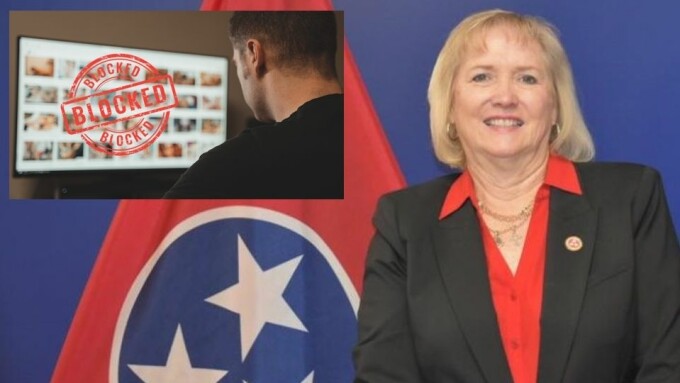
On Tuesday, the state’s Senate Finance Committee advanced SB 1792 — titled by its chief sponsor, Republican Senator Becky Duncan Massey, as the “Protect Tennessee Minors Act” — out of committee.
SB 1792 “would make porn websites criminally liable if they don’t verify the ages of users of their sites through photo matching,” local CBS affiliate WREG reported.
Massey compared the proposed new requirement to “age verification when folks go on an alcohol-related site,” and said her bill is necessary because, she believes, pornography “can cause damage” and “mental health issues.”
FSC Director of Public Affairs Mike Stabile, however, told XBIZ that Massey’s bill effectively criminalizes the distribution of adult content online, which he cited as a frequently stated goal of many conservatives.
Stabile also called SB 1792 “an escalation of what we’ve seen in other states” and deemed it “a grave threat” to First Amendment protections.
“First it was private lawsuits, then fines from attorneys general — Tennessee evidently wants to become the first state to begin arresting pornographers,” Stabile said, adding that the Tennessee bill’s chilling effect on legal speech will be substantial.
“The legislature’s own fiscal review committee says that it assumes ‘a majority of entities’ will simply stop publishing content in the state, but that, if not, ‘the increase in such convictions could be significant,’” he explained.
Stabile also pointed out that for many legislators, age verification is “just an excuse to increase liabilities for people that create, and platforms that host, material dealing in sex or sexuality. It’s no surprise that Tennessee has also recently expanded the definition of ‘material harmful to minors’ to include drag and other non-explicit LGBTQ+ content offline, and the bill itself criminalizes as little as the description of a nipple.”
Aylo: Recent Slew of AV Laws Are 'Ineffective, Dangerous'
SB 1792 would also require websites to keep “anonymized age-verification data” for extended periods of time.
Massey told WREG, “They keep the data but not personally identifying data. They have to keep the data to prove that they did verify for seven years, but it can’t have their name, address. It can’t have any personal identifying markers.”
Kansas, Texas, Arkansas, Indiana, Louisiana, Mississippi, Montana, Utah and Virginia have passed similar age verification bills, all introduced by Republicans, while 19 other states have introduced similar legislation. Florida recently passed its version of the law, written by a legislator who is also a pastor, as part of a more comprehensive social media bill.
Aylo issued a statement about the Tennessee bill and the other laws, stating, “The way many jurisdictions worldwide have chosen to implement age verification is ineffective, haphazard, and dangerous. Any regulations that require hundreds of thousands of adult sites to collect significant amounts of highly sensitive personal information is putting user safety in jeopardy. Moreover, as experience has demonstrated, unless properly enforced, users will simply access non-compliant sites or find other methods of evading these laws.”
Main Image: Anti-Porn crusader Tennessee Sen. Becky Duncan Massey (R)



