



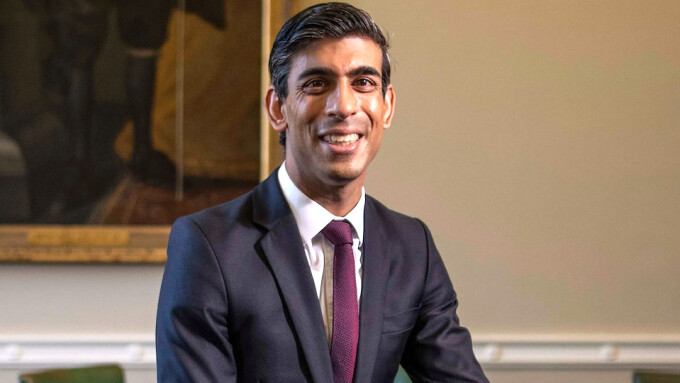
LONDON — New U.K. Prime Minister Rishi Sunak has indicated that his Tory government will backpedal from controversial language in the proposed Online Safety Bill, which would have required online services to remove content that some MPs consider “legal but harmful,” including most pornography.
This week, several U.K. news outlets — including The Sun, a Rupert Murdoch-owned tabloid that backs the Conservatives — reported that Sunak “will bring back the online safety bill this month, but will ditch the ‘legal but harmful’ clause amid freedom of speech fears.”
Sunak — the second Tory politician attempting to form a government following the collapse of Boris Johnson’s government earlier this summer and the non-starter debacle of Liz Truss’ attempt — has “ordered Culture Secretary Michelle Donelan to get to work” on bringing the Online Safety Bill back to the House of Commons “with a string of amendments.”
Sunak has told insiders he “wants to make the promised new laws a ‘priority’ for his new government,” the Sun reported.
A 'Broken Piece of Legislation'
Free Speech and digital rights advocates around the world have denounced provisions of the bill as vague, apt to be misinterpreted and likely to lead to broad self-censorship by overcautious service providers and platforms.
Yesterday, the U.K.'s Center for Data Innovation issued the following statement from Senior Policy Analyst Kir Nuthi:
“I want to commend Prime Minister Sunak and his cabinet for committing to remove some of the worst provisions in the bill that would limit free expression. The requirements for certain online platforms to monitor and remove legal but harmful content were too broad and risked politicizing which content would be restricted in the UK. Removing this provision from the scope of the Online Safety Bill is a step toward protecting free expression.
“Unfortunately, the Online Safety Bill still needs work. Until an amended Online Safety Bill protects encrypted communications, the Online Safety Bill will continue to be a broken piece of legislation.”
A Pet Project of Vocal Anti-Porn and Anti-Sex-Work Crusaders
As XBIZ reported, in August the controversial Online Safety Bill was removed from the House of Commons schedule.
The last debate before the postponement included a motion by anti-porn activist and Labour MP Dame Diana Johnson, chair of the Home Affairs Committee, to insert amendments that, in her words, “would place a legal duty on online platforms hosting pornographic content to combat and remove illegal content through the specific and targeted measure of verifying the age and consent of every individual featured in pornographic content on their sites.”
Had Johnson’s amendments passed, they would have implicitly created a legal category of “pornography websites,” which would then have been subject to record-keeping mandates.
Such mandates could potentially also force open platforms such as Twitter or Reddit, which tolerate adult content, to reevaluate their content policies in order to avoid being categorized as “pornography websites” and thereby forced to keep records of the age and identity of anyone appearing on any piece of sexual content posted on the site.
The Online Safety Bill, adult industry attorney Maxine Lynn explained, would also allow “an arm of the U.K. government to define certain legal speech as ‘harmful,’ and requires social media sites, search engines, and similar platforms to establish and publish procedures for dealing with that ‘harmful’ speech.”
These procedures “may include removal, deleting, and hiding of content, among other things,” she added. “It also requires age verification for pornography.”
According to Lynn, governments “flagging categories of legal speech as harmful, and requiring the policing of such by Big Tech, threatens the existence of free speech, and certainly, the adult industry.”



