



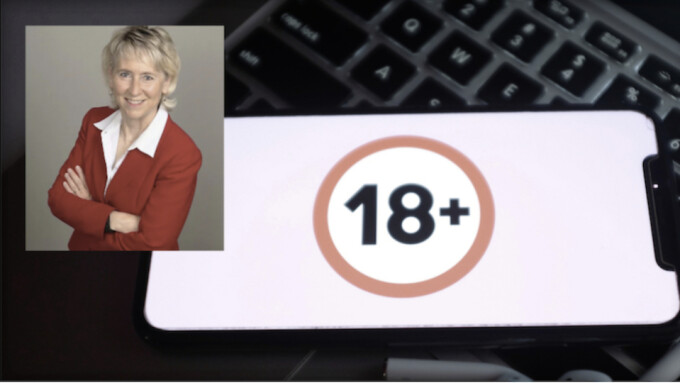
SALT LAKE CITY — On Wednesday, the Utah House of Representatives passed an amended version of a controversial bill that would mandate a default “porn filter” on any phones, computers, tablets or any other electronic devices sold in the state starting in 2022.
HB 72, sponsored by Rep. Susan Pulsipher (R-South Jordan) — a realtor with no technology experience — was speedily passed by the House only hours after it had cleared the committee stage by the narrowest of margins (a 6-5 vote), as XBIZ reported.
The bill was introduced into the Utah Senate yesterday, where it is co-sponsored by staunch anti-porn crusader Wayne A. Harper.
The unusually swift, overnight passage of the bill with minimal-to-nonexistent debate flew under the radar of local and national news organizations, which had not yet reported on it by Friday morning.
Pulsipher had attempted to introduce the bill last year, when it died at the committee stage over serious bipartisan concerns about privacy and interference with interstate and international commerce.
Earlier this month, Pulsipher invited anti-porn advocates to support the bill at the committee stage, including an officer for NCOSE (formerly known as Morality in Media), the leading national sponsor and funder of anti-porn legislation.
Members of Utah trade associations, tech company lobbies and free speech groups all advocated against HB 72.
If passed, the mandatory filters — from which for-profit, faith-based software companies have been profiting for some time — would have to be activated by default in 2022 if certain additional conditions, attached to the bill as an amendment, are met.
According to analysts, international manufacturers of phones and computers like Apple or Google could face civil liability if they don't comply.
Utah Now Officially the Test Case for Similar Bills Nationwide
The amended version of HB 72 that eventually cleared the committee has a provision that "the bill will not go into effect until five additional states have adopted similar language. It gives a 10-year period for that to occur," the Salt Lake City Fox affiliate reported earlier this month.
This suggests that NCOSE will now attempt to get “copycat bills” introduced in other conservative states, which has been their strategy in what religious groups have termed “Project Blitz.”
The most clear example of the “copycat bill” strategy concerning adult content is the passage of dozens of state-level resolutions declaring a fictitious “porn public health crisis” between 2016 and early 2020, when the actual COVID-19 crisis put those efforts on hold.
Utah was also chosen by NCOSE and their allies as the "test battleground" for that campaign.
Last week in Iowa, Rep. Sandy Salmon (R-Janesville) — a religious conservative who has been the most vocal crusader against adult entertainment in the state legislature — introduced the first of these copycat bills, but was temporarily thwarted when the subcommittee declined to advance a bill that proposed blocking adult content on electronic devices by default, as well as creating a special $5 tax on adult entertainment to fund initiatives against “human trafficking.”
Main Image: Utah State Representative Susan Pulsipher (R-South Jordan). Photo: Utah House of Representatives.



