



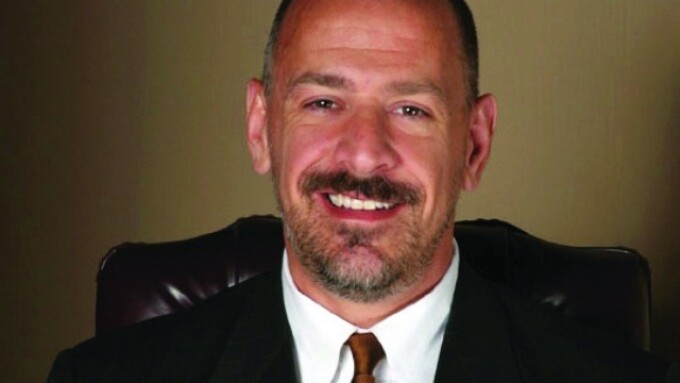
NEW ORLEANS — The 5th U.S. Circuit Court of Appeals today handed another victory to industry attorney D. Gill Sperlein and a client involved in the defense of a trademark infringement claim filed by a so-called AIDS denialist (the plantiff believes HIV does not cause AIDS).
Last month, the 5th Circuit shot down an appeal made over alleged infringement, ruling for the defendant, and today the court reversed and remanded the case to the lower court over attorneys fees.
The case involves plaintiff Clark Baker, who owns a trademark for his “HIV Innocence Group,” an organization that said it helps to defend people “who were wrongly accused of exposing others" to HIV.
Jeffrey DeShong, an HIV activist, set up HIVInnocenceGroupTruth.com to publish highly critical information about Baker and his group.
Baker sued in July 2013, accusing DeShong both of infringing his trademark and of defamation.
But a federal judge dismissed the trademark claims, ruling Baker had “failed to raise an inference that any reasonable person could confuse the content of DeShong's website” with his trademarked HIV Innocence Group.
Baker appealed the decision over infringement, as well as who should pay attorneys fees, losing both rounds.
Sperlein told XBIZ this afternoon that, in effect, “this ruling will deter others from trying to silence critics by bringing bogus trademark claims … and that is something I am proud to be a part of.”
“[I]t was no surprise when a Texas district court dismissed a case in which AIDS denialist Clark Baker and his organization, the Office of Military and Scientific Justice (OMSJ), sued Jeffrey DeShong for using the company’s trademark on a website criticizing Baker and his organization,” Sperlein said in a release today. “Although the lawyer should have known this was a frivolous claim, the judge was reluctant to go one step further and order an award of attorneys fees against Baker and OMSJ. Today, in Baker v. Deshong, the 5th Circuit ruled that the district court got it wrong.
“Under 15 U.S.C. § 1117(a) of the Lanham Act, a court should award attorneys’ fees to the prevailing party in an 'exceptional' case. The issue on appeal, involved how to determine if a case is ‘exceptional.’”
Under the new standard, Sperlein said, “an exceptional case is one where in considering both governing law and the facts of the case, the case stands out from others with respect to the substantive strength of a party’s litigating position, or the unsuccessful party has litigated the case in an ‘unreasonable manner.’”
Sperlein noted that other federal circuit courts — namely the 3rd and 4th U.S. Circuit Court of Appeals — have already adopted the standard.
Sperlein said that today’s ruling should likely have a significant impact on speech.
“First, lawyers will be much more reluctant to bring a bogus trademark claim, just because they don’t like what a critic has to say,” Sperlein said. “They will have to decide if they can prove an alternative claim, such as defamation. However, those claims are not often any more attractive to potential plaintiffs since the First Amendment and state anti-SLAPP laws offer significant protections to individuals who engage in public criticism.
“Nonetheless, arrogant plaintiffs will continue to bring bogus trademark claims. Therefore, the second effect the case will have may be more important. With a more lenient standard for awarding attorney fees, defendants who have been unfairly sued will have an easier time in locating counsel willing to defend them on a pro bono basis, knowing that they have a good chance of obtaining an award for the fees the lawyer would normally charge.”
Sperlein, on a winning note, however, said that today’s victory was a financially hollow one.
“Because the defendant here has applied for bankruptcy, I don’t see a likelihood of collecting,” he told XBIZ.



