If you’re ever in Dallas “, Texas,” I highly recommend a visit to the Rosewood Mansion on Turtle Creek for an opulent Texan experience in one of the city’s most iconic landmarks. Rich burled wood finishes, chinoiserie textiles, a beautiful cantilevered staircase — the atmosphere of the historic estate is truly mesmerizing and certainly made for an ambient backdrop on this particular occasion.
Rachel Starr pulled up to Rosewood Mansion 20 minutes ahead of our scheduled meeting time. Just hours before, a truck hit a light pole outside of Rachel’s residence, and the impact had knocked out the power while Rachel was mid-shower. I go downstairs to greet her in the lobby. Despite the frantic morning, she’s well put together: a soft green surplice blouse, tight white skinny jeans, yellow pointy-toe pumps. Her signature long, dark locks lay perfectly smooth and straight around her defined shoulders despite the thick cloud of humidity hanging outside.
If you want longevity, if you want financial freedom, diversifying your revenue streams is a must. If you put all of your eggs in one basket, you are subjecting yourself to all of the regulations of that one market sector that can change in an instant.
We head into the Mansion Restaurant where we’re seated inside of a beautiful sunroom overlooking the estate grounds. As the last soft rays of morning give way to the harsh Texas afternoon sun, we catch up over a quaint brunch complete with coffee and mimosas. It had been over a year since I had last seen Rachel: she was signing at an event in Vegas and we made a brief exchange as I was making my usual rounds. After a couple of hours talking shop, we make our way upstairs to my room for our camera interview. Rachel assesses the impromptu set: the sun had moved since my test shots before brunch, and the natural lighting was now inadequate for shooting. Without hesitation, she begins to reposition furniture, move tripods and unscrew lampshades for an optimal shot.
“I think we got it, babe!”
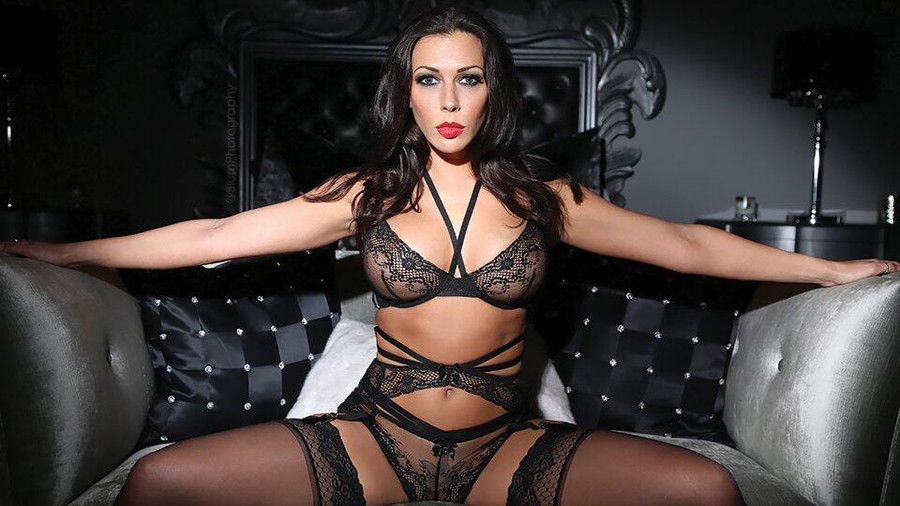
Rachel Starr hails from the Lone Star State, and is a self-professed “Southern hospitality” kind of gal. When she’s not jet-setting for feature dances or shoots, she’s conducting business from her home base in Dallas. Rachel’s statuesque figure, refined facial features and trademark bubble butt accelerated her foray into porn in 2007 after she was approached by a producer at a gentlemen’s club. Nearly 12 years later, with hundreds of scenes, multiple award nominations and a sprawling online presence (including over six million collective followers across social media) under her belt, Rachel is proud to be at the top of her game and thriving.
I was curious to find out just what was behind Rachel’s personal success, and her views on creating a sustainable living in adult for the long-term, despite porn’s ever-changing landscape.
She reflects on her early days: “My first year in the business, I didn’t have anybody to mentor me. I had an agent, but the way that the agents were set up in the industry was very turnkey. There were a lot of girls rolling in, and they didn’t really have time to fully mentor you on a really deep, personal level. So I felt alone … a lot. It was very competitive, very dog-eat-dog, and girls were pitted against each other as competition. There wasn’t a free space to talk about rates, to talk about what you’re willing to do and not willing to do. Everything was supposed to be very hush-hush, don’t share anything with anyone. That made it very hard to know what was the right direction to go. So, I had to have the courage to ask those really hard questions, to start those conversations.”
Although the hard questions weren’t always well received by others, Rachel’s inquisitive nature assisted in setting the trajectory for her career.
“I was the curiosity that killed the cat! I read a ton and I research things a ton because of the curiosity level, but I also like to share that information with others. I’ve been into self-development for years — things like Tony Robbins, seminars and books, stuff like that. I already was trying to make myself, as a person, the best that I could possibly be, but that transfers over into business too. It was very natural for me to see this as a business and say ‘OK, I need to dig deep into this and see how I can make this the best that it could possibly be. I’ve got to figure out all the aspects of this industry so I can be successful.’ And so I felt that it was my personal duty not only for my own brand to figure out what’s the right path for me, but how I can make this better.”
A self-starter, Rachel explored all available resources for information.
“It was during the Facebook and Myspace days, but girls really didn’t promote their work using those [platforms]. I definitely had to learn all about social media when I got into the industry, and about promoting myself. You really have to project yourself onto those places so you can engage with fans. At the time, those were all very new to me. I had to search on Google, ask lots of questions, talk to directors. ’What’s important to you? What makes a girl sell?’ If I met anybody that I thought was an expert at what they did, I definitely would sit them down and be like ‘OK, teach me your ways.”
The adult world, as a whole, can be fleeting. Lifestyle images of champagne popping, luxury, fast money and fat stacks are very appealing perks, but aren’t promises of long-term security. With external factors like film moratoriums, abrupt changes in state and federal regulations and even politics posing imminent threats to businesses and bottom lines, how are performers like Rachel finding solutions to not only create sustainable livelihoods, but to establish meaningful careers that last? In Rachel’s opinion, it comes down to diversity.
“You have to diversify — you have to. If you want longevity, if you want financial freedom, diversifying your revenue streams is a must. If you put all of your eggs in one basket, you are subjecting yourself to all of the regulations of that one market sector that can change in an instant. The industry, when I first got in, didn’t have tube sites. It wasn’t even a concern. Then tube sites came out, and everyone freaked out. Money plummeted, and we didn’t know what we were going to do. When the (film) industry has been shut down (on moratorium) due to an STD, all filming stops: it can stop for two weeks it can stop for two months, it can stop for four months … you don’t know. Thankfully, I had webcam. What better way to make money when that happens? There’s no filming happening, but you can still get on cam from the privacy of your own home anywhere in the world that there’s an internet connection and a laptop. Why give all of your power to one sector and leave yourself open to so much risk?”
Rachel elaborates, “On a financial statement, for example, the whole point of diversifying your portfolio is to limit your risk, right? It’s a big risk getting into the porn industry! ‘Are you going to be successful? Are people going to like you? Are people going to request you? What if they don’t?’ But you still want to be a sex worker, and you like that sexual freedom of expression? Diversify. Maybe you get only two scenes a month, but you can webcam five days a week, or you can dance at a strip club. There’s all various different ways, and I do all of them, by the way.”
Although camming has been around since circa Y2K, it has only really emerged in the adult scene within the past decade. The timing seemed to coincide with the popular trends among mainstream media: Facebook live, Instagram live, Youtube live, Periscope. The “live” concept is beyond a mere trend at this point, but a necessary part of how modern society shares and connects with others.
Rachel enlightens me: “I will tell you that I make more money camming than I do filming … but I’m committed to it. I find a lot of personal freedom in taking my laptop anywhere I want to go and creating my own schedule. If I only want to cam for a few hours, I can make money right now. If somebody cancels a shoot on me: ‘No problem, I’ve got my laptop with me. I’m still gonna make money today.’”
So why isn’t everyone diversifying, especially with such lucrative possibilities? Rachel lends her candid insight: “Girls get used to fast-paced money, and they get used to not having to sell themselves. When you’re on set, you’re there with five or 10 people, but you’re not having to sell to them. They’re just there to film it. There’s no pitching yourself to anybody. You receive your check at the end of that shoot, you go home. That’s easy money. You may be on set for six, eight, 10 hours, but it’s still relatively easy money.
“When you’re on webcam, there’s a higher level of expertise that you have to come with than just having sex and someone filming it. When you’re a cam star, or an exotic dancer, or phone sex operator, you have to learn how to engage that person. You have to figure out how to keep them there, because the longer they’re there, the more money you’re making. The only way they’re going to stay is if you’re truly fulfilling their fantasy — they have to be getting something out of it. You have to know how to ask the right questions. So I think the girls that are in film, there’s nobody to ask those questions to, there’s no one to pull that info out of.”
Rachel’s insight and breadth of experience combined with her passion and willingness to help others has naturally drawn other performers to seek her advice over the years. This eventually compelled Rachel to offer her mentorship to fellow performers, regardless of which segment of adult they are in, who are looking to establish their goals and find longevity as an adult performer, especially after being without such support so early on in her own career.
She explains, “I feel like generosity and contribution to others is what has given me my significance. Before, I used to try to get it through ‘I’m the best,’ or ‘I did this or that,’ or ‘look at these accomplishments.’ When I started coming from a level of just being generous to others, and trying to contribute to others — giving people a judge-free zone, and being a safe place for people who want to come to me and talk to me about anything, I would come with acceptance. This is what true significance is. This is what true love and connection is.”