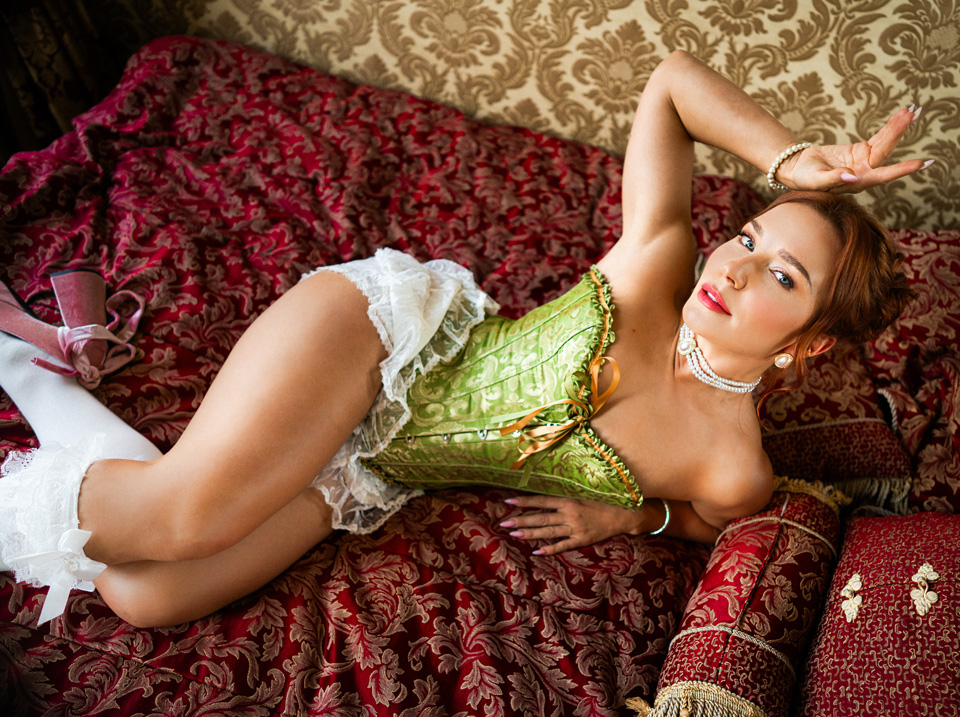
There's a bright aura that surrounds Clémence Audiard as she sits down with XBIZ to discuss her new project, Clémence Crave. She lights up as she talks about the self-funded and self-directed production label, which has become more than a pet project. In this space, she is more than a performer; she is also the architect, curator, and heartbeat of every detail, from casting and costuming to location scouting and visual styling.
"I decided to turn my fantasies into reality," she explains. "Everything is me: the ideas, the scenarios, the investment. There are no sponsors, and no compromises."
As she speaks, she tosses her trademark red mane over her shoulder, a bright spark flickering in her blue eyes with the glow of passion and the thrill of creation.
From Heartbreak to Haute Erotica
Beneath the glamour of Clémence Crave is something deeply human, because the production house was born from a relationship rupture that made Audiard realize something in her life was missing.
"I broke up with someone, and realized that in my relationships with men, I often felt like I wasn't completely free," she admits.
There is no bitterness or resentment in her tone, just a sense of clarity. That lack of freedom, she explains, extended far beyond the emotions of a bad breakup. It shaped what she felt she could explore, even within her own sexuality. And yet, her work in adult had already begun to open those doors.
"When I started doing porn, I really discovered my body — what gives me pleasure, what I like and what I don't like," she says.
Audiard entered the industry later than many of her peers, beginning her career at 29 with a clear understanding that her window, while still full of possibility, would not stretch indefinitely.
"I understood from the beginning that I don't have 25 years in front of me," she says. "Because I'm getting older, I knew I needed to create my own project sooner than later."
From the early days of her career, Audiard approached performing with intention, closely observing how sets operated, studying the people around her, and recognizing both the creative freedom and limitations within existing creative structures.
"I like the industry. I like the open-minded people I meet on set every day," she says. "And I started thinking about creating something of my own. I decided to focus on myself and on my career."
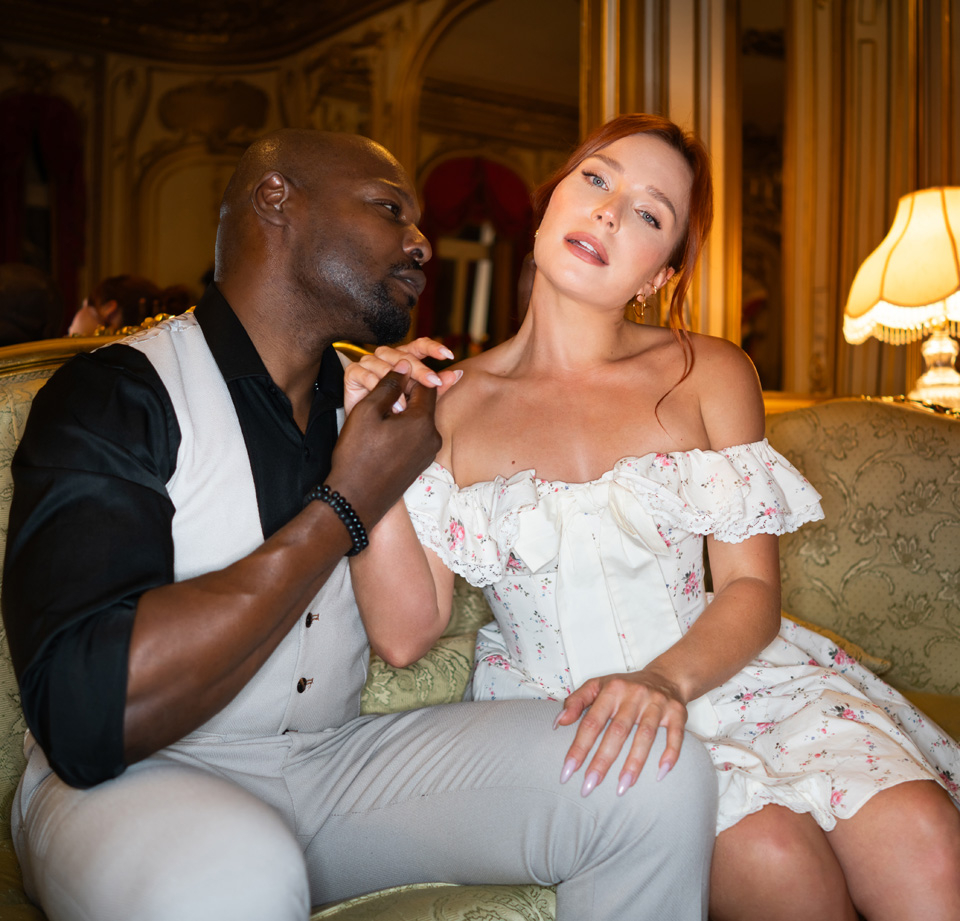
'No Way Back'
Audiard speaks carefully when describing what she is building, her wording reflecting both the scale of the project and the intimacy at its core.
"It is my brand, my name and my project," she attests. "I put my own budget into it. I really do everything myself. All the ideas, scenarios, costumes, decoration, locations and the investment — I do it all."
It is a level of authorship that turns the work into an extension of herself, with every decision carrying her spirit and every detail reflecting her carefully crafted vision.
That level of control becomes even more evident on set, where the balancing act happens in real time. Audiard performs in every scene while simultaneously directing, producing and managing the realities of production. She coordinates performers, oversees scheduling and ensures everyone is comfortable and aligned with the tone of the shoot. At the same time, she works closely with her videographer, translating the images in her mind into something tangible for her audience.
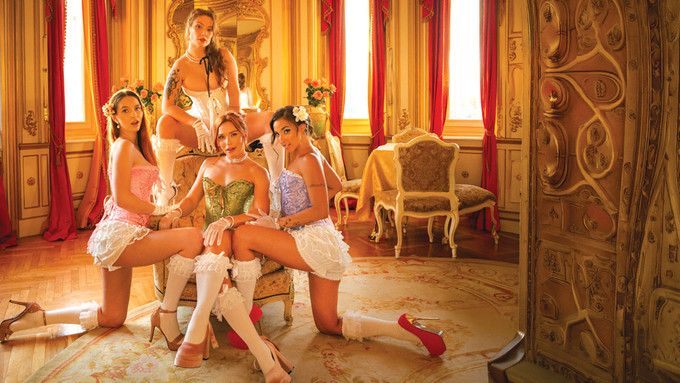
The centerpiece of her first major project, "No Way Back," is a setting that feels almost mythological in tone: a sprawling, opulent property in Budapest that looks less like a rental property and more like a private European castle.
"It's an Airbnb," she says with a smile. "I selected it because I needed a big, luxurious location where I could shoot multiple stories at once."
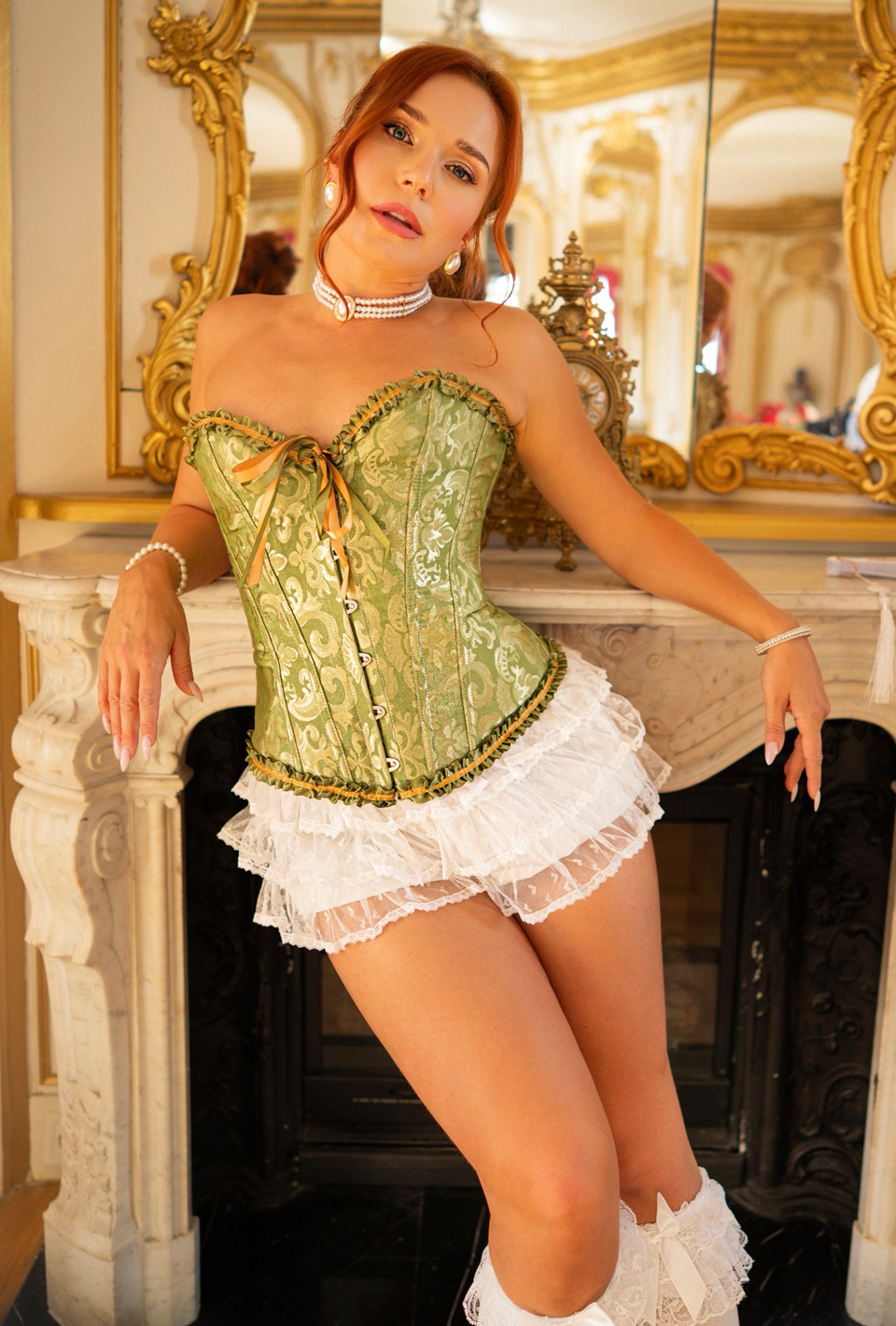
She’s not exaggerating about the scale of those efforts – in just five days, Audiard and her crew shot 15 scenes. And despite the intensity of that schedule, what she built within those walls goes far beyond a period fantasy in a luxury castle. The series unfolds as a five-episode narrative, each scene contributing to a larger visual and emotional arc. The aesthetic features luxurious interiors, soft light cascading over jacquard fabrics and ornate architecture providing the backdrop for each scene.
It is, as she describes it, a story-driven production, existing somewhere between historical fantasy and modern sensuality. A world that feels almost like "Bridgerton," if it weren’t confined by the rules of mainstream television.
More "Vogue" than Voyeur
If the location is the stage, costuming is the love language, and Audiard approaches both with the same level of passion. In her world, wardrobe is a central storytelling device that begins long before the cameras roll and continues shaping the tone of every scene.
"I create mood boards for every vision I have," she explains.
From there, she sources pieces from across the internet, building looks that feel cohesive and visually distinct. Corsets, in particular, emerge as a defining element throughout her work, bringing structure and visual authority to each scene. That same level of precision extends to even the most minute details as well. Accessories, textures and even props are curated with care, often requiring significant personal investment from Audiard to sustain a consistent visual storyline.
"I pay a lot of attention to details," she affirms. "I always try to organize everything so it looks harmonious."
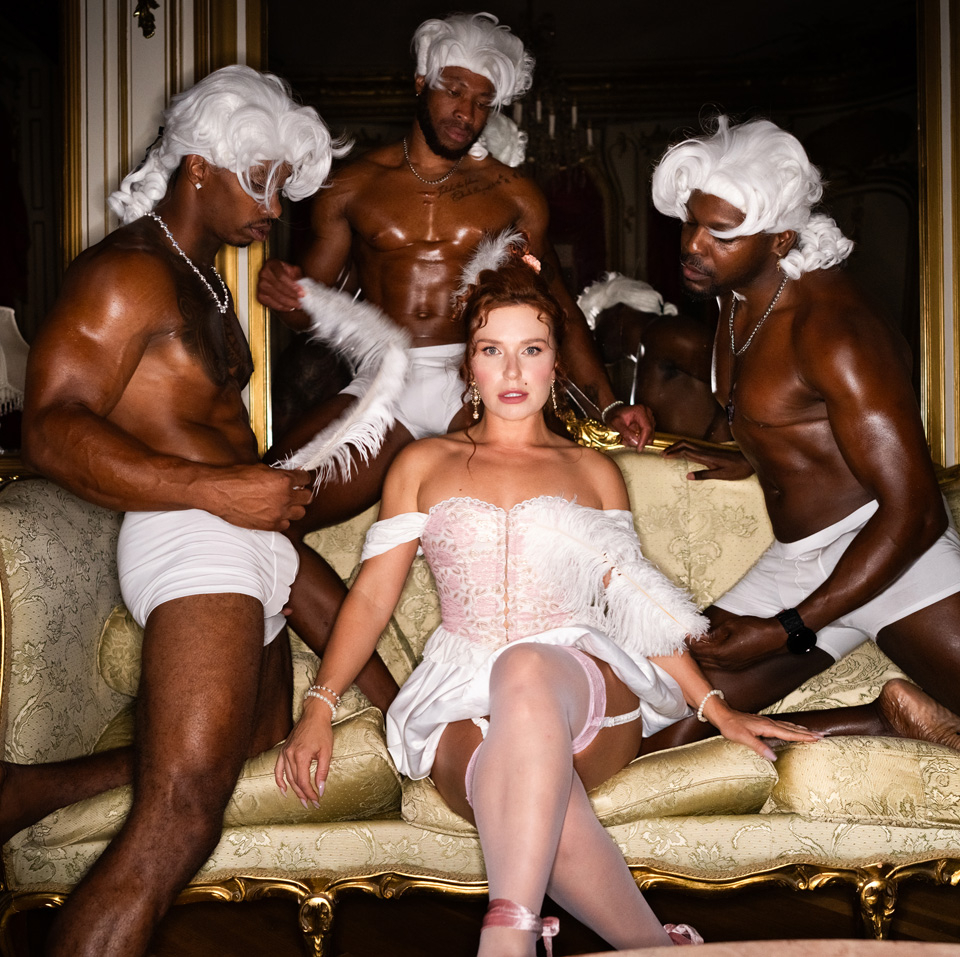
Even in group compositions, her level of visual control is striking. She ensures that bodies are positioned just so, limbs align and negative space disappears, creating a sense of harmony that reflects both strong visual instinct and meticulous refinement, often stopping scenes to rearrange performers until she is happy with the final product.
While her work falls within the gonzo category, traditionally associated with raw sex and minimal scripting, her content carries a more sensual quality in her realm. It’s not just about sexual acrobatics, as she notes that sexual chemistry is still the guiding light in every scene.
"I prefer not to cut during scenes because I don't want to break the chemistry between performers," she explains. "Before, I imagined gonzo as something very rough, but it can also be very beautiful and sensual."
That creative freedom extends into the types of scenes she now explores, as for the first time in her career, Audiard incorporates interracial scenes, something she had long been curious about but had not previously experienced.
"I was always curious about what interracial scenes would be like, so I wanted to create the image I had in my mind — something very luxurious, beautiful, sensual and artistic," she explains. "It was like choreography. After editing, it was even better than I imagined."
For Audiard, every image is constructed to elicit a specific response from her audience, which is immediately clear when you look at the studio's social media pages, where the imagery draws more from high fashion than erotica.
More “Vogue” than voyeur, if you will.
"I love fashion," she gushes. "It's important to create beautiful images. Posing, and even the look in your eyes, can speak to people. Beautiful images are the first thing that captures viewers.
“I'm very picky," she adds. "Every time I shoot with a photographer, I ask them to make sure everything is symmetrical and in its place. If something is off, we fix it immediately. Even my hair has to be placed perfectly."
That attention to detail is not about channeling her inner Miranda Priestly, but rather about preserving the integrity of every image from beginning to end so it looks polished with less editing in post. Corsets are pulled tight with architectural and historical precision, stockings sit perfectly in place, and every pose is carefully executed. Scroll through the studio’s social media and it almost looks like stills pulled from a “Devil Wears Prada 2” trailer.
"You have less work after the shoot," she adds with a smile. "You don't need to fix everything in Photoshop."
Outside of the Frame
When it comes to the future of Clémence Crave, Audiard does not speak in vague ambitions or distant goals. Instead, her ideas arrive fully formed and with a clear sense of direction as to where the ship she has built is headed next. She envisions bigger worlds, more complex narratives and a continued push toward cinematic storytelling that extends beyond traditional boundaries of modern porn.
"I have ideas for bigger productions — stories about money, drama and even shooting on an airplane," she says.
Those visions extend from desert-based productions with sweeping, dusty backdrops to futuristic costuming and potential collaborations with fashion designers, further narrowing the space between adult content and high fashion.
"There are so many creators, and the competition is crazy," she says, admitting that the pressure she feels drives her to keep creating. "I want to go high, go fast and go very far."
As she talks about the present and future, her eyes sparkle once again.
"I wake up happy every morning," she concludes.