



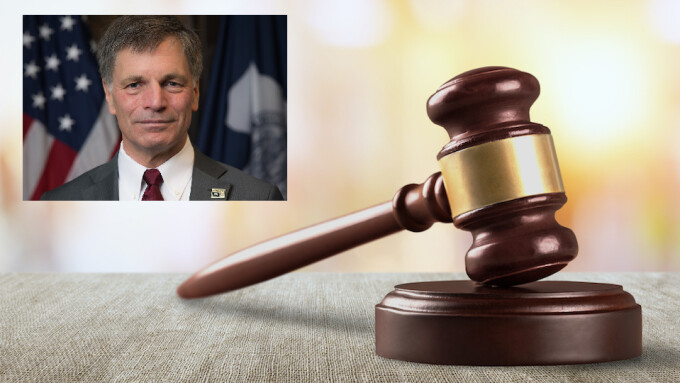
CHEYENNE, Wyo. — Wyoming Governor Mark Gordon signed the state's new age verification bill into law yesterday.
The law, HB 43, defines "material harmful to minors" as "any picture, image, graphic image file, film, videotape or other visual depiction that is obscene or is child pornography." In contrast to other states' age verification laws, the Wyoming bill does not make an exception for sites that host less than 33% of adult content overall.
The bill also allows "any parent or guardian of a minor who is aggrieved by a violation" to bring a lawsuit against the offending site for $5,000 per lack of request for age verification, as well as damages, legal fees, and court costs.
Adult industry attorney Corey D. Silverstein, in reviewing the text of the bill, expressed his surprise at the language used to define "material harmful to minors," as it doesn't necessarily cover what is generally considered to be pornography.
"I'm left scratching my head," he told XBIZ. "Material that is 'obscene or is child pornography,' as opposed to simply sexually explicit material, is already illegal. Either this is an error that was missed by everyone who read this bill before the governor signed it, or they truly passed an age verification law that makes no sense."
Silverstein also pointed out several instances where the language in the bill is vague and ambiguous, such as it referring simply to "material" in several spots, rather than the explicitly defined "material harmful to minors."
"It's sloppy," he said. "I think, honestly, that they were so eager to jump on the age verification bandwagon that they rushed out a law without properly vetting it. When you take this law and review it as a whole, it is more likely than not that Wyoming was clearly in a hurry here, and that this may not reflect what they were trying to do. In any case, I think there's a fantastic argument to be made that this law is so vague as to be unconstitutional on its face."
In a statement, the Free Speech Coalition (FSC) also noted the potentially higher standard set by the definition of harmful material as being "obscene," though it cautioned websites not to rely on that ambiguity.
"While it appears that Wyoming has created a higher standard than other states for filing suit (exposure to obscene content as opposed to merely sexually explicit content), Free Speech Coalition recommends consulting with your legal advisors to determine how to respond," the statement reads.



