



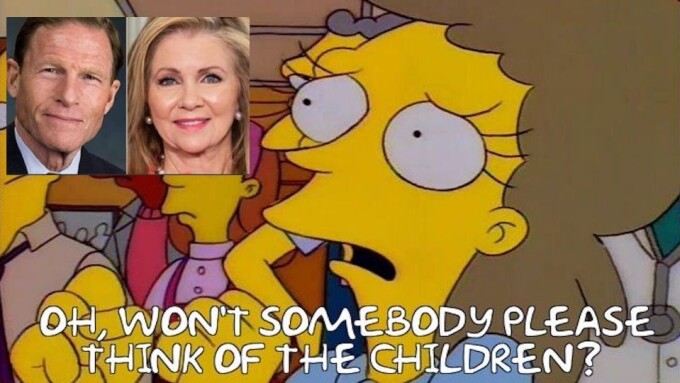
WASHINGTON — The U.S. Senate passed the controversial Kids Online Safety Act (KOSA) on Tuesday on a bipartisan 91-3 vote.
Senators Ron Wyden (D-Ore.), Rand Paul (R-Ky.) and Mike Lee (R-Utah) voted against the bill. Wyden, the author of Section 230, and Lee are the only two senators with in-depth technical knowledge of internet issues. Both have warned in the past about KOSA’s overreach in regulating online content and disastrous potential for being used to police speech.
This is the first time since 1998 that the U.S. Congress has made a serious attempt to regulate online content based on its conception of “child safety,” and the first significant federal legislation impacting online content since the 2018 carve-out of Section 230 under FOSTA-SESTA in the name of “fighting human trafficking.”
As XBIZ reported, Sen. Marsha Blackburn (R-Tennessee) and Sen. Richard Blumenthal (D-Connecticut) have been marketing KOSA as a bipartisan effort, selling it to their colleagues as a “protect the children” measure.
In February, Blackburn and Blumenthal released a new version of the bill, which they claimed addressed privacy and censorship issues flagged by opponents. However, both progressive and conservative critics have warned that the revised version still presents insurmountable problems.
Industry attorney and free-speech specialist Lawrence Walters, of Walters Law Group, explained that KOSA “would give the government new powers to interfere with the First Amendment rights of online platforms generally, threatens anonymous speech and incentivizes adoption of age verification for all users.”
The bill would also “burden access to adult materials by adults and is constitutionally suspect,” he told XBIZ, and urged anyone who cares about online freedom to voice opposition to the bill.
Digital rights organization Electronic Frontier Foundation argued in a statement Tuesday that KOSA “will let the federal and state governments investigate and sue websites that they claim cause kids mental distress. It’s a terrible idea to let politicians and bureaucrats decide what people should read and view online.”
EFF’s forecast about the chilling effect of KOSA, including for first-amendment-protected adult content, is shared by a large number of free speech organizations including the ACLU and FSC.
KOSA, EFF cautioned, “will lead to people who make online content about sex education, and LGBTQ+ identity and health, being persecuted and shut down as well. Views on how, or if, these subjects should be broached vary widely across U.S. communities. All it will take is one member of the Federal Trade Commission seeking to score political points, or a state attorney general seeking to ensure re-election, to start going after the online speech his or her constituents don’t like.”
These speech burdens will affect legal content made and consumed by adults, EFF added.
“Adults simply won’t find the content that was mass-deleted in the name of avoiding KOSA-inspired lawsuits; and we’ll all be burdened by websites and apps that install ID checks, age gates, and invasive (and poorly functioning) software content filters.”
KOSA now heads to the House.
The 'Duty of Care' Issue
Industry attorney Corey Silverstein told XBIZ he is not surprised that KOSA passed the Senate so overwhelmingly.
"I give massive credit to Senators Wyden, Paul and Lee for voting against it, seeing past the rhetoric and viewing this legislation for what it is — a trampling of the First Amendment, Section 230 and individual privacy rights online," he said.
Silverstein explained that under KOSA, companies’ obligations to mitigate potential harms to children, known as a “duty of care,” will make it necessary for social media platforms to collect even more user data than they currently do.
“It’s mind boggling to me how the same Senate that has been so vocal about large social media platforms' data collection practices and privacy concerns would now vote to actually require the very same companies to collect even more sensitive data,” he said. “I sympathize with all victims of any type of bullying or abuse online and share in the belief that children need to be protected, but KOSA and the trampling of the U.S. Constitution is not the way to do it.”
Silverstein advised industry stakeholders to remain hopeful that KOSA will not make it to a floor vote in the House, due to the ongoing debating and infighting between lawmakers.
“President Biden has already indicated that he would sign KOSA into law, so it’s imperative for individuals to be contacting their local representatives and stress their reservations against it,” he added.
Main Image: KOSA sponsors Sen. Marsha Blackburn (R-Tennessee) and Sen. Richard Blumenthal (D-Connecticut)



