



NEW ORLEANS, La. — A federal judge has granted a motion by Louisiana officials to dismiss part of the lawsuit filed by Free Speech Coalition (FSC) and other plaintiffs seeking to block that state’s age verification law.
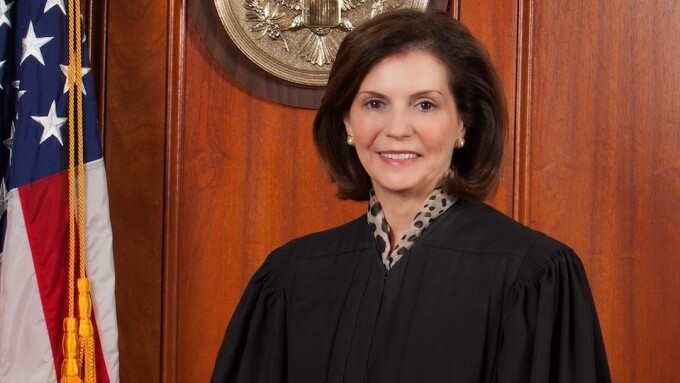
In a decision published Wednesday, Judge Susie Morgan — a Barack Obama appointee — ruled in favor of defendants James LeBlanc, secretary of the Louisiana Department of Public Safety and Corrections; Jay Dardenne, commissioner of the Louisiana Division of Administration; and Jeffrey Landry, attorney general of Louisiana, who had moved to dismiss part of the lawsuit.
FSC Director of Public Affairs Mike Stabile told XBIZ, "As with Utah, the Louisiana ruling is fairly limited, and only applies to whether we can bring a pre-enforcement challenge against the law, or whether we have to wait until an actual suit is brought."
Stabile added that while the FSC disagrees with the ruling, and the case will likely continue to be fought at the 5th Circuit, the order is "by no means a ruling on the merits of the law, which is still clearly unconstitutional."
"In our Texas case, a conservative judge found that no element of the law would stand scrutiny under the First Amendment," Stabile explained. "Today's ruling only applies to the private enforcement option, which allows private individuals to bring suits. Our suit against Louisiana's Attorney General continues unaffected."
Stabile noted that while the group knew that a pre-enforcement challenge to the Louisiana bounty law would be complicated, given the history of the Texas Heartbeat Act on which it was modeled, today's ruling "is not a referendum on the constitutional problems with the underlying law."
"We will fight this and we will win," he added.
Analysis by Industry Attorney
Industry attorney Corey Silverstein, of Silverstein Legal, expressed disappointment at Judge Morgan’s decision.
"Thankfully, today’s order — although wrongly decided, in my opinion — only applies to La. R.S. § 9:2800.29, which grants citizens a private right of action against adult entertainment website operators who do not comply with reasonable age verification requirements," Silverstein said.
Silverstein also pointed out that Louisiana has a second, nearly identical, age verification law: La. R.S. 51:2121, distinguished by the fact that it allows the attorney general to take enforcement actions.
“The challenge/lawsuit against La. R.S. 51:2121 remains active,” he noted. “Unfortunately, there is some confusion related to today’s order because it was written quite confusingly. In summary, the legal challenge related to the private cause of action component of these laws was dismissed while the challenge to the government enforcement of age verification remains, and the fight will surely rage on.
“Additionally, I think it was silly that the Judge didn’t rule that the laws were effectively identical and thus if she ultimately determines that La. R.S. 51:2121 is unconstitutional, then La. R.S. § 9:2800.29 should be considered unconstitutional as well,” Silverstein added.



