



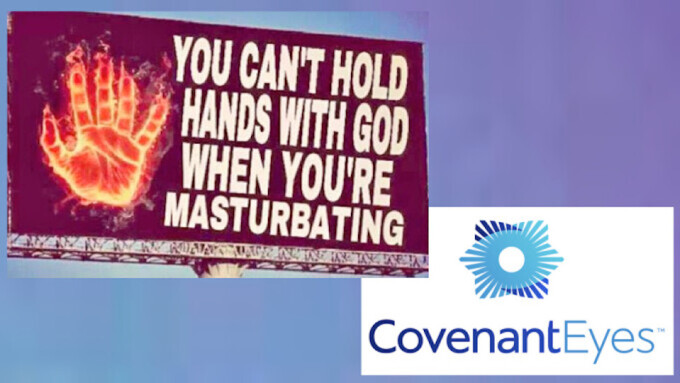
MOUNTAIN VIEW, Calif. — Six months after suspending two religious “porn surveillance” apps, following a Wired magazine report exposing them as spyware, Google Play has quietly reinstated Covenant Eyes and Accountable2You.
In a press release issued today, Covenant Eyes celebrated the March 1 reinstatement of a redesigned version of its app.
“For 162 days, we’ve been working toward and praying for a favorable outcome to our appeal,” Covenant Eyes spokesperson Dan Armstrong said. “We’re grateful that people who want to quit porn are able to get our app through the Google Play Store again.”
As XBIZ reported, in September 2022, Wired’s Security section reporter Dhruv Mehrotra exposed how the two religious surveillance apps, which were being marketed as “porn filters” to churchgoers across America by faith-based corporations, actually spied on churchgoers’ searches and then sent the information to religious leaders.
The two apps, Mehrotra wrote, are “part of a multimillion-dollar ecosystem of so-called accountability apps that are marketed to both churches and parents as tools to police online activity. For a monthly fee, some of these apps monitor everything their users see and do on their devices, even taking screenshots (at least one per minute, in the case of Covenant Eyes) and eavesdropping on web traffic.”
These church-endorsed and -marketed apps “then report a feed of all of the users’ online activity directly to a chaperone — an ‘accountability partner,’ in the apps’ parlance.”
After Wired presented its findings to Google, the search giant determined that Covenant Eyes and Accountable2You violated its privacy policies. A month later, Christian news wire Baptist Press reported that the apps were appealing the ban.
A Lucrative Business Built on the Myth of 'Porn Addiction'
Today, Baptist Press reported that Covenant Eyes’ Dan Armstrong defended the app by stating, “Accountability is powerful and needs to be done appropriately. When it comes to churches, leaders must truly commit to creating safe places with safe processes for addressing issues like pornography. Strugglers need to have a safe environment to be honest and vulnerable about their journey. Help from unwanted porn use should be for everyone, whether it’s men, women, or children struggling.”
Accountable2You likewise defended its own business model, telling Baptist Press that while it offers a group plan under which a church can extend a discount to its members, “by design, the pastor and church leadership do not see any member’s activity … members can share their activity with whomever they choose or not at all — and we do not encourage pastors to receive accountability reports from their congregants.”
In an interview with Baptist Press last year, Dawn Hawkins, CEO of NCOSE — formerly Morality in Media — offered her support to the religious surveillance apps.
“We have heard from hundreds of people who have struggled with pornography addiction and dependencies that the best way most of them have found to help is through an accountability model, similar to AA (Alcoholics Anonymous) and many successful gambling recovery programs,” Hawkins, an outspoken Mormon anti-porn activist and former Republican lobbyist, told the Christian news wire.
Hawkins also claimed that pornography can be “highly addictive” and that research has “objectively identified a wide array of harms from pornography use.”
Scientists have found no basis for classifying pornography as an addiction; the idea seems instead to have arisen as a point of religious dogma in response to personal feelings of shame and guilt. The LDS Church has promoted “porn filters” in Utah and nationwide, based on church elders' theological belief that all porn — a term that for them encompasses all depictions of sexuality outside of the Mormon marriage — is a ploy by Satan to destroy Mormon households.
Ron DeHaas, president and co-founder of Covenant Eyes, also chairs NCOSE's board of directors. DeHaas offers what he calls “accountability software” from a small office in Owosso, Michigan, located in the economically ravaged expanse between Flint and Lansing.



