



NASHVILLE, Tenn. — The Tennessee legislature today passed a bill expanding the state’s definition of “obscenity and pornography” to criminalize anyone who “engages in an adult cabaret performance on public property or in a location where the adult cabaret performance could be viewed by a person who is not an adult.”
SB0003’s redefinition of “adult cabaret performance” was crafted by Republican legislators specifically to target drag shows, although the actual phrasing is expansive enough to criminalize many other trans-inclusive public events, such as LGBTQ Pride Parades.
The wording of the bill also appears to criminalize any performance by any person not presenting as their assigned-at-birth gender that does not take place in a venue or location explicitly zoned as an “adult cabaret.”
There are currently more than 20 Republican bills nationwide purportedly aiming to “ban drag shows for children.” Tennessee’s bill is the first one to clear both chambers of a state legislature and head to the governor’s desk.
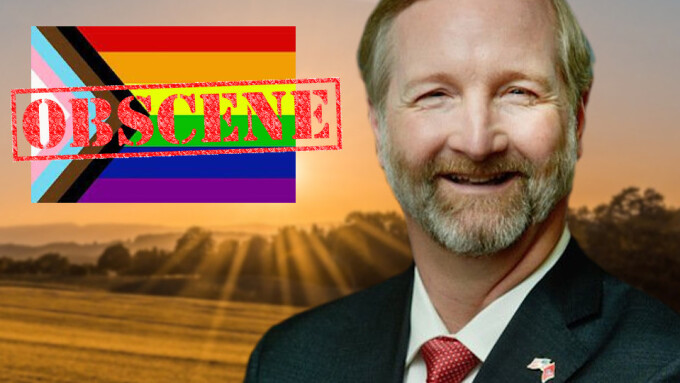
Rep. Chris Todd (R), the main sponsor of HB0009, the House version of SB0003, explained that his bill was prompted by his outrage at seeing an ad for a "family-friendly drag show” during an LGBTQ+ Pride event at a park in Jackson.
A first offense, Reuters reported today, “would be a misdemeanor crime, and a subsequent offense a felony, carrying a sentence of between one and six years in prison.”
Lack of Clear Definitions
SB003 codifies what the legislators called an “adult cabaret performance" to mean “a performance in a location other than an adult cabaret that features topless dancers, go-go dancers, exotic dancers, strippers, male or female impersonators who provide entertainment that appeals to a prurient interest, or similar entertainers, regardless of whether or not performed for consideration.”
The bill does not define what it means by “male or female impersonators” or, notably, the word “prurient.”
As XBIZ has been reporting, codifying a legal definition of “prurient” is crucial to current Republican attempts to revive obscenity prosecutions.
Industry attorney Lawrence Walters, of Walters Law Group, explained to XBIZ in 2020 that the word “prurient” is defined in the law as “a shameful or morbid interest in sexuality.” Walters pointed out that obviously, adult businesses take the position that their content “does not involve a shameful or morbid interest in human sexuality, but a healthy one.”
The Nixon-era Supreme Court set the standard for judging obscenity in the 1973 case Miller v. California as, "Whether, to the average person, applying contemporary community standards, the dominant theme of the material … appeals to prurient interest."
This “Miller test” is used by courts all the way up to the United States Supreme Court for determining whether speech or expression can be labeled “obscene” and therefore not protected under the First Amendment.
According to Reuters, “performers and civil rights groups have condemned the proposed drag regulations, saying they are unconstitutional, redundant under existing obscenity laws, and would lead to further harassment and violence against gay and transgender people.”
If signed by the governor, the bill is expected to become law on July 1.
Main Image: Tennessee State Rep. Chris Todd (R)



