



DC Court Upholds FOSTA-SESTA, Rejects Free-Speech Challenge

DC Court Upholds FOSTA-SESTA, Rejects Free-Speech Challenge

WASHINGTON — The U.S. District Court for the District of Columbia rejected a legal challenge to FOSTA-SESTA presented by First Amendment and free speech advocates, ruling that the U.S. government can continue enforcing the controversial legislation.

The court found on Tuesday that FOSTA-SESTA “is neither overly broad nor unduly vague,” Bloomberg Law reported today.

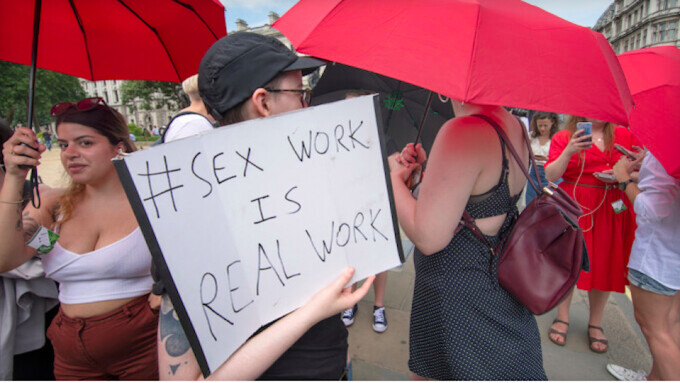
As XBIZ reported, Woodhull Freedom Foundation, Human Rights Watch, Internet Archive and two webmasters sued the U.S. government to challenge the much-criticized carve-out of Section 230, allegedly passed to "help fight human trafficking." The plaintiffs are represented by Davis Wright Tremaine LLP, Electronic Frontier Foundation and Walters Law Group.

FOSTA-SESTA was drafted by religiously-motivated Midwestern Republicans and sold to Democratic members of Congress — most famously now-VP Kamala Harris — as "an anti-human trafficking measure." However, since Donald Trump signed it into law in April 2018, FOSTA has had null-to-negative effect in the fight against actual human trafficking in the U.S. In June 2021, confirming what the vast majority of sex workers and advocates had warned about in 2017 and 2018, the FBI told the Government Accountability Office that its “ability to identify and locate sex trafficking victims and perpetrators was significantly decreased following the takedown of Backpage.com.”

FOSTA-SESTA, the court ruled Tuesday, “doesn’t violate the First Amendment because it doesn’t discriminate against speech based on its content or viewpoint,” Bloomberg Law reported. “And the law gives sufficient notice of the type of conduct it prohibits to survive a Fifth Amendment void-for-vagueness challenge.”

In the opinion of Judge Richard J. Leon, FOSTA “is narrowly tailored to encompass only legitimate criminal activity, not a substantial portion of protected speech, and gives adequate notice of what conduct it prohibits.”

“The plaintiffs are aware of the decision,” Walters Law Group’s Larry Walters told XBIZ. “While we are naturally disappointed with the ruling, we are committed to appealing the dismissal and continuing the constitutional challenge to FOSTA-SESTA.”

The case is Woodhull Freedom Found. v. United States, D.D.C., No. 18-cv-1552.

Copyright © 2025 Adnet Media. All Rights Reserved. XBIZ is a trademark of Adnet Media.
Reproduction in whole or in part in any form or medium without express written permission is prohibited.

More News

Sansyl Group Acquires Blue Donkey Media

Sansyl Group, parent company of AdultPrime Network, has acquired Blue Donkey Media B.V., owner of Dutch adult site Meiden van Holland, among several other erotic websites and television channels.

Pineapple Support to Hold Mental Health Summit

The annual Pineapple Support Mental Health Summit is taking place Dec. 15-17.

Ofcom Fines AVS Group $1.3 Million for AV Noncompliance

U.K. media regulator Ofcom on Wednesday imposed a penalty of one million pounds, or approximately $1.3 million, on AVS Group Ltd. after an investigation concluded that the company had failed to implement robust age checks on 18 adult websites.

Updated: Aylo to Help Test EU Age Verification App

Pornhub parent company Aylo plans to participate in the European Commission’s pilot program for its “white label” age verification app, a spokesperson for the company has confirmed.

Missouri Lawmaker Attempts to Revive 'Health Warnings' for Adult Sites

A Missouri state representative has introduced a bill that would require adult sites to post notices warning users of alleged physical, mental, and social harms associated with pornography, despite a previous federal court ruling against such requirements.

New Age Verification Service 'BorderAge' Launches

French startup company Needemand has officially launched its subscription-based age verification solution, BorderAge.

Ruling: Italy's 'Porn Tax' Applies to All Content Creators

Italy’s tax revenue agency has ruled that the nation’s 25% “ethical tax” on income generated from adult content applies even to smaller independent online content creators.

Proposed New Hampshire AV Bill Appears to Violate Constitution

A bill in the New Hampshire state legislature, aimed at requiring adult sites to age-verify users in that state, contains a provision that seemingly contradicts the Supremacy Clause in Article VI of the U.S. Constitution.

AEBN Publishes Report on Fetish Trends

AEBN has published a report on fetish categories from its straight and gay theaters.

Online Child Protection Hearing to Include Federal AV Bill

A House subcommittee will hold a hearing next week on a slate of bills aimed at protecting minors online, including the SCREEN Act, which would make site-based age verification of users seeking to access adult content federal law.

Show More


