



Latest Censorship Proposal by Utah Politician Fails to Pass Committee Hearing

Latest Censorship Proposal by Utah Politician Fails to Pass Committee Hearing

SALT LAKE CITY — A proposal that would require smartphones and computers to have pre-installed porn-blocking software, and to have it activated as the default option when sold to Utahns, was quashed yesterday during a committee hearing at the state's Business and Labor Interim Committee.

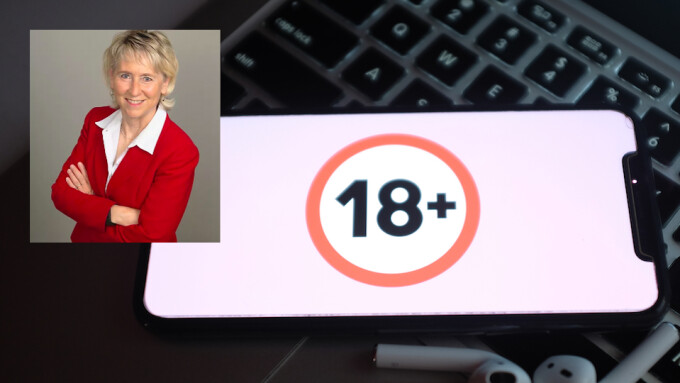
According to a report by Deseret News, Utah State Representative Susan Pulsipher (R-South Jordan) said “the goal of her effort was to create another wall of defense to help protect children from ‘the damaging impact of pornography’ and ‘empower parents and legal guardians to limit a minor’s exposure to such online harmful material.'"

Pulsipher touted her proposal — which would greatly benefit the for-profit, often religiously motivated businesses that claim to provide porn blocking software — as a better way to “protect minors” than the usual flurry of anti-porn measures floated by Utah’s politicians.

Several members of the Utah Business and Labor Interim Committee, however, noted that “it would be extremely difficult to identify which entity in the consumer electronics supply chain should be held liable for ensuring that software was activated,” the Deseret News reported.

A Vaguely Worded Draft

Pulsipher's vaguely worded draft, according to Senator Curt Bramble (R-Provo), “failed to identify whether the responsible party was the manufacturer, the company that distributed the product or the store or reseller that sold the product to the consumer.”

Pulsipher acknowledged a clarification was necessary.

Other lawmakers questioned the constitutionality of forcing manufacturers to do something that was not their responsibility.

Senate Majority Whip Dan Hemmert (R-Orem) put an end to this latest censorship attempt by Utah authorities by stating that he thinks the market is already attempting to provide content filtering solutions.

“Maybe it’s just bad timing, but I’ve had enough 'nanny state' in my life this past year and I don’t need more, and we already have restrictions, limitations on the distribution of pornography,” Hemmert told the committee.

In 2016, Utah became the first state to adopt a resolution endorsing a "public health crisis" around porn. Over 15 other state legislatures have since adopted similar copycat measures, with language provided by religiously inspired lobbies and copied from state to state. These bills are usually sponsored by religious legislators, often fundamentalist evangelicals, with various appeals to War On Porn propaganda scares around "sex trafficking" and the debunked notion of "porn addiction."

Main Image: Utah State Representative Susan Pulsipher (R-South Jordan). Photo: Utah House of Representatives.


Copyright © 2026 Adnet Media. All Rights Reserved. XBIZ is a trademark of Adnet Media.
Reproduction in whole or in part in any form or medium without express written permission is prohibited.

More News

Peter Hooke Launches New Paysite

Peter Hooke has launched an official website through PAYSITE.

Pineapple Support Names Ny Ny Lew as Brand Ambassador

Pineapple Support has named Ny Ny Lew as its newest brand ambassador.

Federal AV Proposal Passes House, Faces Senate Opposition

The U.S. House of Representatives on Monday passed the Kids Internet and Digital Safety (KIDS) Act, which includes provisions to make age verification by adult websites federal law, but the bill still faces tough going in the Senate.

Devin Drills Launches New Paysite

Creator Devin Drills has launched an official website through PAYSITE.

AV Bulletin: Midyear Roundup

Since the U.S. Supreme Court’s decision in Free Speech Coalition v. Paxton, more state age verification laws have been enacted around the United States, as well as proposed at the federal level and in other countries. Meanwhile, lawsuits resulting from AV laws have begun to play out in the courts. This roundup provides an update on the latest news and developments on the age verification front as it impacts the adult industry.

Judge Dismisses Last NCOSE-Backed Suit Over Kansas AV Law

A federal judge on Monday dismissed a lawsuit alleging that adult site SuperPorn violated Kansas’ age verification law, citing lack of jurisdiction after similarly dismissing two related cases earlier this year.

ASACP Updates 'Restricted to Adults' Labeling Resource Page

The Association of Sites Advocating Child Protection (ASACP) has updated its Restricted to Adults (RTA) labeling resource page.

Federal AV Proposal Scores Minor Win in House but Remains in Doubt

A newly announced bipartisan agreement in the U.S. House of Representatives Committee on Energy and Commerce may soon bring a proposed federal age verification law before the full House, but the measure continues to face an uphill battle.

Arizona Governor Vetoes 'Protect Act' With New Consent Provisions

Arizona Governor Kate Hobbs on Friday vetoed HB 2133, the “Protect Act,” which would have imposed new requirements for adult content uploaded online.

Brazil Begins Monitoring 18 Adult Sites for AV Compliance

Brazil’s National Data Protection Authority (ANPD) is now monitoring 18 high-traffic adult websites for compliance with the country’s Digital Statute for Children and Adolescents (Digital ECA), which requires such sites to age-verify users located in Brazil.

Show More

