



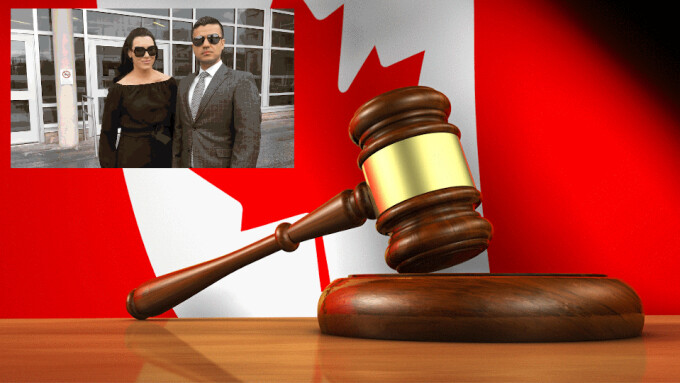
LONDON, Ontario — Charges against a London, Ontario couple, Tiffany Harvey and Hamad Anwar, who were arrested in 2015 following a raid on their business, Fantasy World Escorts, have been stayed following a landmark decision by Judge Thomas McKay that the charges are unconstitutional.
In his decision, McKay noted, "legislation for which the stated purposes include eliminating exploitation and reducing the risk of violence to sex workers actually has the effect of exposing sex workers to an increased risk of exploitation."
Harvey and Anwar originally faced several counts of human trafficking, which had been dropped, but retained charges which prohibit the "procuring, advertising and materially benefiting from someone else's sexual services," as outlined by the Canadian Broadcasting Corporation (CBC).
After a loosening of prostitution laws in 2013, the Canadian government took a decidedly aggressive approach to discouraging sex work in 2014, passing the Protection of Communities and Exploited Persons Act (PCEPA), which criminalized the purchase of sexual services, as well as criminalizing activities related to their sale, emulating the Nordic Model, which advocates for the focus of law enforcement efforts on so-called "pimps and johns," instead of providers, in an effort to deplete demand.
The Nordic Model has been widely criticized by sex workers' rights advocates.
In 2018, the constitutionality of the new laws was upheld by the Ontario Superior Court of Justice, which cited a Department of Justice technical paper that revealed the ultimate goal of PCEPA to be the abolition of prostitution "to the greatest extent possible," on the grounds of protecting "human dignity."
But this week, in stark opposition to the popular mainstream narrative of sex work being inherently dangerous, exploitative and degrading, McKay ruled that the new additions to Canadian law, relative to sex work, are unconstitutional, specifically regarding freedom of expression and of the greater right to "life, liberty and security of the person" section of the Canadian Charter of Rights and Freedoms.
Although legal analysts suggest the Crown will appeal McKay's decision, the ruling nonetheless denotes a landmark case regarding sex workers' rights, one which could set a precedent for future cases.
Following the staying of charges, Harvey and Anwar's lawyer, James Lockyear, told the press, "I think his judgment is a tremendous advance for the cause of a good society, and a society that protects those who are being exploited, especially the sex workers."



