



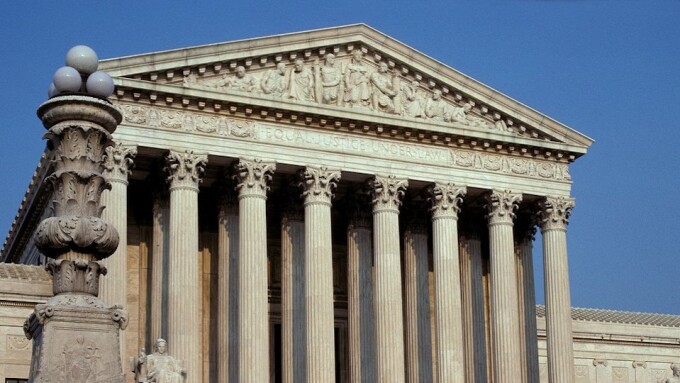
LOS ANGELES — The United States Supreme Court may soon rule on the constitutionality of revenge porn law.
In a Washington Post article published yesterday, the case of Bethany Austin was discussed. Austin, an Illinois resident, was charged with the felony of "nonconsensual dissemination of private sexual images" by an Illinois court. She had discovered her fiance had cheated on her, and after the fiance attempted to paint her as "crazy," she sent both of their families four pages of text messages between her fiance and his lover. The pages also included nude pictures of the woman the fiance had been cheating with.
Austin challenged the ruling on the grounds that Illinois' revenge porn law was an unconstitutional restriction of her freedom of speech.
Two years after being charged, the original trial court dismissed the charge against Austin. The Illinois Supreme Court, however, reversed the ruling, and the charge was reinstated. In a 5-2 ruling, the court decided that the law meant to protect the privacy of the victim could not be constitutionally protected free speech.
"Viewed as a privacy regulation, [the law] is similar to laws prohibiting the unauthorized disclosure of other forms of private information, such as medical records, biometric data or Social Security numbers," the higher court said in its ruling. "The entire field of privacy law is based on the recognition that some types of information are more sensitive than others, the disclosure of which can and should be regulated."
Austin's attorney, Igor Bozic, has asked for a stay on the Illinois Supreme Court ruling while he files a petition for a writ of certiorari at the U.S. Supreme Court.
"It covers the woman who reacts to an unwanted sexual text message by showing a friend," Bozic wrote. "It covers the woman who tries to deter that toxic behavior by forwarding the unsolicited image to the sender’s mother or girlfriend… And, of course, it gives controlling men — like Bethany Austin’s ex-fiancé — yet another legal tool for victimizing their intimate partners."
The Post spoke with Northwestern University law professor Andrew Koppelman, who wrote a law review article on the constitutionality of revenge porn laws which have now been passed in 46 states and the District of Columbia. He said that because the Illinois statute specifically mentions that the law is broken when the person disseminating the images knows that the person photographed did not give consent, it's not protected speech.
"There’s no good reason to construe free speech to protect malicious people who want to hurt people unless there’s no way to draw a line," Koppelman said. "The Illinois statute shows there is a sensible way to draw a line."
Image: US Bureau of Land Management



