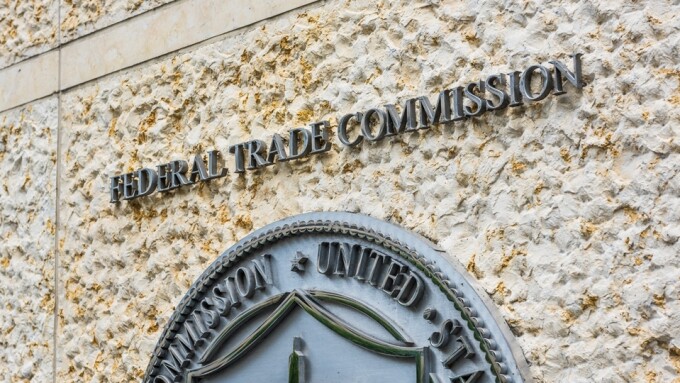
WASHINGTON — An internet marketing company has agreed to return $1.38 million to customers to settle Federal Trade Commission charges that it deceived online shoppers who enrolled in a "negative-option" membership program offering discounts and other benefits.
The marketing company, which sells lingerie at AdoreMe.com, made it hard for them to cancel their memberships, the FTC said last week after approving a complaint and proposed stipulated order for permanent injunction and monetary judgment.
Industry attorney Corey Silverstein told XBIZ today that he’s been preaching to adult industry clients for years that one of the biggest potential threats to online businesses is the FTC.
“The FTC’s powers are broad and their ability to punish can leave businesses shuttered,” Silverstein said. “Once again, there is opportunity for responsible adult website operators to review their business practices and ensure that they aren’t engaging in business practices that will invite FTC investigations and prosecution.”
Regulators said that AdoreMe.com’s “VIP” membership program cost $39.95 per month — unless, in the first five days of each month, a member bought something or clicked an online button to “skip” buying that month.
The company’s website stated, “If you do not make a purchase or skip the month by the 5th, you’ll be charged a $39.95 store credit that can be used anytime to buy anything on AdoreMe.com”
The FTC alleged that, despite explicit promises that consumers would be able to use their store credits “anytime,” from at least May 2015 to May 2016, AdoreMe took unused credit amounts away from consumers who cancelled their memberships or initiated chargebacks with financial institutions to dispute their transactions with the company.
Despite discontinuing this practice in May 2016, the company has not made full refunds to all affected consumers, the FTC said.
AdoreMe.com was charged with violating the FTC Act by misrepresenting its store credit policy and the Restore Online Shoppers Confidence Act (ROSCA) by failing to provide consumers with a simple mechanism to stop recurring charges.
The FTC alleged that for several years the company made it hard to cancel memberships, including by limiting how consumers could submit cancellation requests, under-staffing its customer service department and putting consumers through drawn-out cancellation request processes.
Under the settlement order, the company is prohibited from making misrepresentations in the sale of any good or service with a negative-option feature and failing to provide a simple way for consumers to avoid being charged and to immediately stop any recurring charges.
AdoreMe also is barred from representing that any negative-option feature is being offered on a free, trial, no obligation, reduced or discounted basis, without clearly disclosing costs and how consumers can avoid charges. In addition, the company must promptly send consumers confirmations of their orders with similar disclosures, without any upsells, additional product or service offers, or other advertising or marketing.
The order also prohibits the company from using customers’ billing information to obtain payments without first obtaining their express informed consent in a manner prescribed in the order.
The order requires AdoreMe to notify and provide refunds of forfeited store credit to eligible customers and imposes a $1.38 million judgment that will be used to pay refunds to consumers under the order.
Silverstein noted that ROSCA has been “repeatedly used to punish online businesses that still engage in so-called negative-option memberships.”
“Once again the FTC has targeted an online business, and this time it’s a lingerie retailer,” said Silverstein of Silverstein Legal. “There are still far too many online business operators that do not understand ROSCA or the potential consequences for violating the law.
“AdoreMe.com is now subject to a settlement order that requires them to pay a $1.38 million judgment that will be used to pay refunds to consumers, in addition to various forms of injunctive relief that includes AdoreMe.com being barred from various activities.”