



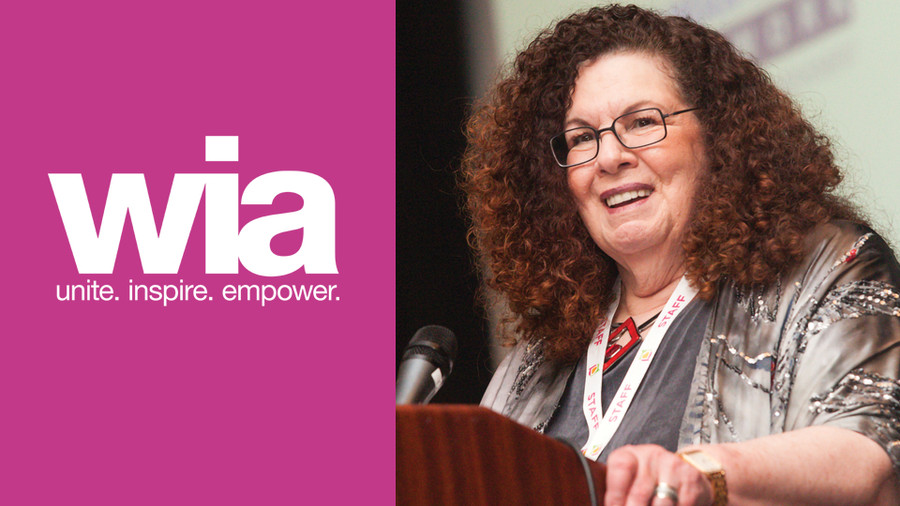
When Ricci Levy speaks about human rights, she does not use detached, academic language. She speaks with urgency, emotion and the kind of passion that immediately makes it clear just how deeply personal this work is for her.
Chatting with XBIZ, Levy’s thoughts tumble out rapidly, one idea flowing into the next as she discusses censorship, bodily autonomy, LGBTQ+ rights and the decades-long fight for sexual freedom that has shaped much of her life. At times, she grows emotional while reflecting on old memories. Other moments make her laugh mid-thought before she dives even deeper into the subject. It quickly becomes apparent that she could easily talk for hours about her work and why it matters so much to her.
One of the biggest gaps in policymaking is that lawmakers and media outlets often talk about the adult industry without ever listening to the people actually affected.
Long before she became an advocate for free expression and the adult industry, Levy was a young woman watching the people she loved navigate fear, stigma and discrimination amid a vastly different cultural moment. Her close friend Kenny died of AIDS during the height of the epidemic in the 1980s, when misinformation and panic still surrounded the disease. Levy remembers watching him face constant judgment simply for existing openly as a gay man. She recalls police targeting him near gay pickup spots for no legitimate reason and how, to shield him, she would pretend to be his girlfriend in public — and even in front of his family.
Those experiences have stayed with her, and so have the issues that first pushed her toward advocacy work. She says that Kenny’s story and her frustration with identity politics were what initially drew her to the Woodhull Freedom Foundation.
Founded in 2003, Woodhull operates at the intersection of sexual freedom and human rights, advocating for bodily autonomy, free expression, privacy and personal liberty. Over the years, the organization has become one of the most outspoken voices pushing back against censorship, anti-sex-work legislation and attacks on LGBTQ+ rights.
Levy, who previously worked in the corporate world, says her transition to advocacy happened gradually.
“I got involved more from an operations perspective, then slowly realized that I could help make some real change with regard to issues that matter to me,” she explains.
For readers unfamiliar with Woodhull, Levy describes its mission in direct terms.
“The core mission is to affirm sexual freedom as a fundamental human right and defend the civil liberties that make that freedom possible: free expression, privacy, bodily autonomy and access to information,” she explains.
At the center of Woodhull’s philosophy is the belief that sexual freedom cannot be separated from larger conversations surrounding democracy, speech and human dignity.
“In practical terms, Woodhull is not simply defending ‘sexual issues,’” Levy says. “It is defending the infrastructure of a free society: the right to speak, learn, organize, access information, explore identity, form relationships and exist without ideological control from the state.”
That broader framing, she says, feels especially urgent in today’s political climate as censorship debates intensify nationwide. Across the country, legislation targeting adult content, LGBTQ+ visibility and online speech continues expanding under the banners of “safety,” “morality” and “protection.” Levy views many of these efforts as interconnected rather than isolated issues.
“The same laws used to censor pornography are used to suppress LGBTQ+ visibility,” she explains. “The same surveillance systems justified in the name of ‘child safety’ threaten privacy, reproductive freedom and political dissent.”
The Fight Never Stops
For someone who has spent decades in advocacy work, Levy remains remarkably energized by the future, though she learned long ago that progress never comes easily.
“Nothing changes overnight,” she affirms. “It’s a series of building blocks: consistent effort, pressure and focus on a future that’s better than whatever we have today. It’s that vision that motivates me to keep going, waiting for that day when we announce the candidacy of a person like Pete Buttigieg without identifying him as a gay man.”
Asked which career accomplishments she feels most proud of, Levy struggles to narrow the list down to just one. She first names the Sexual Freedom Summit, Woodhull’s annual conference, which has grown from a half-day gathering into a four-day event spotlighting voices often excluded from mainstream policy conversations. Then there is traveling to Geneva to advocate internationally for recognition that violence against sex workers constitutes a human rights violation.
Another particularly emotional milestone: her work in the wake of SESTA/FOSTA, legislation widely criticized for harming sex workers and online safety.
“We couldn’t stay silent,” Levy says firmly. “We filed the only federal lawsuit challenging the bill, Woodhull Freedom Foundation versus the United States of America.”
Even now, she vividly remembers the moment the case was called in federal court.
“I had been warned to maintain a neutral expression, no matter what I heard,” she recalls. “But inside me there was a massive explosion of pride when I got to hear ‘Woodhull Freedom Foundation versus the United States of America’ in that loud voice of the bailiff we always hear on TV. I thought I was going to combust in my seat.”
A Shared Fight for Free Expression
For Levy, LGBTQ+ communities and those working in the adult industry have long been affected by many of the same policies regulating sexuality and expression.
"Historically, LGBTQ+ communities have been among the first targets when governments or corporations decide to regulate 'morality,' 'decency' or 'obscenity,'" she notes.
Levy says the effects can be wide-ranging, from stricter content moderation and banking restrictions to surveillance and legislation targeting adult content.
"Queer creators are often moderated more aggressively than heterosexual creators, and trans bodies are routinely treated as inherently sexual by policymakers and platforms alike," she explains.
For creators across these communities, the impact reaches far beyond financial concerns.
"Many LGBTQ+ performers and sex workers rely on digital platforms not just for income, but for safety, community, autonomy and survival," Levy says.
Those shared challenges are one reason Woodhull advocates for policies protecting free expression, online privacy and the decriminalization of sex work, arguing that those rights should apply consistently rather than only to politically convenient groups.
"Rights become fragile when they are conditional," she warns.
An Industry Still Evolving
Levy believes the adult industry has made meaningful progress in LGBTQ+ inclusion over the last two decades.
“One major area of progress is visibility and normalization,” she says. “LGBTQ+ performers, especially queer, trans and nonbinary creators, have far more control over their own narratives than they once did.”
Independent creator platforms, she says, help shift power away from rigid systems and allow performers to build businesses on their own terms. Still, she cautions, visibility alone is not enough.
“There is still substantial work to be done,” Levy says, pointing specifically to issues surrounding financial access, legal protections and long-term stability for LGBTQ+ performers — especially trans creators, who often face inconsistent treatment both culturally and algorithmically.
“In some spaces, trans content is celebrated,” she explains. “In others, it is segregated, algorithmically suppressed or treated as inherently ‘more explicit’ than cisgender content.”
Levy’s work also requires stepping back to assess wider social context and trends.
“The broader backlash against LGBTQ+ visibility and DEI initiatives is affecting entertainment, advertising, tech and online platforms,” she says. “That absolutely affects the adult industry too.”
A Call to Speak Up
For creators and business owners navigating the industry today, Levy believes advocacy is no longer optional.
“If you’ve ever dealt with censorship, payment processor discrimination, account bans, banking restrictions, age verification laws, stigma or fear about what new legislation might mean for your livelihood, then you are already experiencing the impact of public policy and cultural advocacy every single day,” she attests.
One of her strongest messages to creators: Their experiences matter and their voices deserve to be heard.
“One of the biggest gaps in policymaking is that lawmakers and media outlets often talk about the adult industry without ever listening to the people actually affected,” Levy says.
She encourages creators to build relationships with advocacy organizations before crises emerge, and to recognize the overlap between issues impacting industry rights and broader civil liberties movements.
“The same systems affecting adult creators often affect journalists, activists, educators, artists, abortion access advocates, LGBTQ+ communities and marginalized political speech,” she explains.
Still Looking Forward
Even after decades spent in the fight, Levy still speaks about the future with eagerness. “I’m going to be 80 years old next month, so I am most excited about that,” she laughs.
Outside of work, she credits friends and family with helping her stay grounded, though she admits stepping away from advocacy entirely remains difficult.
“The kind of work we do here at Woodhull isn’t a 9-5 job,” she admits. “We can’t just turn out the lights and shut the door on Fridays.”
Even after decades of activism, lawsuits, and policy fights, Levy still lights up when discussing what comes next: building bridges, continuing difficult conversations and pushing society toward a more compassionate understanding of freedom and autonomy.
For her, the work has never simply been about politics. It is about people like Kenny, who were punished or had their humanity questioned or erased, long before conversations surrounding sexuality and identity entered mainstream discourse.
For Levy, ensuring that the people facing those same dangers today are heard and protected remains a cause worth fighting for.
Each month, XBIZ spotlights the career accomplishments and outstanding contributions of Women in Adult. WIA profiles offer an intimate look at the professional lives of the industry’s most influential businesswomen.



