



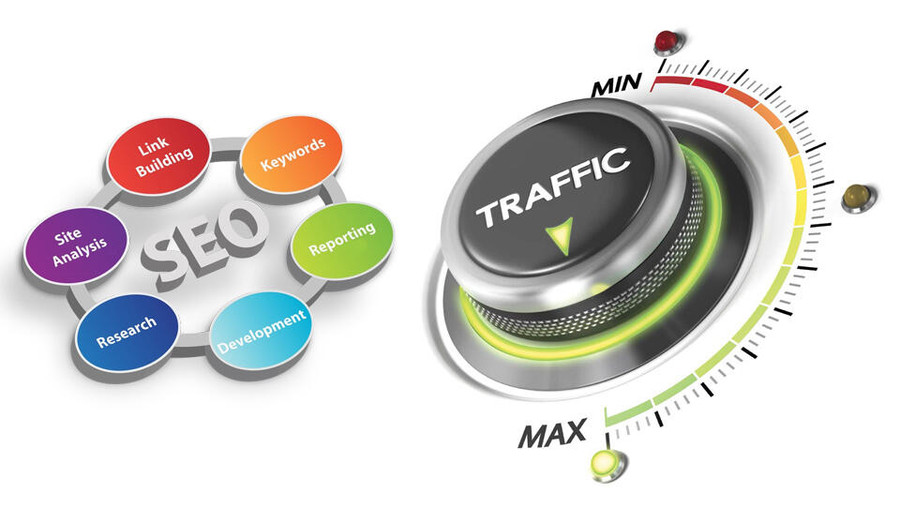
If your site has a blog, whether it’s used to announce site updates or if you use it to attract NSFW traffic to adult, revising your old stale posts may be more effective than simply continuing to add new content in the form of frequent, short, posts.
How to Determine if Your Content Has Gone Stale
Look at your competitor’s high-ranking pages targeting the same keywords to see what they are doing to be successful.
How long has it been since you’ve gone through your blog and read your past posts? If it’s been some time, you may have accumulated a bunch of posts that contain outdated information or broken links. This is particularly true if you publish weekly roundup posts which link out to many different URLs.
If a search through your past blog posts turns up years of old content that no longer interests your traffic, it’s likely a good time to launch a content review and refresh campaign. You may ask if going through your old content and revising, updating, or deleting it is worth the effort. After all, what’s so bad about leaving a bunch of stale posts on your site?
The answer is that your site needs fresh, high-quality content to maximize its authority ranking with Google. If it is weighed down by outdated content of subpar quality, the result is likely to be elevated bounce rates as well as a reduction in clicks — factors which will damage its Google ranking.
Another thing to consider is that Google and other search engines, as well as web users, typically look for content that is fresh, especially when it comes to time-sensitive content such as news or blog posts. The inclusion of the date the content was created in many Google search listings reflects this.
Google can tell if people are clicking on any link which shows up in its search engine results pages (SERPs). If your old links aren’t attracting clicks, Google will take note of this and your page’s ranking is likely to suffer as a result.
This is not to say that you need to get rid of all your old material. But you should take the time to audit it to see which posts should be revised, deleted, or redirected. One way to do this is to use an analytics app to determine which of your posts have not been able to attract even a single organic visit over the past 90 to 120 days. Posts in this category are likely to be too old to be relevant or of thin quality. Once you’ve identified which of your posts have gone stale, you can analyze them to determine how they can either be revised or redirected if worth salvaging, or simply delete them if not.
Another way to analyze the quality of your content is to calculate the “relevancy ratio” of your content. You can do this by adding up the total blog posts on your site and determining how many of those posts had at least one organic visit over a certain length of time, say 60, 90, or 120 days. For instance, if you had 1,500 posts on your site 300 of which had at least one organic visit over 120 days, the relevancy ratio for that period of time would be 5:1, indicating only 20 percent of the posts are considered “relevant” by this measure.
The ideal ratio for this metric is 1:1, with 100 percent of the posts seen as relevant. The lower the relevance percentage (and the higher the ratio), the greater the number of low quality posts on your site is likely to be. A high relevancy ratio can serve as a wakeup call, telling you to analyze your posts to see what improvements can be made.
Making the Most of Your Current Content
With 2 million new blog posts written daily, the internet is teaming with content these days. To a great degree, this stems from the advice given to webmasters to publish as much content as possible. With so much content available on the web, the sad truth is that other than a few highly ranked sites, most content is seldom, and sometimes never, viewed. This is especially true in the adult industry where text-based blog posts take a back seat to video content.
This doesn’t mean that you shouldn’t publish new content regularly, just that it pays to be equally attentive to making sure that your old content is optimized for your visitors. Instead of pumping out a new post that doesn’t actually say much, or that doesn’t provide much entertainment, you may be better served by updating a post that does have lot to say by making sure that it remains relevant.
The key insight here is that it’s preferable to publish a smaller amount of high-quality material than a large amount of mediocre or low-quality material. You can increase your conversion rates substantially and boost your organic SEO results by optimizing your already published content rather than putting out new material. To accomplish this, simply rewrite or repurpose your old blog posts and delete or redirect posts that can’t be updated.
How to Revitalize Stale Content
If your content analysis reveals that you have a fair amount of old blog posts or other materials that are no longer attracting conversions or suffer from subpar rankings, you can take several steps, including:
- Update the content to improve its quality or make it more relevant
- Delete it entirely
- Set-up a 301 redirect to content that is likely to perform better
When taking the improvement route, there are a number of steps you can take to spiff up your old content. These include:
Competitive research:
See what other industry leaders are doing before revising your pages. Look at your competitor’s high-ranking pages targeting the same keywords to see what they are doing to be successful. You can use the ideas gained from your research to help improve your pages. Things to check for:
- Keyword density
- Total word count per page
- Use of images or videos
- Which sites link to them
- Which sites they link out to
Optimize the pages turning in decent performances first:
If you have two pages, one of which is ranked No. 9 and the other of which is way down at the bottom of the SERPs, revise the better performing page first. It will be easier for you to rank it up to the front page of the SERPs via refreshing the content than it would be to get a page that is #56 in the rankings to the top.
Check the post for proper SEO formatting:
Go over the structure of the post to ensure that it is formatted in a manner that won’t impede its SERP position. This includes checking all of the following for alignment with SEO best practices:
- Title tags
- Images
- Lists
- Headers
- Descriptions
Review images and screenshots for relevance:
Given the rapidity with which things can change in the internet era, it makes sense to go over your images, videos, etc. to make sure they are still appropriate in light of any changes or developments relating to the subject matter since the post was published.
Optimize the writing:
When reviewing old posts, you may find some that aren’t written as well as you might like. Along with the information contained in the content, the quality of the writing is a major factor in keeping bounce rates low and driving repeat site visits. A free resource you can use to analyze your posts is the Hemingway app, which emphasizes clarity and simplicity in writing. Grammarly is a free app for checking the grammar of your posts. Clarity, spelling and grammar are important even for adult sites.
Change the publish date:
When you’ve finished revising your content, make sure to update the publish date to reflect the date on which the content was revised.
Contact influencers:
A number of apps are available to assist you in determining who the leading influencers in your industry are. Reach out to them to let them know about the updated post. This can help increase the scope of your audience.
Read the post comments:
Many times, you will find that commenters have pointed out things that were missing from the original post, or provided insights relating to the subject matter than can be added to the post. If you find relevant information in the comments, be sure to add it to the revised version of the post.
Use social media to get the word out about the revised post:
Anytime you update a post you should be sure to notify your social media followers. Include info about other companies or models mentioned in your post via a hashtag or brief mention – this increases the chance that they will inform their own followers about your post.
Notify your email list:
If you maintain an email subscriber list, send a blast out to your email list to inform them of your updated post. In the blast, you can refer to the specific parts of the blog that have been updated to help motivate list members to read the post.
Once you’ve analyzed and updated your blog content, review your continuing content management plans. Gauge how frequently you are posting compared to your competitors. If more or less, should you change your approach? Is your content relevant? Are you ranking for the proper keywords? Answering these questions can be helpful to getting content management right. If you’ve established a content publishing calendar, consider scheduling a regular content review session to analyze the performance and relevance of your old posts.
Doing all of the above can really help ramp up organic traffic more than you think might be possible.
Adrian “Yo Adrian” DeGus is a 15-year adult industry veteran and founder of AdultSEOPartners.com, a professional adult SEO agency catering to large established adult sites. DeGus, who has provided advanced consulting services to many leading sites in the adult industry, also operates Adult SEO Training, a popular service that helps webmasters, program operators and affiliate managers to learn in-house SEO.</em?



