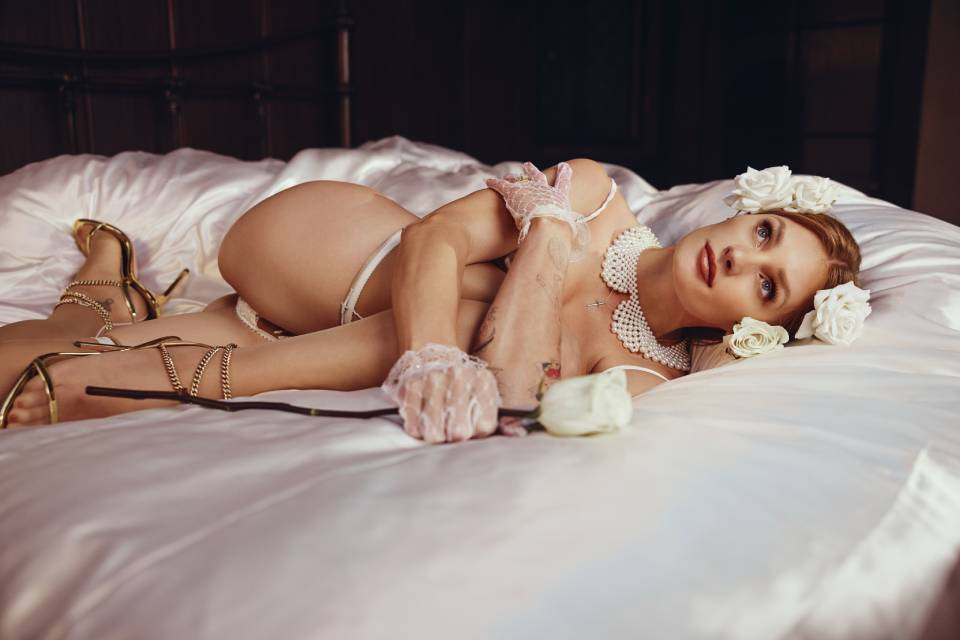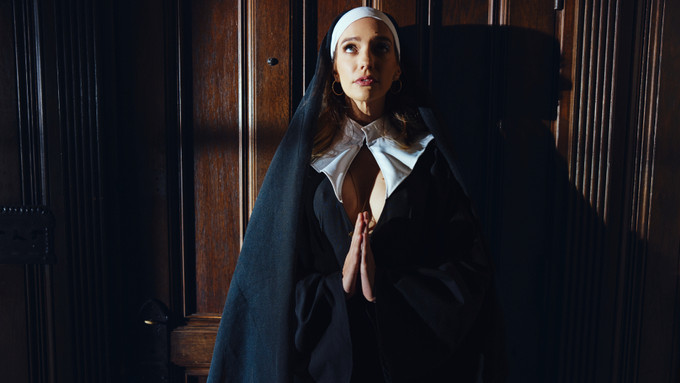
For as long as humans have told stories, goddesses have embodied our fascination with desire, temptation and pleasure.
Kayden Kross taps into that ancient fascination in "Equilibrium," her five-part fantasy feature for Deeper, where desire exists on two planes. On the surface, pleasure collides with duty, appearances and expectations. But beneath it lies an underworld of the psyche, where desire takes physical form and characters confront the parts of themselves they would rather keep buried.
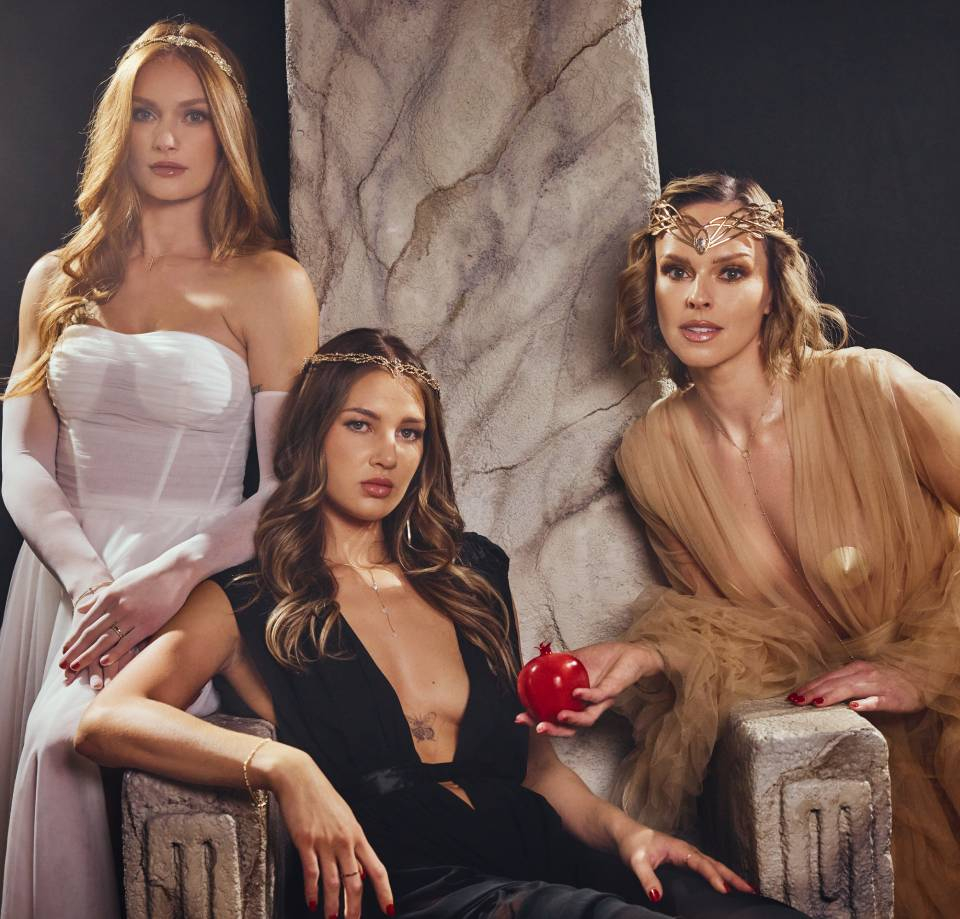
At the center are three sisters, portrayed by Jewel Diamant, Jessi Rae and Serenity Cox, whose paths become entwined with a philosopher played by Jason Luv. He becomes the masculine force against which each woman's relationship with desire and balance is tested.
"There are no polar opposites," Kross explains. “There's a continuum, with an extreme at either end. When you balance it, you get that 'goddess,' the integrated masculine and feminine."
Serenity occupies the integrated center of that continuum, while Jewel and Jessi approach it from opposite ends.
"Serenity was my already integrated woman who knew exactly what she was there for and didn't negotiate," Kross explains. "Then I had Jewel, who gave too easily, and Jessi, who couldn't give to herself. Jessi and Jewel are moving toward the center from opposite angles with the same man. And that was the basis for the whole story."
A Feast for the Eyes
Turning the philosophy of "Equilibrium" into something viewers could see and feel meant building two distinct worlds: the overworld and the underworld.
The production team spent weeks constructing a 360-degree underworld designed to disorient, with no obvious source of light or sense of place and imagery evoking everything from the birth canal to the tomb and resurrection.
"The underworld is the psyche. You don't know where the lighting is coming from, and you can never see where you are," Kross explains. "Sex in the underworld, in its own way, is more representative of facing your own conflict than actual sex. Sex in the overworld is the actual hookup."
The overworld breathes more freely, favoring natural, source-driven light and a more expansive frame, while the underworld remains confined, dreamlike and untethered from reality.
That sensual visual language reaches down to the smallest details. Wardrobe traces the characters’ journeys, with Jessi starting in pristine white before black creeps in and, later, sprouts bloom across her dress. Jewel remains exclusively in black and white, while flashes of red on Violet Myers and Rissa May signal danger.
“That first seedling popping up into the earth of the new world, into the light of the new,” Kross explains of Jessi’s dress. “A lot of work went into what they were communicating in their outfits.”
For Kross, those visual cues can work their magic even when viewers never consciously decode them.
"Our psyche speaks in symbols, and we don't need to attend a specific class to understand them," she says. “There's an instant recognition, so even if people don't understand why they're arriving at a certain feeling, the symbolism is still taking them there."
That philosophy extends to the elements entwined with each sister, all three converging in a recurring tea kettle.
"The first time you see Jessi, a fire starts," Kross says. "The first time you see Jewel, she starts drowning in her own desire. And then the first time you see Serenity, she's coming out of the steam. And so that's why we keep going back to that tea kettle."
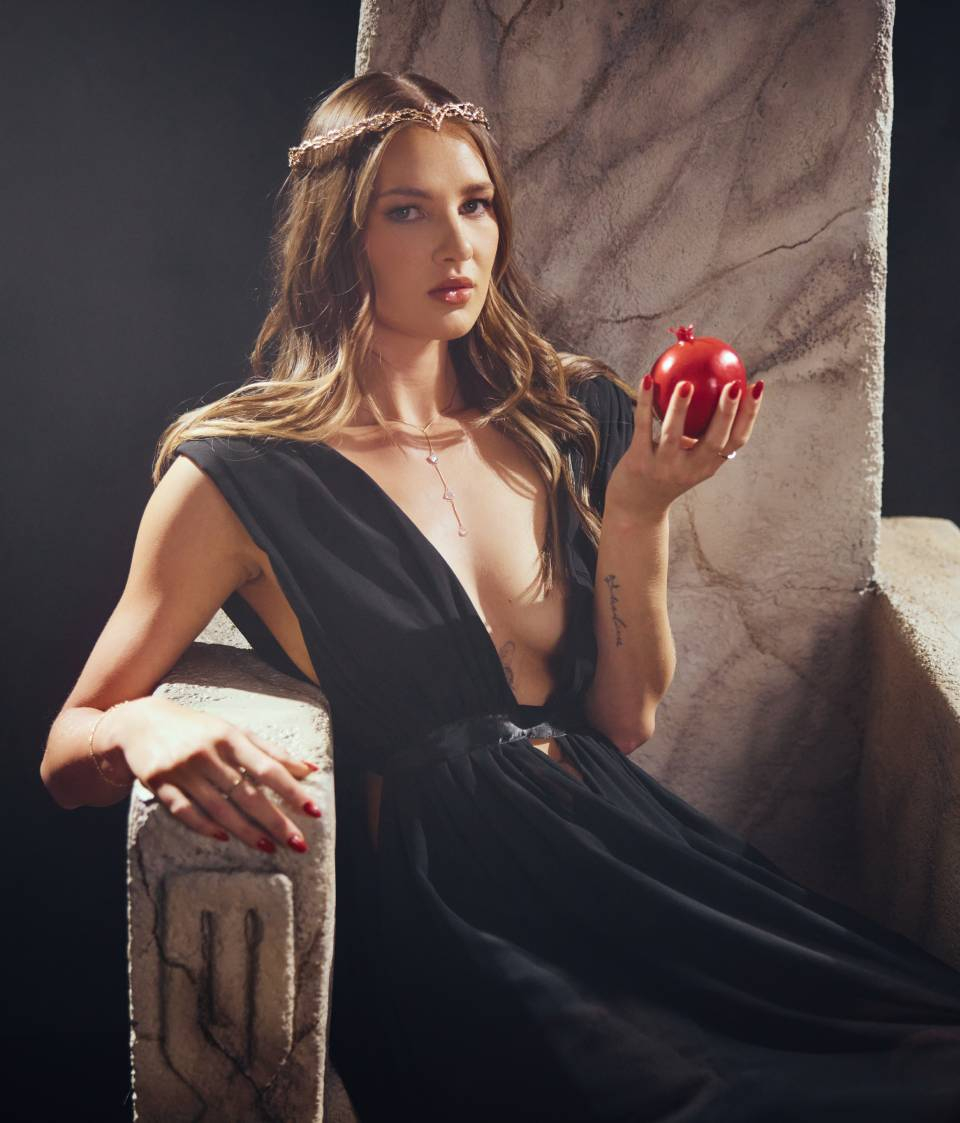
Serenity becomes perhaps the most sensual manifestation of that symbolism. Draped in gold and jewels, with luminous makeup designed to glow beneath the lights, she evokes a latter-day Helen of Troy. To achieve the look, Kross asked her team to channel an ethereal, supernatural goddess, envisioning “this shimmering, almost hologram of a woman.”
Denizens of Desire
Kross had many of the performers in mind as she developed their characters, but Little Puck especially impressed her with the preparation she brought to the film's dialogue-heavy material.
"She would be sitting in the space running lines on her own, just so focused," Kross marvels. “She's such a hard worker and I was so impressed with her. She didn't miss a beat, and didn't miss a mark. It was just perfect delivery on every take."
That commitment extended across the production. As performers began seeing Kross' vision take shape on the monitors, they understood why she was asking so much of them.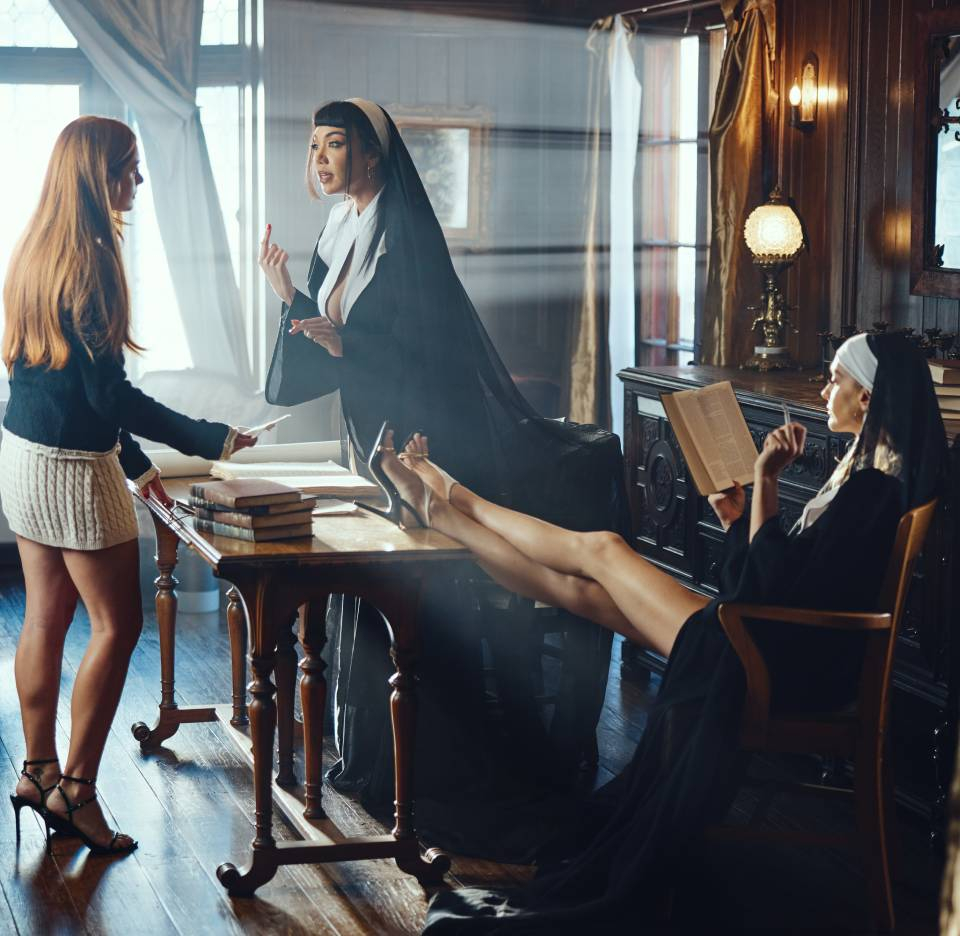
"Sometimes you ask them to do something and they don't understand why," Kross admits. "Sometimes you're in it and can't see how the light is reading with the filters, the frame and the anamorphic. But I saw everyone's eyes light up when they saw the monitors with playback."
That trust was tested near the end of the shoot, when in the wee hours of the morning, production needed a performer submerged in a water tank. Getting her into position required a ladder that had to be removed before filming, and despite the crew's efforts to heat the water, it had gone cold by the time cameras rolled.
Then she saw the footage.
"She was like, 'OK, let's do it again,'" Kross remembers. "I could tell we were all just going on the fumes of excitement because nothing else was going to get us to the end of the day."
Kross' longtime crew shared that enthusiasm, recognizing the project as their most ambitious yet. Her cinematographer, who also works in mainstream production, offered perhaps the ultimate validation.
"This is the best thing I've ever done," Kross recalls him telling her. "Hard stop, no qualifier for adult. This is the most interesting creative thing I've ever been allowed to do."
"It made me feel good," she admits.
Labor of Lust
Long before there was a script, a 360-degree underworld or a goddess emerging from the steam, "Equilibrium" was already becoming something of Kross' personal Roman Empire.
"This was something that was bubbling somewhere in the back of my head for a long time," she affirms.
That curiosity led Kross deep into symbolism, Jungian psychology, the shadow self, archetypes and Hermetic principles, where she became fascinated by the ideas that recur across cultures and centuries.
“It's this conglomeration of everything I've found through human history, because different civilizations hit the same conclusions without communication," she explains.
By December 2025, those years of simmering ideas had taken the shape of Jewel, Jessi and Serenity, and Kross spent her Christmas break writing the script. Months of preproduction, filming and postproduction followed, culminating in the recent release of the fifth and final installment.
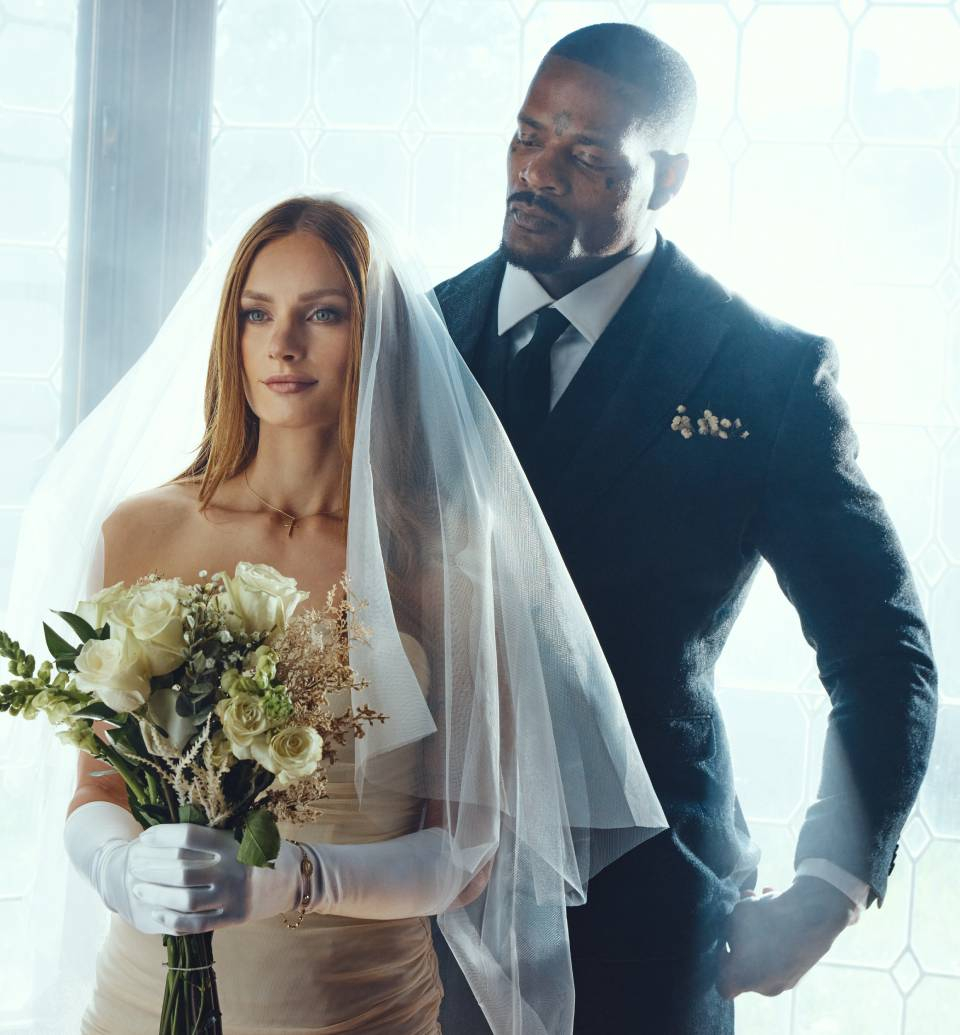
For Kross, the investment was enormous—"minute for minute, hour for hour, week for week," making the film's opening sequence, which weaves together a shot from every day of production, a particularly meaningful distillation of that work.
"That first long lead-in was such a big thing for me because there's a shot from every day of production in that lead," Kross says. “It's not the whole project, but it's representative of the whole."
As the edits came back, years of ideas and months of work finally appeared onscreen.
"I was getting the most intense goosebumps while watching the edits," she recalls. "I'd watch them again and again and again, and think, 'Yes, I got it.' It's the little things I do in between that feel like work, but projects like this make it worth it."