It's the end of the world as we know it, and Seth Gamble feels fine.
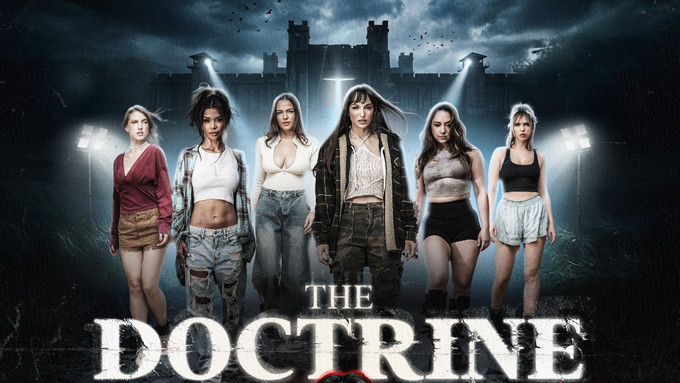
On a scorching hot day in the remote mountains of Santa Clarita, Gamble is directing "The Doctrine," an ambitious post-apocalyptic drama for Adult Time's Pure Taboo label.
“It's their big-budget feature for the year," Gamble says from a soccer mom chair outside a single-wide trailer.
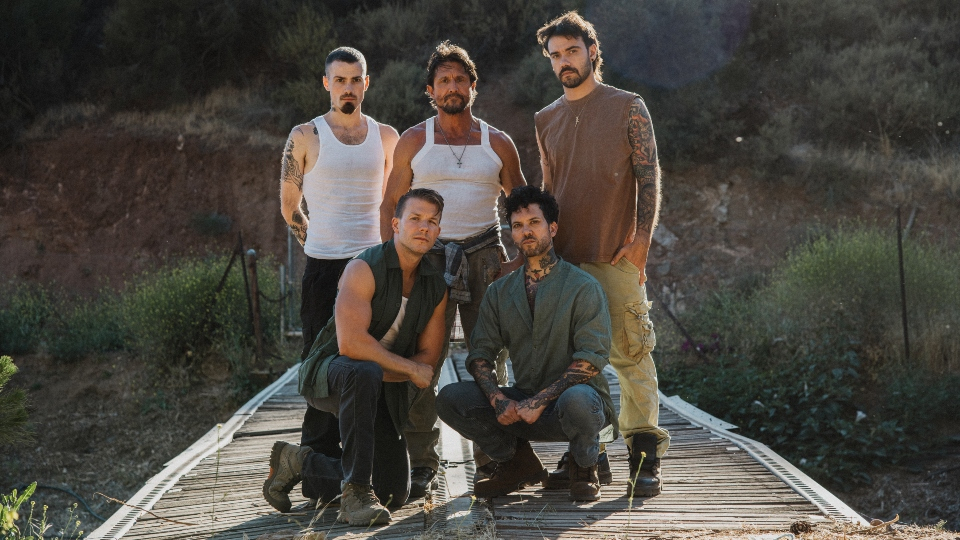
Set three years after the collapse of civilization, "The Doctrine" follows four brothers who operate the last secure compound for miles. Raised by a devoted but domineering father, played by Tommy Gunn, the men have learned to live off the land and follow a strict philosophy built around preserving their bloodline.
When a group of women arrives seeking refuge, the brothers offer them protection under one chilling condition: Each newcomer must accept the role they believe she has been destined to fulfill.
"The brothers need to find women who are on board with rebuilding the population and being impregnated so the world can continue," Gamble explains. "At its core, this movie is about breeding, and being forced to breed when there's no other choice. It's about the lengths humans will go to ensure the survival of our species."
The resulting conflict asks how far people will compromise themselves when their survival is at stake and whether sanctuary can ever truly be safe when it comes at the cost of personal autonomy.

Gamble, who stays behind the camera for this feature, cast Small Hands, Codey Steele, Nade Nasty and Logan Xander as the four brothers, with Octavia Red, Ava Amira, Rissa May, Lexi Luna, Lilly Bell and Remy LaCroix rounding out the ensemble.
“It's a pretty lofty cast," says Gamble, who was encouraged by studio Chief Creative Officer Bree Mills to expand the scope of a typical Adult Time production and elevate the film's visual ambitions.
Survival is Submission
Beneath its apocalyptic premise, Gamble sees "The Doctrine" as a character study about people clinging to their humanity while adapting to a world governed by fear.
Amira plays Lotus, an unfiltered free spirit with what she describes as a "slutty Lara Croft vibe."
"I was excited to play her because she reminds me of myself," Amira says.
For Gamble, Lotus' hyper-sexuality reveals how she has chosen to navigate the new world.
"Lotus may be fun and promiscuous, but really, she's made a decision to protect herself and do what she thinks she has to do to survive," he explains. “There's a lot of that in the film because people employ different ways of coping with what's happening."
Steele portrays James, one of the older brothers and a steadfast follower of his father's rules. Nasty plays Marcus, a younger sibling struggling to reconcile his devotion to the doctrine with his desire for a life beyond it.
"My older brothers are more stoic because they've seen some shit, but I'm more angry and lost," Nasty says. "I want my brothers' love, but they only care about the doctrine, and I do too, but I'm also seeking more. That's hard to find on the compound."
Marcus finds that "something more" with Bell's character.
"We shot a sex scene together last night, and it was fabulous. It was right on that table," Nasty says, pointing to the picnic table where everyone is eating a late lunch and prompting a chuckle.
Xander makes his feature debut as Braxton, the youngest brother, whose attraction to Lotus places him at odds with the doctrine and his marriage to Miriam, played by Red.
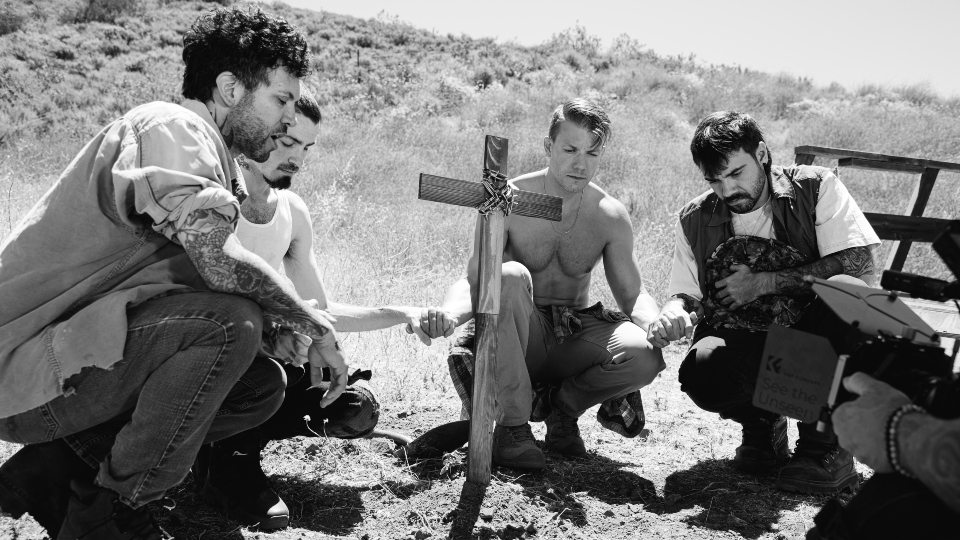
"Braxton is torn between the doctrine and his desires," Xander says. "He lusts after Lotus, but he has to follow the rules of the doctrine."
Miriam, meanwhile, is the compound's original female member and a committed believer entrusted with bringing newcomers into the fold.
"She's very into the doctrine, but she's struggling to get pregnant herself, so she helps indoctrinate all the other girls who join," Red explains.
In her first feature since returning from a brief career hiatus, LaCroix plays a hardened woman who forms an unexpected bond with Small Hands' character.
"Remy is the tough-as-nails survivor who feels the world has beaten her down," Gamble says. "She's a very guarded person who has a hard time allowing people in."
Building the Compound
Complete with a greenhouse, a geodesic dome, and a room outfitted with chains, the secluded property reinforces the story's post-apocalyptic tension.
"This location makes everything feel more immersive as an actor," Steele says. "It feels like a real compound, which helps keep you in the moment."
Gamble imagines the property as a secluded getaway Gunn's character owned before the collapse, then turned to for refuge as civilization crumbled.
"It's a pretty relatable instinct. If the world starts ending, you're going to go somewhere that's more secluded," Gamble says. "We picked this place because it's in the middle of nowhere and at a higher elevation, so it's the kind of place where the characters would feel safe."
That sense of isolation contrasts with the bustle behind the camera, where Gamble aims to complete roughly 10 script pages and one sex scene that day.
As caterer Jane Hamilton, better known as Veronica Hart, prepares beef stew for dinner, Gamble requests an apple for Nasty to eat during the next scene. When none can be found, production manager Kasey Warner calls for backup.
"I need a secondary fruit," she yells.
A peach is located, and Nasty eats it like a pro before flubbing his line to Xander.
"Who the fuck is in there? Are you fucking Miranda again?"

Gamble calls “Cut!” because there is no Miranda. The character's name is Miriam, but even that is beside the point, as the line is supposed to be about Lotus. Despite the flub, Nasty quickly recovers, and production rolls on.
Experience Behind the Camera
Bringing this brutal new world to life requires Gamble to be as exacting behind the camera as he is on the page. He captures the apocalyptic action on a Blackmagic Pyxis camera using Zeiss Super Speed lenses, the same type used to shoot "The Shining."
"The visuals are dope," he promises.
Gamble's experience in front of the camera also shapes his approach to directing. Having endured demanding scenes and uncomfortable conditions himself, he understands exactly what he is asking of his cast.
"When a director has on-camera experience, the empathy they have for the actors creates a better environment and gets better performances out of the models," Warner says. "They know the person asking them to have sex on a picnic table in the middle of the night in 50-degree weather has done that before, and a million other things, too."
That empathy accompanies exacting creative standards, and Gamble spends nearly a dozen takes capturing one meticulously envisioned shot.
"Sorry, guys, I know this is getting weird," he tells the crew.
Everyone patiently follows Gamble’s lead, and his persistence pays off. He later describes “The Doctrine” as one of his best-looking films.
Red, who recently worked with Gamble on the comedy "Sweet Juggz of Justice," admires the breadth of his creativity. Amira similarly praises his ability to make performers look their best and predicts that "The Doctrine" will become a major awards contender.
"I have a good feeling about this one. It's different from anything I've seen, so I'm excited for it to come out," Amira says.
Gamble is equally proud of the emotional depth his cast brings to the film.
“What drew me to this story was how deeply human it feels beneath the apocalyptic setting,” he says. “Every character is fighting to survive while trying to hold onto who they are.”