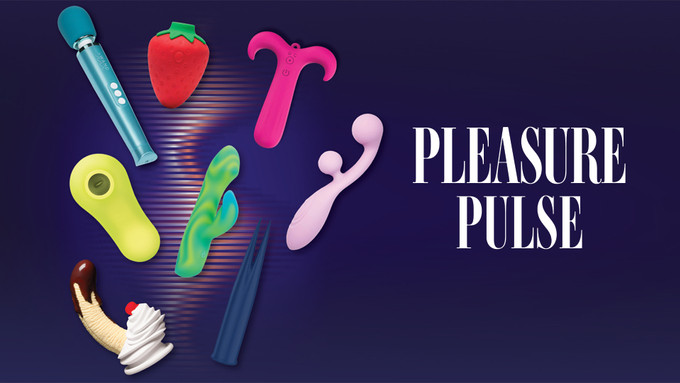
The past year has brought new product rollouts across categories, driven by consumer demand for unique sensual experiences. Pleasure brands, retailers and distributors with their finger on the pulse of the market are sharing their observations on the latest trends from the past year that are driving sales.
A prominent area of growth is wellness, particularly for customers who have historically been neglected by the general pleasure market. Sexual wellness centered on menopause is increasingly popular as more consumers seek products that enhance comfort, arousal, sensation and intimacy during a life stage that has frequently been underserved.
“Menopause is finally a conversation, not something that’s hush-hush,” said Kim Card, national sales manager for Lovehoney Group. “Consumers are hungry for education, insight and products that actually support this stage of life, from wellness to sleep and mood. Anything that helps vulva owners navigate these changes is getting a lot of attention.”
Carly S., owner of HornyStoner.com, has seen similar momentum, noting that education is becoming just as important as the products themselves.
“It’s a category that still feels underserved despite a very engaged audience that’s eager for solutions,” she remarks.
The rising focus on wellness is also boosting demand for products such as lubricants, bath and body items, and other categories that emphasize ritual and self-care. For many consumers, these products serve as the gateway to adult retail shopping because they seem familiar, accessible and lifestyle-oriented.
“One of the biggest shifts shaping the category is the growing demand for purpose-driven lubricants designed for specific experiences, devices and sensations,” said Timothy Ferencz, director of sales, North America, for JO.
Customers are paying closer attention to glide, longevity, toy compatibility and skin feel, Ferencz added, while still expecting formulas that feel premium and easy to use. That has helped keep sales of water-based lubricants strong, especially because they work across a wide range of toys and experiences.
“With money a bit tighter these days, customers want a lubricant that does it all,” Rebecca Powley of Intimate Earth adds.
The same combination of wellness, cost-effectiveness and upscale presentation is driving the crossover popularity of sensual bath-and-body products, says Xgen Director of Marketing Blake Bagdon.
“These products fit naturally into sexual wellness, romance, gifting and self-care categories all at once,” Bagdon said.
Xgen’s Baci brand will leverage this trend with its new Bare by Baci collection, featuring scented, pheromone-infused bubble baths, massage oils, and luxury candles. These products are formulated with skin-friendly ingredients, are pH-balanced, and do not contain artificial colors, aligning with the values important to modern consumers.
While wellness is expanding the customer base, innovative features are pushing the toy category forward.
“Customers are hungry for innovation and are eager to experience entirely new forms of pleasure,” said Josh Ortiz, director of education and outreach for XR Brands. “We’re seeing growing demand for functionality that goes beyond traditional vibration, including thrusting, ejaculating, squirming, egg-laying and other immersive features.”
Thrusting toys remain especially strong sellers, as do products that combine multiple sensations in one device.
“Multifunctional features remain a major driver in toys, especially products that combine thrusting, vibration or rotation in a single toy,” said Lupe Martinez, director of sales and marketing for CalExotics. “Consumers also love customizable settings, quieter motors and remote or app-controlled features, particularly for couples or long-distance play.”
Air pulse technology continues to gain traction, particularly as brands bring premium sensations to more accessible price points. Additionally, retailers are seeing interest in products designed for humping, grinding and pressure-based pleasure.
“For a lot of people, that’s how they naturally first explored pleasure, but historically there haven’t been many products designed specifically around those preferences,” Carly S. said.
Chelsea McCain, sex toy and novelty manager at Adult Empire, also sees potential in grinding pads.
“These style toys can also be great for those who don’t have the ability to move much, or for those who are larger in size and don’t want to fumble to position a toy to hit all the right spots if it doesn’t work with their body shape,” McCain said. “Simply sitting and grinding can bring the thrills!”
Male pleasure is another category showing strong growth. What was once a relatively narrow category has evolved into a more sophisticated space, with app-compatible devices, suction, stroking, thrusting and other features designed to create a more immersive experience.
Phoebe Grott, director of marketing and strategic partnerships at Nalpac/Entrenue, attributes the growth of premium male toys to their growing association with technology and content-platform compatibility.
“Even with tight wallets, consumers are splurging on high-end penis products that deliver on performance and experience,” Card said.
According to Alicia Sinclair, founder and CEO of COTR, anal play continues to be one of the fastest-growing categories across the board.
“What's shifted is who is buying,” Sinclair reveals. “We're seeing broader demographics exploring anal wellness, including heterosexual couples and older consumers who are coming to it through a health and pleasure lens rather than a taboo one.”
Beginner-friendly anal items, softer materials, adjustable sizing and trusted content are helping the category feel less intimidating.
That shift also applies to bondage, where shoppers are gravitating toward softer materials and modern colors and designs that feel more inviting than extreme. Verna Meng, CEO and founder of Blush, said the category is benefiting from a broader move toward approachable exploration.
“People want pieces that look like they belong in a bedroom, not a costume shop, and they want to feel invited in rather than tested,” Meng said.
Design is playing a major role across nearly every category. Soft-touch silicone, simplified controls, quieter motors and approachable shapes are among the product features that continue to perform well across boutique and mainstream retail environments.
“We’re seeing major growth in products that combine luxury aesthetics, approachable pricing and user-friendly functionality,” said Meghan Dunkel, sales manager for Nasstoys.
Shoppers increasingly want products that look sophisticated, discreet and lifestyle-friendly.
“Design aesthetics have also shifted,” said Sarah Tomchesson, director of marketing and education at Magic Wand. “People want products that don’t look shameful on a nightstand, that they can leave out even.”
That change is particularly important for younger shoppers and consumers entering the category through wellness, self-care or relationship-focused purchases. For these mainstream-leaning customers, appearance can determine whether a product feels approachable or intimidating.
Verna Meng, CEO and founder of Blush, said products with outdated visual language are losing relevance quickly.
“Products that look like sex toys from a decade ago are aging out of consideration fast, particularly with younger shoppers,” she said.
Functionality is equally scrutinized. Consumers expect products to work as promised and to be user-friendly immediately. Complex controls, poor charging systems, or unreliable performance can quickly damage customer trust, especially now, when online reviews are instant and unforgiving.
Changing consumer expectations are encouraging brands to focus on thoughtful innovation rather than adding excessive features. More settings are not always better if the product is difficult to navigate. Retailers are seeing customers gravitate toward toys that feel simple, reliable and effective, even when the underlying technology is advanced.
“Consumers don’t want to read a manual,” she said. “They expect reliable charging, a seal that doesn’t fail, and performance that holds up over the life of the product.”
At the more playful end of the spectrum, whimsical products are drawing attention from customers who want pleasure products to feel fun, cute and memorable.
“Mushroom-inspired products, playful designs, bright colors, fantasy aesthetics, and products that feel more like self-care accessories than medical devices are bringing new customers into the category,” Carly S. said.
Elizabeth Porter-Smith, brand ambassador for XR Brands, said that response has been especially pronounced for products that break away from traditional silhouettes. She highlights XR’s Simply Sweet Chocolate-Dipped Banana dildo as a standout success among novelty and “cute aesthetic” shoppers.
A fun, relatable theme has also helped attract shoppers to Our Erotic Journey’s Zodiac collection, says Dolly Su.
“Shoppers instantly start looking for their own [astrological] sign or their partner’s sign,” Su said. “It becomes interactive before they even touch the product.”
From Tech to Human Connection
Technology remains one of the most closely watched areas of innovation, though retailers and brands are increasingly prioritizing ease of use over novelty for novelty’s sake. App-connected toys, interactive features, and remote experiences continue to grow, but the products with the strongest staying power are those that feel intuitive rather than complicated.
Sinclair said the next wave of app-connected and couples-focused technology will depend heavily on accessibility.
“The barrier to entry has historically been setup friction; as that improves, the category opens up enormously,” she said.
AI is also beginning to shape conversations around the future of pleasure technology, both through fantasy-driven experiences and smarter retail tools. Tibor Nagy, head of purchasing at Vagyaim.hu, views AI-driven technology as one of the most significant long-term opportunities.
“Whether through synchronized device functionalities or virtual product extensions, AI offers an immersive experience that goes beyond mere physical gratification; it delivers a fully realized fantasy,” Nagy said.
For retailers, AI may also affect how customers discover products in-store. Grott pointed to AI-powered displays and iinteractive tools as emerging opportunities for product education and customer engagement.
Still, several industry voices emphasized that as technology advances, human connection remains central to the pleasure business. Alex Gay, the “Minister of Mischief” for the brand Dr. Tush’s, highlighted aftercare as a reminder that intimacy is not just about stimulation or fantasy but also about communication and trust.
“As AI and digital interactions become a larger part of everyday life, I believe people’s desire for authentic human connection is growing as well,” Gay said. “Aftercare is one of the things that makes intimate experiences uniquely human.”
In the Know
Across the pleasure products space, consumers continue to seek information and are wellness-minded and selective in their approach to shopping. They research before buying, compare product claims, read reviews and ask more direct questions about what they put on or in their bodies. In many ways, shoppers are treating pleasure products like skincare, wellness and personal care purchases, with higher expectations for transparency, safety, performance and presentation.
Those higher expectations have reshaped how retailers communicate with customers and how brands position products. Shoppers are no longer satisfied with vague assurances about safety or quality. They want specifics and are increasingly adept at distinguishing meaningful claims from marketing language.
Tomchesson said consumers are more informed than ever, particularly about materials and product performance.
“They read ingredient lists on lube, know the different grades of silicone, and compare motor quality on countless Reddit threads,” Tomchesson said. “They expect premium build quality, thoughtful design and innovations that enhance their sexual experiences.”
Value is another major theme, though it is more complex than simply looking for the lowest price. In a tighter economy, consumers are still willing to invest in premium products when they understand what they are paying for.
Clear education, comparison points and staff recommendations can help shoppers feel confident about investing in higher-end items. This is where brick-and-mortar stores have a powerful advantage. A customer can compare textures, packaging, weight, controls and design in person, where a trained staff member can also explain the material, how one charging style differs from another or which lubricant is compatible with a specific toy. As consumers become more selective, that kind of guided education becomes vital.
“Overall, shoppers are more educated and selective than ever, which encourages brands to raise the bar for quality, design and innovation,” Martinez affirms.
The Package Deal
In adult retail, packaging anchors the shopping experience by guiding customers to stop, pick up, scan, ask, compare and decide to buy. It also allows brands to express their personality and purpose.
“For the ID brands, we’re seeing strong consumer response to packaging and merchandising that simplify the shopping experience while still feeling elevated and approachable,” said Jia Jeng, brand manager for Westridge Labs, which makes the ID Wellness line of toys. “Shoppers want to quickly understand product benefits, compatibility and intended use without feeling overwhelmed.”
Clarity matters in a category where customers may be curious yet hesitant. A shopper might want to explore a new toy, lubricant or intimate care item but may not want to ask a staff member every question.
“The back panel still has to work hard,” Meng said. “It needs to communicate the material, the feature set, the charge type, everything a consumer needs to decide without flagging down a staff member they may be too shy to approach. The packaging is the silent salesperson on the shelf.”
That “silent salesperson” role is especially important in stores where staff members may be assisting other customers or where shoppers prefer to browse privately.
Still, packaging cannot carry the entire sales process on its own. Several industry voices noted that it performs best when paired with thoughtful merchandising, staff education and other tools that help customers understand how products fit into their lives.
“Since returning to Je Joue, one thing I’ve noticed almost immediately is that packaging cannot do all the heavy lifting anymore,” said Ian Kulp, head of global wholesale and brand for the company.
For brick-and-mortar stores, that broader experience can include store testers where appropriate, educational displays, knowledgeable staff and product adjacencies that make the path to purchase feel more natural. A well-designed box may invite interest, but where that box sits and what surrounds it can help shoppers understand the occasion, mood or need it supports.
Carly S. suggests that lifestyle merchandising can be more effective than organizing products strictly by brand.
“Collections built around themes like self-care, long-distance intimacy, menopause support, or beginner exploration help customers understand how products fit into their lives,” she affirms.
In addition to supporting the theme, packaging imagery should stand out on store shelves and across online platforms.
“Product packaging that is both trendy and eye-catching as well as able to translate to advertising without raising the flags of content moderation is so important in an age where brick-and-mortar and ecommerce or online marketing need to be in continual conversation with each other,” Lovely Planet Senior Sales Manager Sonny Farnsworth said.
Nevertheless, even strong packaging can lose its impact if shelves are jammed or disorganized.
“When products are displayed cleanly on walls, shelves, or grid systems, with packaging and information easy to see, customers engage more naturally,” XR Brands Brand Ambassador Porter-Smith said. “Packaging design, color and messaging stand out more when stores avoid overcrowding products.”
Educated Sales
Education is the other major piece of the puzzle. Packaging can introduce a product, but many shoppers still need support before they feel ready to buy. That education can come from staff, signage, QR codes, videos, blogs, comparison guides or social content.
“For the ID Wellness Essentials toy line, we developed educational videos that help explain product benefits, usage and key features in a simple, approachable way,” Jeng said. “In-store, retailers are utilizing QR code shelf talkers that link directly to these videos, allowing consumers to instantly access product education while shopping.”
Kulp recommends online retailers try to replicate the experience with strong imagery, video, reviews and educational content.
“Whether someone is standing in a boutique, visiting their favorite retailer or browsing from their sofa at home, the goal is ultimately the same: make the shopping experience feel less intimidating and more informative,” he said.
Staff education remains equally vital. While an attractive box can appeal to customers, a knowledgeable staff member can link the product to a particular need, concern, or desire. Meng mentioned that investing in retailer education is one of the most underfunded opportunities in this category.
“A staff member who understands why Puria matters, or why Magna Charge protects a waterproof toy, sells differently than one reciting a box,” Meng said. “The brands that show up with a content and education kit, not just a product kit, are the brands retailers want on their floor.”
Grott also emphasized the role of education in driving sales of pleasure products.
“Brands and retailers investing in staff training, simple educational materials, and sex-positive customer conversations are converting more of their foot traffic,” she observes.
Value Proposition
Economic uncertainty has not stopped consumers from shopping for pleasure products, but it has changed how they shop. Across adult retail, customers are becoming more selective and more focused on value.
Brands like Lovehoney are responding by making sure shoppers have options.
“We’re responding by offering products across entry, mid-range and premium price points, ensuring there’s something fresh and appealing for every budget,” Card noted.
For Frank Kok, director of sales for Mystim, the current economy has sharpened the importance of offering retailer support. He said stores are still interested in innovation, but they are approaching new products with more discipline.
“Retailers are no longer looking for ‘just another new product,’” Kok explains. “They want products with a clear story, strong category positioning, and tools that help their teams confidently sell the experience behind the product.”
According to Bagdon, across the market, retail prices are trending downward, with many successful products now priced below $50.
“We’ve adapted by focusing on products that offer standout features, strong quality, and approachable pricing so retailers can still drive sales without overwhelming customers with too many new releases,” Bagdon said.
Even when customers are cutting back on larger expenses, they may still make room for purchases that offer comfort, intimacy and enjoyment at home.
“Interestingly, the sexual wellness category has historically been relatively recession-resilient because we offer an affordable luxury,” Tomchesson said.
For premium products, the conversation may need to shift. Instead of leading with price, brands and retailers can focus on longevity, performance and cost per use. A higher-ticket item can still feel like a strong value if the customer understands why it will last, how often they may use it and the experience it provides.
“The brands winning in the next five years will be the ones that treat the sale as the beginning of the relationship, not the end,” Sinclair said.
For retailers, adopting a relationship-building approach is essential. While economic challenges might shift consumer spending patterns, they also underscore the need to build lasting rapport with shoppers. Customers are more likely to return when they feel they have been helped make the right choice.
Pleasure and self-care remain important to consumers, even when budgets are tight. In fact, during trying times, they may matter even more as consumers seek intimacy, connection and affordable ways to feel good.
For adult retailers, the opportunity is not only to weather economic challenges but also to meet the moment with wider, curated assortments, clearer education and a focus on offering value customers can see and feel.