



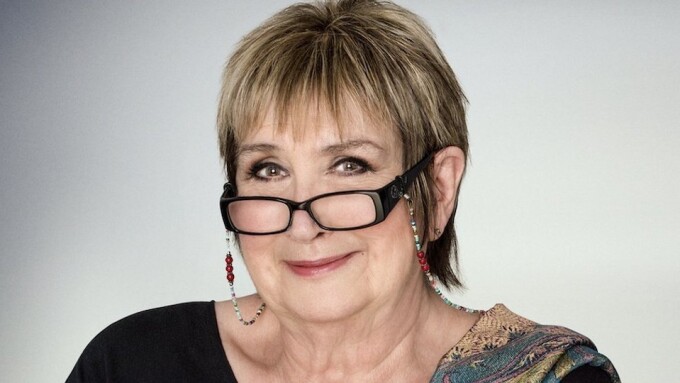
LONDON — Influential British journalist Jenni Murray published an extremist tirade in the Daily Mail last week, advocating for all adult content to be made illegal and for the imprisonment of its producers and distributors.
Murray's screed comes amidst a full-blown, media-fueled moral panic in the U.K., designed to sell the controversial Online Safety Bill to the public. In the piece, the veteran journalist, who was honored by the Crown as a Dame Commander of the Most Excellent Order of the British Empire for her contributions to art and culture, calls for unleashing the full powers of the state against anyone found guilty of producing or distributing sexual material.
After endorsing a sensationalist anti-porn report by Boris Johnson-appointed Children’s Commissioner Dame Rachel de Souza, Murray tells her readers, “Simply type ‘sex’ or ‘porn’ into the browser and you are bombarded by unimaginably horrific videos of men doing vile things to women, with little or no control over the age of the viewer and no demand for any payment.”
Murray also cites a methodologically questionable report that appeared in the British Journal of Criminology as revealing “the extent to which popular porn sites show depictions of sex acts which are criminal.”
Conflating consensual content that depicts fantasies with illegal content, Murray asks, “When boys and young men are seeing physical aggression, coercion, exploitation and women weeping, is it any wonder they believe, wrongly, that women like all that?”
No Such Thing as 'Consensual Sex Work'
Murray then segues from her anti-porn diatribe to her across-the-board anti-sex work agenda, declaring, “In all my years talking to women as a journalist for both regional TV in Southampton and Women’s Hour, I have never encountered a single sex worker who said she enjoyed selling her body, either as a prostitute or as a ‘porn star.’ Not one was doing her job because it was pleasurable. In every case they felt used, abused and harmed. They had not chosen such a career path.”
Murray writes that she “began to believe pornography should be banned” around 1980, when she read about the experiences of early-1970s adult performer Linda Lovelace.
A complete ban, Murray contends, “would not only prevent women in the porn industry from being violated (with little or no recourse to justice), it would also reduce the belief by some in society that sexual violence against women is acceptable.”
Demanding 'Long Prison Sentences' for All Pornographers
Acknowledging that no past attempt to outlaw pornography has ever succeeded, Murray attempts to recast the narrative as being about sexual assault.
“The industry is powerful and rich — worth an estimated 12 billion pounds globally,” she writes. “And until now, the argument that a ban would threaten freedom of speech always took precedence over the simple facts that pornography damages women and puts them at risk. But we’re not talking ‘speech’ here. We’re talking recorded evidence of sexual violence.”
Murray, who would like to censor not only “adult sites” but also Twitter and every other website and platform online, also thinks that the controversial Online Safety Bill is “too weak in its definition of age verification and leaves too much to codes of practice and guidance being drafted later.”
It is time, she declares, “for the Government to be tough enough to make pornography illegal — with long prison sentences to control those who continue to distribute it. Fines are not frightening enough.”



