



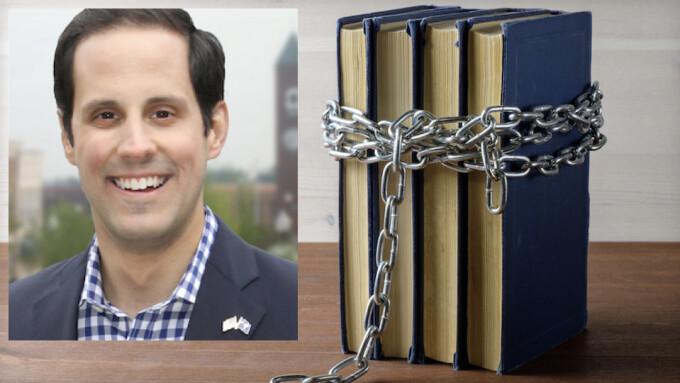
COLUMBIA, S.C. — The South Carolina House of Representatives on Friday quietly declined to support the so-called “library-porn proviso,” a budget mandate approved by the State Senate in March which would have blocked libraries from offering books “that appeal to the prurient interest.”
Calling the proviso “unnecessary,” an editorial in the influential Post and Courier newspaper explained that the first version of the amendment introduced by Republican state senator and Christian talk show host Josh Kimbrell actually “came close” to outright calling for state censorship, “prohibiting libraries from having ‘any books or materials that could be harmful to children or that appeals to the prurient interest.’”
The version that the Senate adopted in March and which died in the House last Friday, the paper continued, “removed the breathtakingly broad ‘harmful to children’ language — which could include books about, say, grilling out — and doesn’t require libraries to remove any books. It simply means some books may have to be moved from the children’s sections of county libraries to a special parental section or the general circulation area.”
The House also declined to move forward with what the Post and Courier described as “the next-closest cultural flashpoint,” a requirement for high schools “to post assigned reading lists online by the 15th day of each semester,” which was “a pared-way-down version of the so-called anti-critical-race-theory legislation.”
According to the report, the “library-porn” proviso “set off an outrage when the Senate approved it back in March.”
“We might get to see some performance art on Wednesday, as senators complain about those liberal House members who refused to go along with their restrictions,” the Post and Courier noted, “but after Friday’s votes, this show is over for the year.”
A May editorial in the same paper, criticizing the vague, censorious language proposed by the Christian disc jockey and politician, decried the proviso’s “lack of clarity” as the result of “trying to prevent children from seeing things you don’t want them to see by using language that’s designed to protect them against sexual predators who have clearly developed prurient interests.”
Most young children, the editors continued, “haven’t yet developed ‘prurient interests’ to be aroused; what they have is interest in unfamiliar material that their parents not unreasonably think they’re not old enough to learn about.
“If there’s a problem that needs fixing, lawmakers need to provide some clarity about what the problem is — Is it 'sexually explicit' material that Sen. Kimbrell told the Senate he was targeting? Is it nudity? Is it pictures that involve sexual activity? Is it written descriptions of sex?”
The editorial board even urged lawmakers, if they really meant what they implied, to curtail the chilling effect on free speech of these moral-political stunts by writing down a definition “so librarians don’t have to wonder if descriptions of sexual immorality in the Bible are covered.”
Main Image: State Senator and Christian talk show host Josh Kimbrell (R)



