



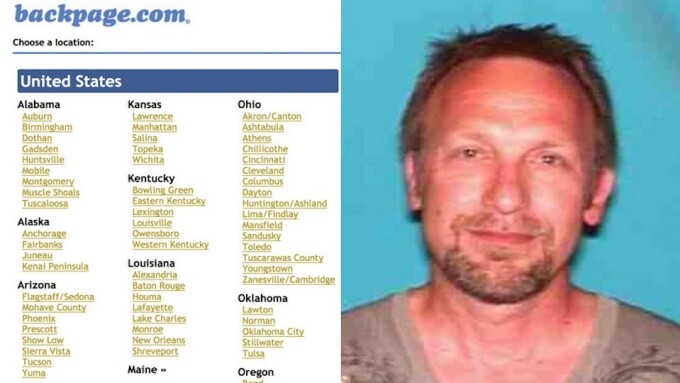
PHOENIX, Ariz. — As proceedings against Backpage.com founders Michael Lacey and Jim Larkin continue unraveling in California courts, the sentencing of former associate Carl Ferrer, now cooperating with the government as a witness against them, has been delayed until July 2020.
Ferrer, the former CEO of Backpage.com, was due to be sentenced this week. The exec was initially a co-defendant of Lacey and Larkin’s, but abruptly withdrew from the Joint Defense Agreement last year, around the time Donald Trump signed FOSTA into law.
Ferrer's name was "conspicuously absent" from an indictment of seven other Backpage officials unsealed in April 2018, reported the Washington Post at the time. The former CEO shocked his former co-defendants by pleading “guilty in state courts in California and Texas and federal court in Arizona to charges of money laundering and conspiracy to facilitate prostitution.”
“In addition,” the Post continued, “he agreed to testify against the men who co-founded Backpage with him, Michael Lacey and James Larkin," who remained in jail in Arizona on "facilitating prostitution" charges.
For Lacey’s attorney, renowned criminal law and First Amendment expert Paul Cambria, this week's sentencing delay is an expected ploy by the prosecution to exert pressure on Ferrer to testify against his client and Larkin in the ongoing, sprawling saga concerning the dissolution of Backpage.com.
Backpage, the leading adult online classifieds site, was shuttered by the FBI in April 2018, following a single-minded crusade against it by California Democratic politician Kamala Harris (then Attorney General and now Senator and Presidential Candidate) and allies among religious conservatives from the Midwest and other anti-sex and anti-sex-work entities.
The vast majority of sex workers and sex worker advocates vocally protested the closing of a digital forum that made their jobs safer from the abuse of pimps and corrupt law enforcement. Before Congress passed FOSTA, even the FBI and other organizations had commended Backpage for their usefulness in the fight against non-consensual sex work, including human trafficking.
“Politics often plays a huge role in these kinds of cases, and there was a lot of that going on here,” Cambria told XBIZ. “People were using [the campaign against Backpage] as a way to get elected.”
The sentencing delay also affects Backpage's former Sales and Marketing Director Dan Hyer, who pleaded guilty to “conspiring to facilitate prostitution in a scheme to give free ads to prostitutes to draw them away from competitors,” according to the Associated Press.
“Delaying the sentencing is a standard technique by prosecutors,” Cambria exclusively told XBIZ. Ferrer made a deal and he wants to make the government happy so that they will recommend a more lenient sentence.”
“As far as we are concerned,” Cambria continued, “Ferrer will be testifying [against his former partners] in a way he thinks will help him with his own sentence. That’s a fact that we will make sure the jury understands when they have to decide whether his testimony is truthful.”
The government’s case against Lacey and Larkin, which will most likely rely on Ferrer’s turncoat testimony, looks to be heading to a spring 2020 trial.
“The sentencing delay until after he has testified for them is the prosecution's hammer,” said Cambria. “They’re holding it over Ferrer’s head."
For XBIZ’s comprehensive coverage of the Backpage saga, click here.
Our March 2019 op-ed "Can Sex Workers Every Trust Kamala Harris?" includes a brief history of the Backpage saga.



