Between omnipresent social media and constricting mainstream beauty standards, most people can relate to falling into the trap of self-doubt and hypercriticism of their own physical appearance. But as adult performers and content creators, we experience a uniquely intense version of this struggle because body type and physical appearance play such a significant role in our careers, even dictating the kinds of work opportunities to which we have access.
As a thick, all-natural model, I’ve definitely had moments of insecurity about not having a desirable enough body type for porn. Left unchecked, this insecurity could be detrimental to my career. That’s why I had to find ways to market my look effectively to potential fans, taking on a “body neutrality” perspective and detaching my self-worth from the very same beauty standards I have to consider in my work.
I experienced much more growth in my career once I started prioritizing collabs with creators whose fans were more likely to appreciate my body type.
The Limits of Body Positivity
Body positivity has gained massive traction in recent years. I wholeheartedly support the body positivity movement as a necessary response to fatphobia and body shaming — but as a full-time adult content creator who must consider and often cater to my audience’s standards of beauty and desirability, I have also encountered its limits.
Body positivity rejects mainstream beauty standards, encourages you to love your body at any size or shape, and asserts that all bodies are beautiful and desirable. This mindset did wonders for me in my early 20s, and has helped many others reconnect with their self-confidence. However, I recently discovered an alternative approach that has benefited me much more as an adult content creator: the less well-known concept of body neutrality.
A body neutrality mindset asserts that your body is only your physical vessel and does not need to dictate who you are or your personal identity. Your body’s perceived beauty and desirability do not dictate your self-worth or your value as a human being.
Body Neutrality Can Be Challenging
As a young woman, I struggled with body dysmorphia. In college, I dieted excessively — to the point of developing an eating disorder. When I started creating adult content full-time, I had only recently gained weight and started eating healthy again.
Unsurprisingly, the nature of the work triggered many of my old body image issues. I could not help but compare myself to others whom I perceived as thinner, more fit or more petite. I even turned down great opportunities and ignored collab requests solely because I felt too insecure about my look and had imposter syndrome.
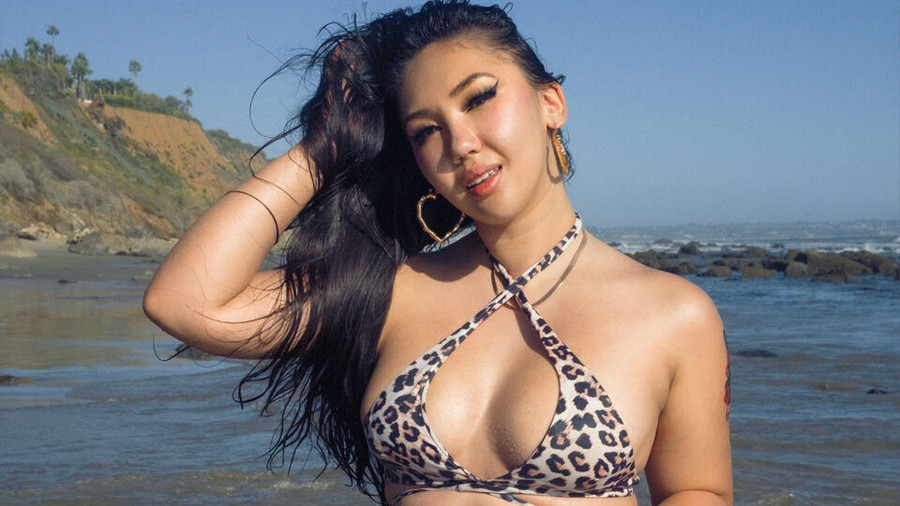
As a tall, thick, tatted and all-natural Asian woman, I almost never saw anyone who looked like me represented in either the mainstream or in porn. In fact, photographers, fans and other content creators told me all the time, “You have such a unique look.”
Everything changed when finally I realized how much of a compliment that was! Suddenly it dawned on me that looking unique is actually a huge advantage. Up until then, I had tried so hard to downplay all the traits I was ashamed of. I lied about my height to seem shorter, posed to make myself look smaller next to other girls and edited my pictures to remove cellulite and fix my hip dips. But pretending to be something I’m not only limited me further.
Viewing my body more neutrally and detaching my self-worth from desirability has made it possible for me to make better marketing decisions and navigate the adult industry with much more ease. Instead of getting tangled up in feelings of shame about the way I look, trying to hide parts of me and avoiding opportunities, I began wholly embracing all of my physical traits — and thinking strategically about how to market those traits to potential appreciative audiences.
Figure Out Where You Can Make Your Mark
One of the first things I did was research the many different niches that could apply to me. Then I started catering my social media content to those niches. I was following numerous other Asian content creators, but many of the Asian girls I looked to for inspiration were much more petite than I am. I realized that I had made a mistake by not branching out beyond just one niche, and that I needed to market myself a little differently from petite girls.
I intentionally started following other tall, curvy female content creators and paid close attention to how they marketed themselves, letting their strategies inspire me. It was mind-blowing how quickly I got great results! One of my first viral TikToks ever was me joking about how shocked men are when they find out I’m Asian, because of my height. I got countless thirsty “Let me climb that tree” and “Thick thighs save lives” comments, and I realized plenty of potential fans were enamored with my look.
Cashing In on Being Unconventional
There are massive audiences out there for “unconventional” aesthetics and traits, and these fans are very eager to show their support when given the opportunity. You need to identify and engage your niche directly, in a way that makes them feel compelled to respond.
For example, posting a basic thirst trap with a caption like “all-natural babe” might garner some comments. But captioning it “Where are the kings that love natural curves?” or “Does anyone still like natural bodies these days?” generates significantly more engagement because potential fans in that niche feel recognized, which inspires them to speak up and show some love.
Gone are the days of painstakingly editing visible cellulite out of my pictures. Now I go out of my way to highlight these traits and write captions that directly address potential fans who appreciate them. The response is always overwhelmingly positive. Fans who enjoy less mainstream features tend to be the most excited about opportunities to engage with and support your content.
Collab With Creators Whose Fans Appreciate Your Body
While I’m always eager to collaborate with amazing content creators of all shapes and sizes and broaden my reach across the board, I experienced much more growth in my career once I started prioritizing collabs with creators whose fans were more likely to appreciate my body type.
When I started opening up to collabs, I sought out other Asian content creators. I got good results from working with them, but I made two mistakes: I failed to factor in multiple niches, and I assumed that I would automatically benefit from working with any creator who had a huge platform.
While it never hurts to work with a creator who has achieved more recognition than you or has a more considerable following, fully embracing my unique look and thinking more strategically about how to factor it into my brand image ultimately helped me apply a more effective form of cost-benefit analysis. I learned that, when it comes to collaborating with other content creators, sometimes it may be a smarter use of your time to work with someone who hits the same niches you do, even if they are a smaller creator.
I believe this is especially true for those of us whose body types are less “mainstream.” As a tall, thick girl, I have found that even when very petite or thin content creators have huge fan bases, working with them is still far less materially beneficial to me than working with other thick girls and BBWs who might have smaller audiences, but whose fan bases are generally more open-minded when it comes to body types.
Things to Consider Before Changing Your Look
Considering how common cosmetic surgery is in the adult industry, it’s worth touching on how a body neutrality mindset can be helpful in such a space.
For adult creators and performers, cosmetic procedures can be regarded as investments in our businesses and brands. Like any investment, you need to weigh the potential returns against the risks — especially if the procedure is very costly or significant.
Is it worth the expense? Is it a necessary expense? For example, could you realistically achieve a similar look by working out, changing your diet or other means? Would getting this procedure necessitate changing your marketing strategy? How might it affect your work opportunities? If you do studio work, could it change the kinds of roles or scenes you do? How is your existing audience likely to respond?
Of course, there is much more to consider when making significant, permanent changes to your body and appearance. We’re not talking about renting a space for shooting or buying a new phone. That’s why your cost-benefit analysis in this situation should also be informed by body neutrality, which prioritizes how your body feels, how it makes you feel and how it serves you over and above how desirable it may seem to others.
Having experienced body dysmorphia and disordered eating, I know firsthand that attempting to change how you look because you base all your self-worth on your body image is like a snake eating its tail. When considering cosmetic procedures, try not to let feelings of insecurity, societal pressure or shame drive your decisions. Your health, safety and mental well-being should always come first.
Looks Will Only Get You So Far
I’ve heard so many people say they wish they could enter the industry but just “don’t have the body for it.” I like to remind them that looks are ultimately only one small part of what brings us success.
A strong work ethic, creativity, marketing savvy, talent as a performer, self-discipline, ambition, authenticity and individuality are the traits that inspire me most about the creators and performers whom I look up to. These are skills and attributes that anyone can develop and hone — and they will take you much further than your looks and body type.
Applying a body neutrality mindset while working in the adult industry can help us view beauty standards more objectively, incorporate them into our marketing strategies and embrace our bodies as an integral part of our brand — while also remembering that as human beings, we are so much more than our bodies.
Tomie Tang is a content creator, anime enthusiast, ex-NPR reporter and performer who can be followed @tomiebabydoll on Twitter, @tomiebabydollofficial on Instagram, @tomiebbydoll on TikTok and OnlyFans.com/tomiebabydoll.