



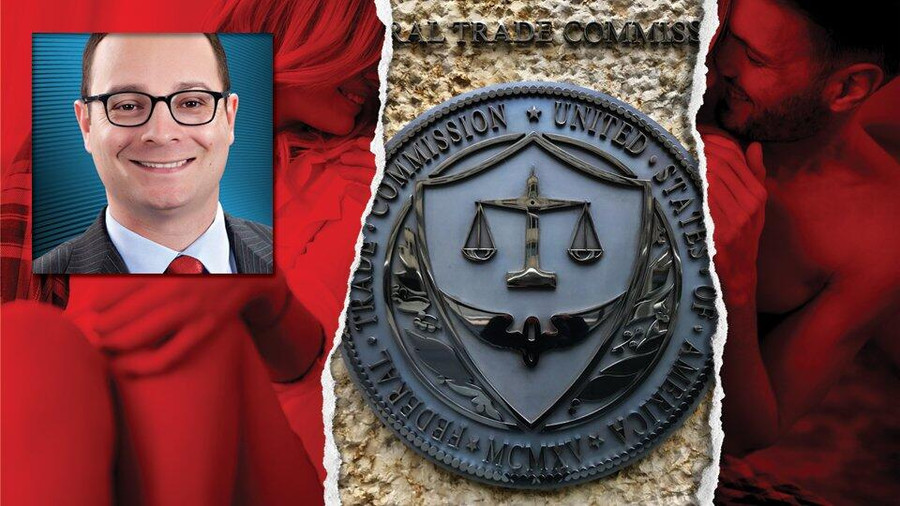
Everyone enjoys being proven right, but that doesn’t necessarily mean that a person enjoys the point that he or she is right about. For years, I have spoken at trade shows across the world and shouted as loud as I could that as financially rewarding dating websites are to their operators, dating websites also present substantial legal risks including both civil lawsuits and regulatory action. Despite my words of warning to dating website operators, far too many have failed to change their business practices or at the very least have their business practices reviewed for potential legal exposure.
In fact, there are still far too many dating website operators that do not understand what they legally can and cannot do. Now, once again, dating websites are headlining CNN, MSNBC, Fox News, and the rest of mainstream media for all the wrong reasons. Arguably the most aggressive United States regulatory agency, the Federal Trade Commission (“FTC”) has set it sights on one of the largest dating website operators in the world.
As a business, it is imperative that you treat customer support and complaints as a priority.
Match Group, Inc. (“Match”), which presently has a Market Cap of 20.073B, and operates Tinder, OkCupid, Match.com and more, can now also be known as “Defendant” courtesy of the case of the Federal Trade Commission v. Match Group, Inc., filed on Sept. 25, 2019. In the complaint, the FTC alleges that Match engaged in numerous incidents of “unfair and deceptive acts or practices in or affecting commerce.” The specific alleged acts include, Misrepresentation Regarding Users of Defendant’s Service, Exposing Consumers to Risk of Fraud, Deceptive “Guarantee Program” and Unfair Denial of Access to Consumers’ Account. The FTC also alleges multiple violations of the Restore Online Shoppers’ Confidence Act (“ROSCA”), including, Failure to Provide a Simple Mechanism for Consumers to Stop Recurring Charges.
One of the biggest allegations surrounds Match’s use of so-called “fake accounts” and “fake love interest advertisements.” Per the FTC, "Consumers reasonably believe, based upon these advertisements, that other Match.com users are interested in establishing a possible dating relationship with them. As a result, consumers have often purchased Match.com subscriptions from defendant … Hundreds of thousands of consumers subscribed to Match.com shortly after receiving a fraudulent communication."
Also, on Sept. 25, the FTC released a scathing press release announcing the lawsuit against Match which is available online at the FTC website. Within this press release, the FTC sent a clear message to every single dating website operator: “Online dating services, including Match.com, often are used to find and contact potential romance scam victims. Fraudsters create fake profiles, establish trusting relationships and then trick consumers into giving or loaning them money. Just last year, romance scams ranked number one on the FTC’s list of total reported losses to fraud. The Commission’s Consumer Sentinel complaint database received more than 21,000 reports about romance scams, and people reported losing a total of $143 million in 2018.” So, if you are a dating website operator who gets investigated or pursued by the FTC down the road you cannot say that you weren’t warned.
And what does this mean for dating website operators? Is this doomsday? Is it too late to make changes to your websites’ practices? Of course not. For those who have been holding back having their business practices reviewed by legal counsel or making changes, this case should be used as the ultimate reminder to take action now.
It should be noted that Match says it is going to “vigorously” defend itself against the FTC’s allegations. Hopefully, Match will back up its words, because a negative ruling or consent decree could have disastrous implications for the rest of the online dating sector. Nonetheless, my prediction is that this case will never go to trial and some type of resolution will be reached between the parties. Regardless, everyone in the online dating marketplace needs to pay close attention to how this case proceeds and ultimately ends. It’s unfortunate to see an industry under attack by a government agency, but it would be foolish to not utilize this case as a positive learning experience.
The FTC takes in reports from consumers about the problems they experience in the marketplace and the reports are stored in the Consumer Sentinel Network (Sentinel). During 2018, Sentinel received nearly 3 million consumer reports. It’s important to understand that FTC investigations are triggered by consumer complaints. The FTC does not have its own police force and doesn’t run around arbitrarily choosing websites to target. FTC investigations and enforcement actions are triggered by consumer complaints. As a business, it is imperative that you treat customer support and complaints as a priority. Typically, consumers don’t race to the FTC when they have a gripe with a product or service that they purchased. It is more likely that consumers only turn to the FTC after they feel that they have exhausted all other remedies, including dealing with the online business in question.
All online businesses need to stop ignoring and downplaying unhappy consumers — by doing so, the business can potentially stop an FTC complaint before it ever happens. It’s important that as you have your legal advisor review your website for FTC compliance, you also have your legal advisor review the business’ customer support department to include but not be limited to, how the business handles return and refund requests, how easy the business makes it for customers to contact the business, the actual disclaimers and provisions located on the business’ website in terms of clarity and ease of reading (quick hot tip — the FTC hates refund and customer support policies that are buried in small print and unreadable to consumers).
Online dating website operators proceed at their own risk and must get their business practices reviewed by counsel experienced with FTC enforcement investigations and actions now. The Match case should be closely followed because I promise that there are lessons to be learned from their alleged business practices that could save you big money.
This article does not constitute legal advice and is provided for your information only and should not be relied upon in lieu of consultation with legal advisors in your own jurisdiction. It may not be current as the laws in this area change frequently.
Corey D. Silverstein is the managing and founding member of Silverstein Legal. His practice focuses on representing all areas of the adult industry and his clientele includes hosting companies, affiliate programs, content producers, processors, designers, developers, operators and more. He is licensed in numerous jurisdictions including Michigan, Arizona, the District of Colombia, Georgia and New York. Contact him at MyAdultAttorney.com, corey@silversteinlegal.com and (248) 290-0655.



